
If you watch any of the TV cooking shows you will see that the fry pan by for used the most is a cast iron skillet. The reasons for this are very good ones. It gets very hot and holds the heat uniformly so it is an excellent cooking platform. With its metal handle it can go from the stove top to the oven or under the broiler or out on the grill so it is very versatile. And a well-seasoned cast iron fry pan has a no stick surface for cooking and cleans very easily.
Why do home cooks seldom use cast iron fry pans? They are less expensive than good quality stainless steel or brand name no-stick pans. One reason is that they are very heavy. That weight makes for a great cooking surface, but they can be difficult to work with, especially when a full load of food is in the pan. But the biggest reason, in my opinion, is that if you do not know how to clean them correctly, it can be a lot of work. And, at the end of that process, you have almost certainly compromised the pan’s seasoning so the next time you cook with that pan, it will not be non-stick and the cleaning job gets harder and harder as food sticks to the pan and in some cases ruins the dish.
My go to pan for cooking is a 12” cast iron skillet that I have had for over 30 years. In this post I will share cooking with it, including when cast iron is not the right pan to use. I will cover the right way to clean cast iron pans. I will walk you through seasoning a cast iron fry pan if you get a new one or the seasoning is compromised. The good news is that it is almost impossible to ruin a cast iron pan to the point that you want to throw it away. If it has been sitting in the basement for years and has rust all over it, you can soak it for an hour in vinegar, scrub it thoroughly with detergent and it will be just like a cast iron pan you bring home from the store. Season it like I discuss below and build up that seasoning by cleaning it correctly and you will have a great fry pan you can use for years. I will also talk about alternatives to cast iron to address the weight issue. While the pictures and discussion are all about cast iron fry pans, the same is true for other cast iron cooking utensils such as griddles.
Cooking With Cast Iron Pans
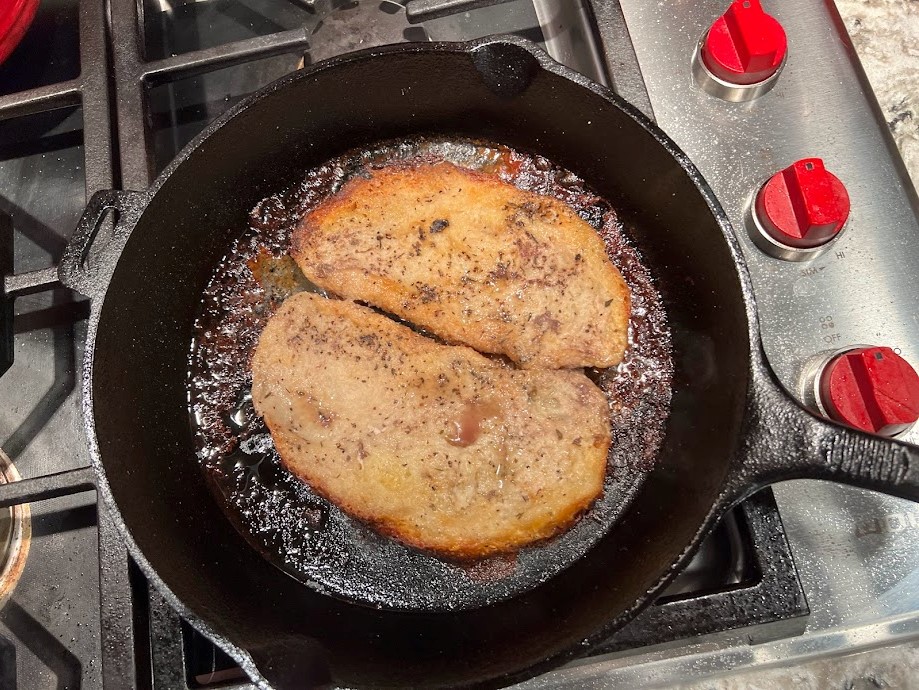
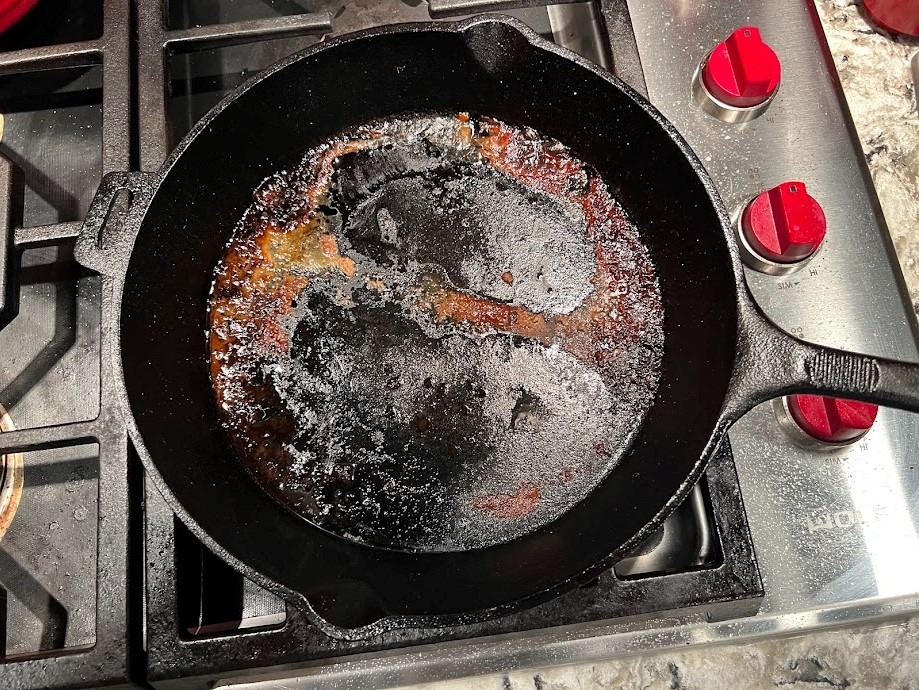
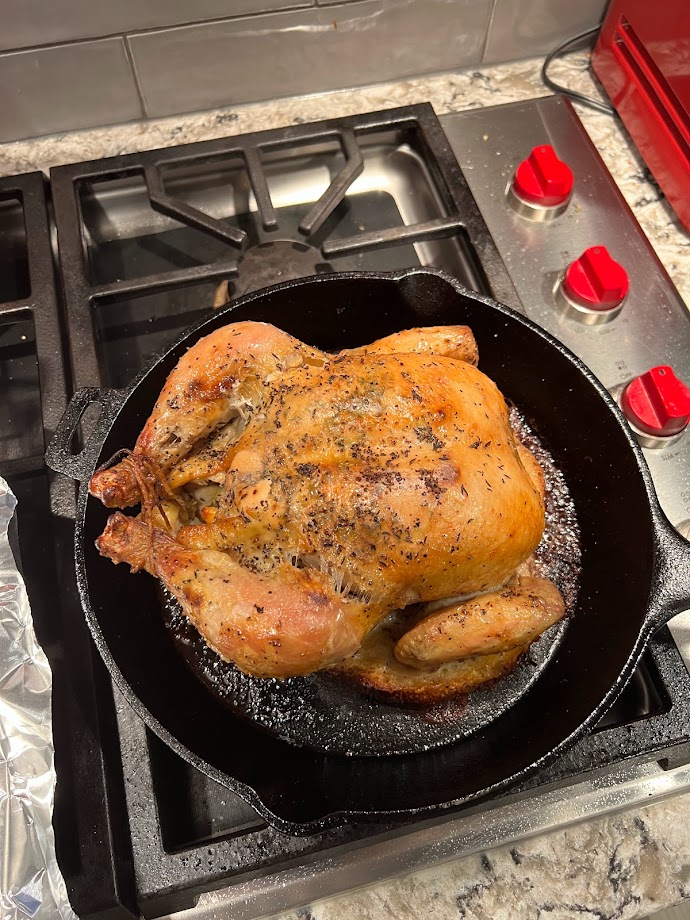
A properly seasoned cast iron pan has a non-stick surface equal to any commercial no stick product. You do not need to use more oil or shortening when you cook in a cast iron pan. In the picture above I did my favorite roast chicken recipe which is from Ina Garten. I put two large thick slices of sourdough bread in the bottom of the bare cold pan. I then put the 5 lb. bird on top of the bread and put it in a 500° oven for about 45 minutes. I then wrapped the skillet with the bird in it in for 30 minutes and let it rest on the top of the stove. In this next picture I have removed the chicken to carve and the bread, soaked in the juices from the chicken is left sitting in the pan. When I take the bread out the pan to add to the Arugula salad, the pan looks to be a total mess and one that will be very difficult to clean but in the section below I will talk about how quick and easy it was to clean. This dish was totally done under the broiler. You can find this great recipe at https://barefootcontessa.com/recipes/roast-chicken-with-bread-arugula-salad.
Bobby Flay’s recommended recipe for a Porterhouse steak is to cook it in a cast iron pan over high heat for about 4 minutes. Take it out of the pan and put it on a cutting board browned side up and cut the two large sections of meat off the bone. Slice each of them across the grain in slices 1” thick. Put the slices back around the bone so that it looks like the whole steak again and put that back in the pan with the browned side up. Put slices of butter on top of the steak, and maybe some sprigs of Rosemary, and put that pan under the broiler for a few minutes until it gets to the right state of doneness which will be heavily dependent on how thick the steak was. The full recipe can be found at https://www.today.com/recipes/bobby-s-flay-s-cast-iron-steak-brown-butter-blue-t162968. Here we start on the stove top and finish under the broiler. The ability of cast iron to get that hot and spread that heat uniformly makes this recipe possible.
Another simple example is the earlier post on this blog about fried eggs. I fry them in my cast iron pan but put them under the broiler for a few seconds at the end to fully cook the white of the egg sitting on top while leaving the yolk nice and runny. Having a pan that I can move from the stovetop to under the broiler makes this really easy and my eggs do not need to be flipped or basted to be fully cooked.
One note about olive oil. There is a widespread misconception that olive oil, especially Extra Virgin Olive Oil, should not be used for frying. In fact, it has a pretty high smoke point, 410°, which is just under the 420° smoke point for Canola Oil and Grapeseed oil. Working on the stove top you are not going to get above 400° and olive oil is fine. Canola oil is also very good to fry with but there is nothing wrong with olive oil.
The more you cook with cast iron where the juices from the cooking are in the pan, like with the chicken drippings from the dish above and the oils from the butter and fat from the steak from the Bobby Flay recipe, the better the seasoning in the pan gets. The accumulation of oil and fat particles gets baked into the surface creating the deep black color and yielding a great non-stick surface. What we don’t want to do is scrub all those oils and fat particles out of the pan when we clean it.
Acidic dishes like tomato sauces, lots of citric acid like lemon or lime juice, vinegar, or wine will break down the seasoning and those are dishes we want to cook in stainless steel or non-stick pans instead of cast iron. On a TV cooking show if you see them flambéing a dish, they are probably not using a cast iron pan for that because of all the wine that is being heated and them flamed. As another example, take a look at the Beef Daube posting that was the very first one in this blog. After marinating the beef overnight in two bottles of wine, it is browned and then cooked in that marinade. Using a cast iron pan with that much wine will likely break down some of the seasoning that has been built up, so I used an enamel Dutch Oven for that dish. If it is just a couple of tablespoons of wine, lemon juice, or tomato paste, that small amount will not damage the seasoning and you are fine using your cast iron pan. But if the dish is highly acidic, then use non-stick or stainless steel instead of cast iron.
As shown in the picture below, I have a 12” cast iron fry pan that is what I reach for most of the time. I have a 7” cast iron for smaller dishes, like a single steak or a couple of fried eggs. And a year ago I got a carbon steel 10” fry pan for Beth for Christmas which is the one in the back. More on Carbon Steel below but the BLUF (Botton Line Up Front) is that it cooks just like a cast iron pan, with all the pluses and minuses, and weighs 3.1 lbs. compared to 6.8 lbs. for my 12” cast iron. With over 20 year using cast iron and just over a year using carbon steel, the cast iron is still my number 1, but Beth really likes the much lighter weight of the carbon steel. And she has me to clean it for her.

Cleaning Cast Iron Pans
The primary way to clean cast iron is just to rub the debris out of the pan with paper towels. You want the pan cool to the touch to do that so for both above recipes I let the pan sit on the stove while I ate dinner and then cleaned it after dinner when the pan was at room temperature. For a well-seasoned pan just wiping it clean with paper towels is often all that is needed.
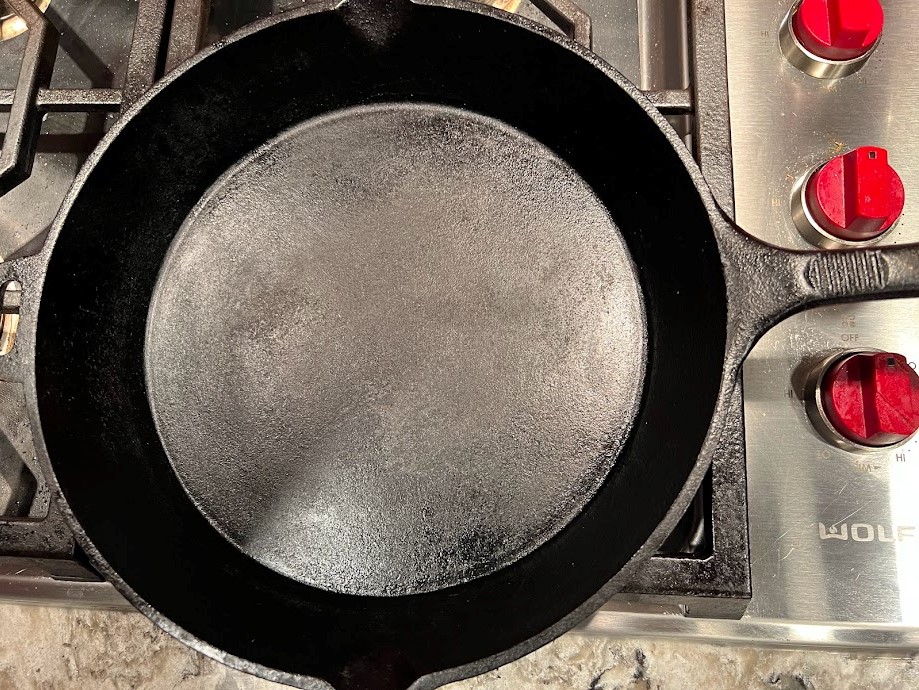
Look closely at the picture of the cast iron pan when I finished cleaning it after doing the roast chicken dish, and also at the carbon steel pan in the picture below under Alternatives to Cast Iron. Neither one has a uniform color, there are blotches of different color in spots. That is normal and OK. The hardest thing for me was moving past my Boy Scout training where I needed to keep scrubbing the pan until it was bright and shining. We don’t want to do that here. NEVER leave water soaking in a cast iron pan. NEVER put a cast iron pan in the dishwasher. Any time any detergent gets into the pan, you might have work to do to restore the seasoning you have carefully built up over time.
When I have lots of grease or oils in the pan, they often are not all baked in. When this happens, after wiping the pan out with a couple of paper towels, I will put about ½ inch of water in the pan, NO detergent – just water, and swirl a paper towel around in the water and then pour it out and rinse the pan quickly under the faucet to get rid of the final grease in the pan. Any time I do this I want to be sure that the pan is totally dry so, after rubbing it with a dish towel. I put it on a burner on the stove under a medium flame for a couple of minutes on each side, upside down first to make sure it is totally dry. About every fourth time I use the cast iron pan I do a quick rub with my seasoning wax when it is hot and then let it cool down on the stove top. More on this under the seasoning section below. I do this more when I feel the pan could use this than any rigid count or schedule.
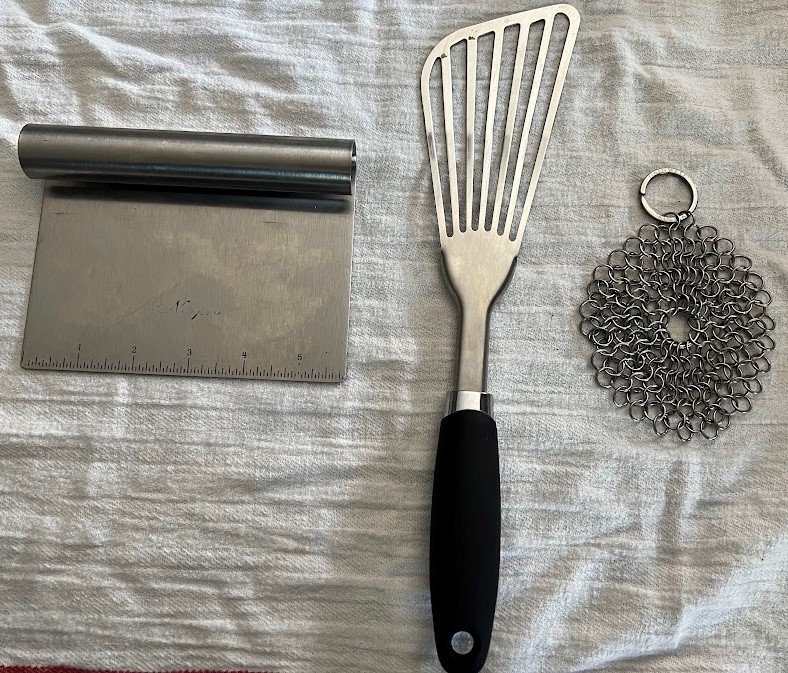
If there are some spots of debris that I can’t get out with the paper towel I have three tools that can help me get rid of them that are shown in the picture to the right. The one on the left is just a basic bench scraper used for many tasks in the kitchen. Use whatever one you have to scrape the bottom of the pan and break loose anything that is stuck there. I prefer to use the bench scraper over my spatula, shown in the middle, so I can keep the spatula for cooking and don’t put any scratches or nicks in it by using it to help clean the pan. But if you don’t have a bench scraper then the spatula will work. Once or twice a year I have something in the pan that does not come free with the bench scraper. The tool on the right is like a little section of chain mail I got from Amazon when I searched on cleaning cast iron pans. I put a little water in the bottom of the pan and use the chain mail to scrub it and that has always gotten everything out of the pan.
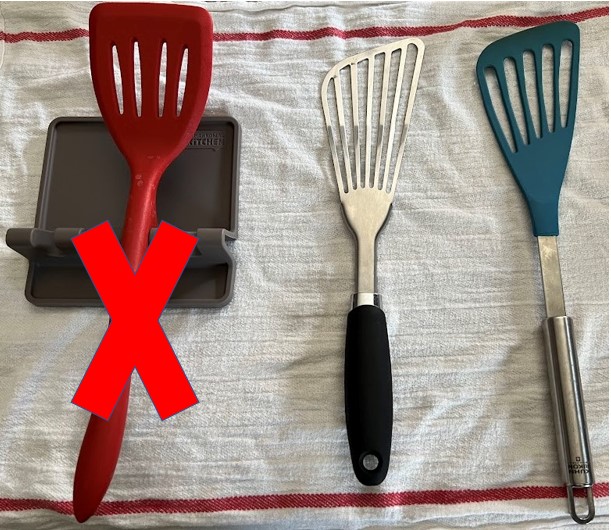
Side Note: According to chef Michael Symon a restaurant kitchen will only have the kind of spatulas shown in the middle and to the right in this picture. The style of the red one to the left is never found in a professional kitchen. The blue one is for use in non-stick pans while the silver one is what I use in cast iron, carbon steel, and stainless-steel pans.
Seasoning a Cast Iron Pan
If I get a new cast iron pan that says it is “preseasoned”, I still give it the initial seasoning. Seasoning is the process of treating your pan with oil to create a seal on your pan’s surface. Heating an oil with a high smoke point creates a polymerization – the oil and heat react together to form a solid layer, filling in the metal’s small pores. This helps prevent rust and keeps food from sticking during cooking.
First give the pan a good wash with warm water and a mild soap. This removes any coating that was put on the factory to protect it during shipping and sitting on a shelf in a store. You want to get as much of this coating off as possible, inside and out. Thoroughly dry the pan and put it over low heat on the stove top for a couple of minutes on each side to make sure no dampness remains. You want the pan to be warm to the touch and then move to the next step in the seasoning process.
A light coat of oil is rubbed all over the pan, including all the outside surfaces, using a paper towel dipped in a small bowl of oil that has a high smoke point: canola, grapeseed, or olive oil. There is no point in using expensive oil to season the pan. Be careful and consider using potholders to hold the pan so you don’t burn yourself if there are some hot spots from being on the burner. The pan is then put on a sheet pan lined with aluminum foil in a 400° oven for an hour. Some of the oil usually drips off and you want that to be caught in the sheet pan and not dripping onto the floor of your oven. The oven is then turned off and the pan left to slowly cool down. I generally leave it over night in the oven. When it comes out of the oven the next morning, I wipe it all over with a paper towel to remove any oil that has not baked in and the pan has a solid seasoning foundation.
You can repeat this process, skipping washing the pan, one or more times to accelerate the seasoning process. Or you can start cooking dishes with it that will add to the seasoning. Dishes like eggs that stick easily should not be done in your cast iron pan until it has built up a good seasoning. Good dishes to start with include anything that cooks in a Brown Butter Sauce. If you are cooking strips of bacon, that is better done in the oven on a rack in a sheet pan, but if you have a recipe that calls for Bacon, Pancetta, or Guanciale to be cut into pieces to be cooked, using your cast iron fry pan for that is a very good way to add to the seasoning. Both the recipes under Cooking with Cast Iron above are very good to build up the seasoning, especially if you have done one or two other dishes first that build up the initial seasoning.
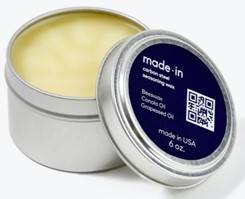
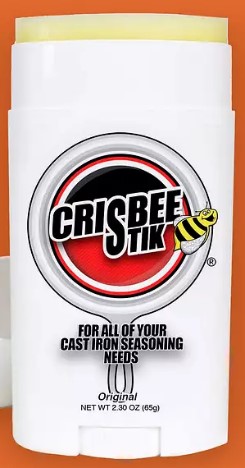
The oil used for seasoning needs to be a high smoke point oil with the oven at 420°. However, I do not use a cooking oil to season my pans or refresh the seasoning periodically. Instead I use a Seasoning Wax from Made-In that consists of canola oil and grapeseed oil mixed into in beeswax. Here is a picture of it and web site to get it is below. https://madeincookware.com/products/carbon-steel-seasoning-waxx. I have found this easy to work with and gotten great results with it. As discussed below, I am a big fan of the products from Made-In and top chefs like Michael Symon and Tom Colicchio have recommended them. If you search on cast iron seasoning on Amazon will see a number of other similar products there, generally at lower prices. The Crisbee Stik shown in the other picture has very high ratings but I have not used it. Do not cook with either of these products, but they are great in building up a great seasoning on your pans.
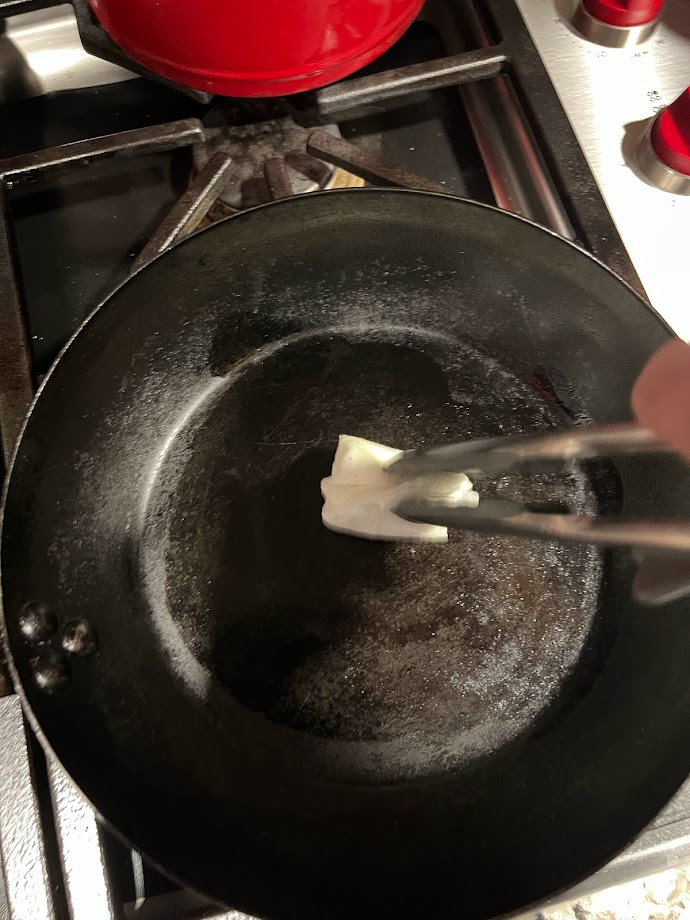
As mentioned above, I like to refresh the seasoning occasionally and, when I do this, I complete the cleaning cycle above and put the pan upside down on the stove under a medium flame for a couple of minutes and then flip it right side up for a couple of more minutes. I then turn the flame off and I take a folded piece of paper towel and rub it inside the seasoning wax can to get a layer on the paper towel. As shown in the picture, I use tongs to swirl it all around the bottom and insides of the pan while it is still hot from the burner. I then leave the pan on the stove top overnight and the next morning I take a fresh sheet of paper towel and rub the inside of the pan with it. That will generally pick up a little oil that was not burned in leaving a clean pan with refreshed seasoning to be put away and be ready of the next cooking session.
Buying A Cast Iron Fry Pan
If you do not have one stuck away on a shelf somewhere, good cast iron fry pans are readily available and not very expensive compared to some other kinds of pans. The 12” pan is the basic pan you will use the most. Food and Wine Magazine ranked the Lodge 12 Inch Cast Iron Skillet the Best Overall and the Amazon listing for it at a price of $44 is below. I highly recommend when buying a cast iron skillet getting one with an assist handle across from the primary handle like the Lodge Skillet has to make it easier to handle and move around with the weight of the skillet and the food that is in it. Having a large pour spout at least on one side is also very important for some dishes and steep sides are highly recommended. A lid is also very good to have some dishes and the Lodge one below does not come with a lid. If you don’t have one for a 12” fry pan, you should consider searching Amazon for one and include it in your order. https://www.amazon.com/Lodge-Skillet-Pre-Seasoned-Skillet-Silicone/dp/B00G2XGC88/ref=as_li_ss_tl?ots=1&ie=UTF8&linkCode=ll1&tag=fwbestcastironskilletskmacdonald1019-20&linkId=85e6e76c83b32ef8047ab8eb7eb15da7&language=en_US
Alternatives To Cast Iron Pans
There are a number of alternatives to cooking with cast iron pans:
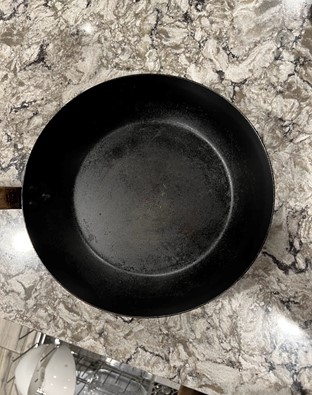
- Carbon Steel has rapidly gained popularity in the last few years. It cooks just like a cast iron pan but, as mentioned above, it generally weighs less than half of what a cast iron pan does. Made-In makes very high-quality cookware that is used in many restaurants and professional kitchens. Their product line includes stainless steel, non-stick, and carbon steel. We have been very happy with all of the Made-In products we have and celebrate a company that is committed to both high quality and keeping jobs in the US. I never thought I would pay $100 for a fry pan but their products are fully worth the price, and they have a very loyal following. Michael Symon frequently recommends them when asked for recommendations on cookware in social media. Note that this pan has been in use for a year now and still has blotches of different color on the surface which is to be expected for both carbon steel and cast iron pans. There are several other companies offering carbon steel pans but I do not have any experience with them and suggest you look closely at the user reviews for those products in making your selection. Lodge, one of the top companies selling cast iron pans and the one recommended above, recently added carbon steel pans to their product line.
- Enamel coated pans are excellent but expensive and even heavier than cast iron since they are generally made using cast iron as the base pan. They do not need to be seasoned and can be cleaned with dish soap.
- Stainless steel is recommended for acidic dishes like tomato, citrus, or wine sauces. Stainless steel can come in a broad range of prices. Just a quick look at Amazon for a 12” stainless steel fry pan showed prices ranging from $22 to $130. Heavier weight is one indication of quality as lighter pans are generally thinner and do not hold the heat as well or as evenly. I recommend getting a few good pans over multiple inexpensive ones. Also good pans will last many years while cheap ones often need to be replaced every few years so good ones may end up saving you money in the long term.
- Non-stick pans come in an even broader price range. There are good quality non-stick pans and there is a lot of crap for sale out there, and price is not proof of quality. I get a real kick out of one very prominent TV chef with a British accent that is all over social media pushing the non-stick pans he uses for cooking in his home. If they are that good, why doesn’t he use them in his restaurant? Tom Colicchio is a paid consultant for Made-In but he is up front about it and he also uses their products in his restaurant. That is an endorsement that means something to me. I think putting a chef’s name on the product is a red flag to avoid it. Cheap light weight aluminum non-stick pans will not cook well and the coating will not last long. The non-stick pans that we have are proven brand names like Calphalon and Made-In. I think it is probably clear by now that think having very good quality cookware is really important to produce meals that bring out all the flavor and appearance that the dish has to offer.
I hope you found this post interesting and helpful. Is it too long? Should I have broken it up into 5 or 6 smaller posts, each of one of the topics above. I am very new to blogging and your feedback is greatly appreciated.
 Bill's Thoughts on Wine, Travel, and Food
Great write up! I use cast iron and carbon steel for at least half of my cooking. Durable, reliable, and even heating. One mistake I made for years with cast iron, which led to frequent aggravation, was thinking that I needed to cook everything on high heat. I’ve found that even for straight up frying, sautéing, and even browning, medium to medium-low heat is all that’s needed. It prevents the carbon build up that kills the seasoning of the pan.
I’ve been using Crisbee for the past few years to maintain seasoning in the pans after use and cleaning. Great product! Heat the pan for a few minutes at medium-low, apply Crisbee, and distribute/wipe out excess with a cloth (most paper towels leave lint). Then I let it sit on the burner until it smokes for a minute or two (the main sign of polymerization) then let it cool. It’s helped maintain an excellent season on all my pans and I can gladly claim that I can fry an egg in any of those pans without any sticking.
LikeLike
Great addition, Tim. Thanks.
LikeLiked by 1 person
I am so glad you wrote about carbon steel pans. I had to give up on cast iron because of the weight, and I didn’t know about carbon steel as an alternative. John was the one who used his pan until he got a T fal nonstick for eggs. Brian and Irene got me a George Forman with removable plates and that’s what I use for meat, which I don’t cook often anymore. Thanks Bill. And I have enjoyed all your blogs. Ellen
On Wed, Mar 16, 2022 at 12:01 PM Bill’s Thoughts on Wine, Travel, and Food wrote:
> Bill posted: ” If you watch any of the TV cooking shows you will see that > the fry pan by for used the most is a cast iron skillet. The reasons for > this are very good ones. It gets very hot and holds the heat uniformly so > it is an excellent cooking platform. With” >
LikeLike
If you search Amazon for Lodge Carbon Steel you will see their highly rated products. Less expensive than the Made-In pans we really like. We have not tried the Lodge Carbon Steel but they have a long history of making great cast iron pans and that is a good indicator that their Carbon Steel pans are probably good ones. The say preseasoned but I suggest you follow the seasoning directions in the blog if you buy one.
LikeLike
GREAT summary statement, Bill. Mary and I have the 12-inch Loge frying pan that we bought almost 50 years ago. It still shines…just like yours. I have no idea how many wonderful meals that have been prepared in it. Have not tried your wax/whatever stick, but we will.
LikeLike
Good blog Bill. I too am a great fan of cast iron and carbon pans. I have several from a small 5 inch for cooking one egg for an English muffin egg sandwich or an 7 inch dish for making personal frittatas all the way to a 14 inch monster. I tend to use my carbon steel the most. I like the weight and I’m able to get a smoother non-stick surface. I have both Matfer and De Buyer carbon pans. I have way too many pieces, but I follow the motto “Right tool for the job”.
LikeLike