
First – What Cut Is The Porterhouse Steak?
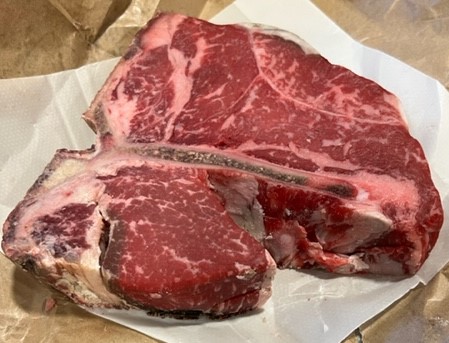
It is two steaks, one on each side of the bone. They are cut from the rear end of the short loin and the larger of the two steaks is a strip steak. When solo on the menu it usually called a NY Strip Steak. On the other side of the bone the smaller steak is the tenderloin, generally called Filet Mignon when served as by itself. T-bone steaks have the same two components but are cut closer to the front so the filet piece is much smaller. Porterhouse steaks are great when cut at least 1 ½ inches thick and one steak can feed at least two people and more if it is thicker.
Second – What Is A Dry Aged Steak?
Dry aging beef is a process that breaks down the connective tissue in the cut and the result is a much more tender and flavorful steak. As you can see in the above picture, the steak is a deeper ruby red from the dry aging. While the Porterhouse is a great steak, it moves into a whole new class when it is dry aged. The strip steak portion becomes very tender and easy to cut. The tenderloin is the most tender cut of beef but with not much flavor. For that side of the Porterhouse, the dry aging process really adds flavor to the tenderloin steak. You can do dry aging at home but it is not easy and the best results come from at least two weeks of dry aging which is hard to do in a home kitchen. A dry aged steak that has aged for at least two weeks or longer carries a very premium price per pound. There are companies that will ship you dry agreed steaks, some of them are able to do it where the steak is never frozen which is important when you want a taste that is fully worth the price you are paying for a nice dry aged Porterhouse steak.
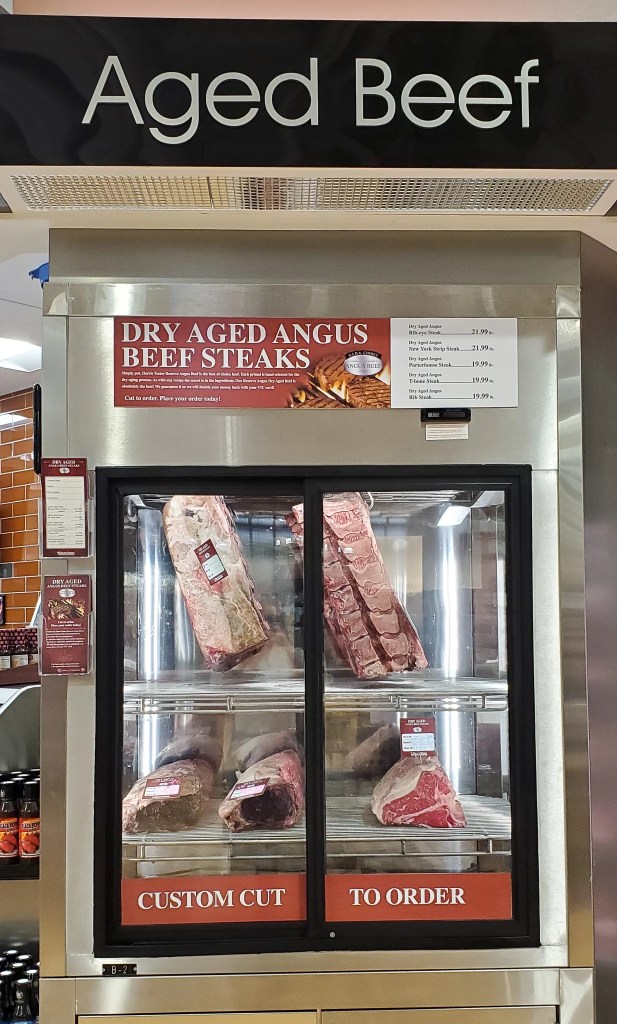
We are fortunate that one of the very large Harris Teeter stores that does Dry Aged Beef in the store is only a 10 minute drive. Not all the Harris Teeter stores have the dry aging apparatus as shown in the picture. The Porterhouse steak is on the right side of the loser shelf. Each cut in the ager has a tag that says when it went in, when it is sufficiently aged that they will cut steaks from if for you, and when it has reached the limit and must come out of dry ager. If they have a Porterhouse that is in the time zone where they are cutting and selling it, you just tell them how big a cut you would like. They will cut it from the large piece being dry aged and wrap it up, and weight it out for you. As I mentioned above, the steak that we get is 1 ½” thick and that gives us a great dinner for two of us and enough leftovers for lunch or a great steak salad for a second dinner. The last one we got was $55 so it carries a very premium price but it is a really great steak for a special occasion.
Third – What Is The Origin Of This Recipe
One of the legendary steak houses is Peter Luger’s in Brooklyn, NY. On any list of the top 10 steakhouses in the US, it generally is very close to the top of the list. You can order one steak for however many people are at your table and they will go into their aging room and cut that steak to the thickness needed for that many people. It is served on a platter in thick slices, perfectly cooked. When TV chef Bobby Flay had a chance to go into their kitchen and see them cook the steak, his reaction was they are breaking all the rules but the end result is fantastic. He now only cooks his Porterhouse steaks this way. If you search the web for Bobby Flay Porterhouse Steak Recipe you will find a Bon Appetit article with the recipe I used.
The first thing is to heavily salt the steak on both sides – “make it rain” salt. Turn on the broiler in your oven and then get your cast iron skillet really hot over medium heat on your stove top and then add just a dash of a neutral oil like Canola. Gently place your steak in the pan so you don’t splatter any very hot oil. Don’t touch it for 4 minutes. Take it out of the pan and put it cooked side up on a cutting board. Like the picture below shows, it should have a beautiful brown crust. Now the recipe really gets crazy.
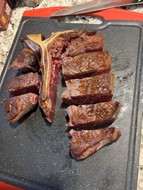
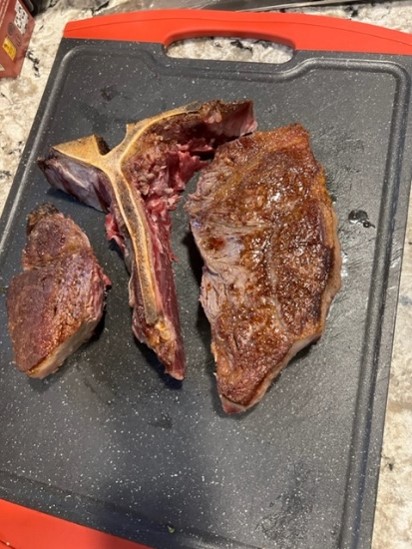
Cut each of the two steaks off the bone, the strip on one side and the filet on the other. Then cut each into slices about 1” wide cutting straight down perpendicular to the bone. The two pictures shows the steak through this stage.
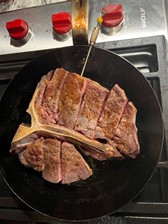

Put the bone back in the hot cast iron pan and reassemble each of the steaks alongside it, crust side up. I then inserted one of the temperature probes I use when grilling into one of the thick slices so I know when to pull it out of the broiler but it needs to be a probe that can handle the heat under the broiler. Top the steak with a few pats of butter. I soften the butter and add some chopped tarragon and sliced garlic and then chill that mixture and slice it into pats so I add some garlic and tarragon flavor to the steak in this way.
Put the pan under the broiler and broil until sizzling and gorgeous. This can be 4-6 minutes depending on how thick your steak is. The side you are seeing is the one that was face down in the skillet on the stove so between that and going under the broiler, it is developing a great crust. The side that was face up in the fry pan and not cooked is now face down and cooking from the heat of the fry pan under the broiler. It seems wrong that all the attention is on one side of the steak but the results can’t be argued with. I keep it under the broiler until it gets to 115 degrees internal temp. I then pull the steak out, tilt the pan, and baste the steak with the brown butter for another minute or so and the steak will come up to 120 degrees internal. Serve it from the pan and spoon some of the buttery pan sauce over each portion. Because of the butter basting the outside of each slice will look more like it is cooked medium but the steak inside should be a bright rosy red rare to med-rare when you cut into your portion. If you like your steak more medium, you can adjust the temperature when you pull it out from under the broiler accordingly.
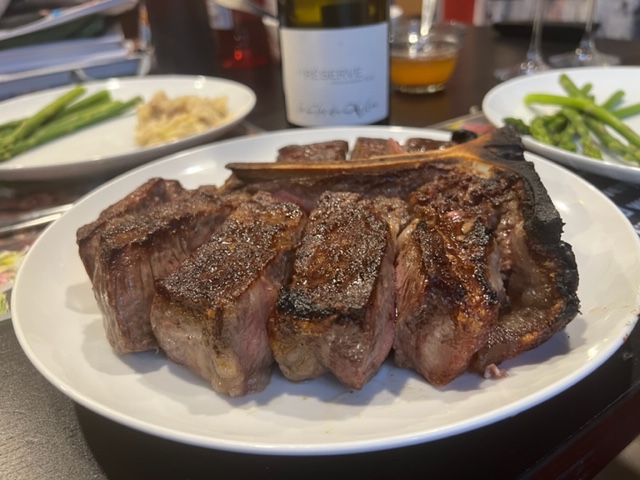
If you join us for the virtual Pinot Noir tasting on May 11, you get suggestions to help you pick a really great Pinot Noir to accompany that delicious steak! https://billwinetravelfood.com/2022/04/13/new-date-for-pinot-noir-tasting-and-may-change-to-some-less-expensive-wines/
 Bill's Thoughts on Wine, Travel, and Food