
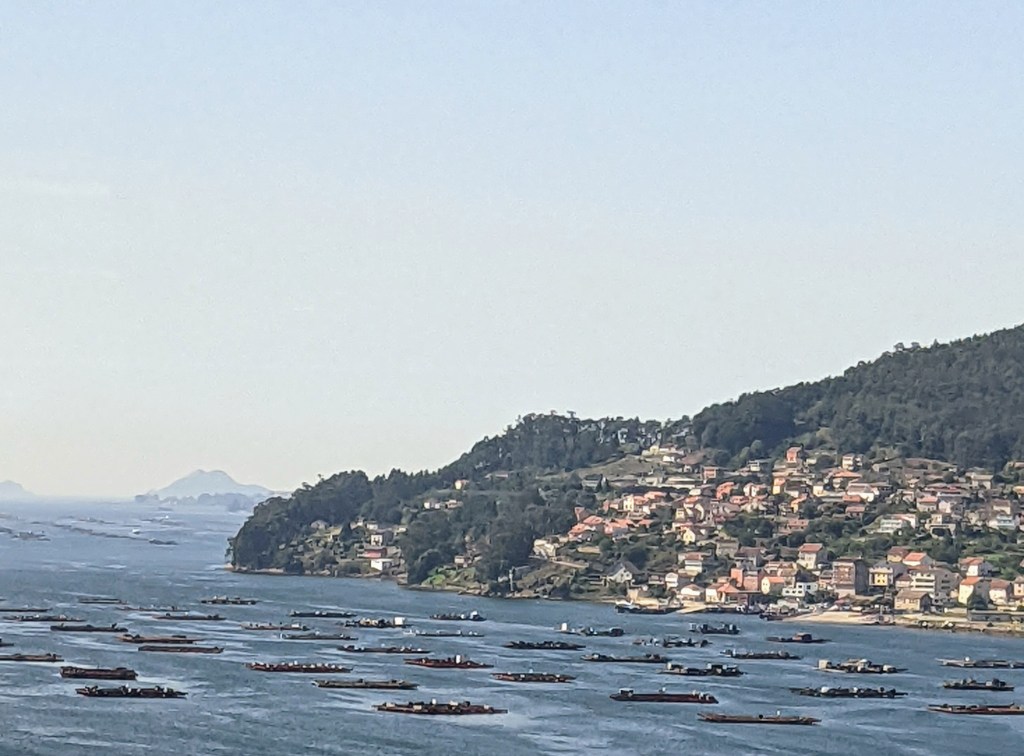
We had a very full day on Tuesday: a boat trip to see the extensive shellfish farming in the Galician estuaries, a wine tasting followed by lunch at a Michelin 1 Star restaurant, a wine tasting back at the hotel that Howard had arranged, and a welcome dinner hosted by Howard.
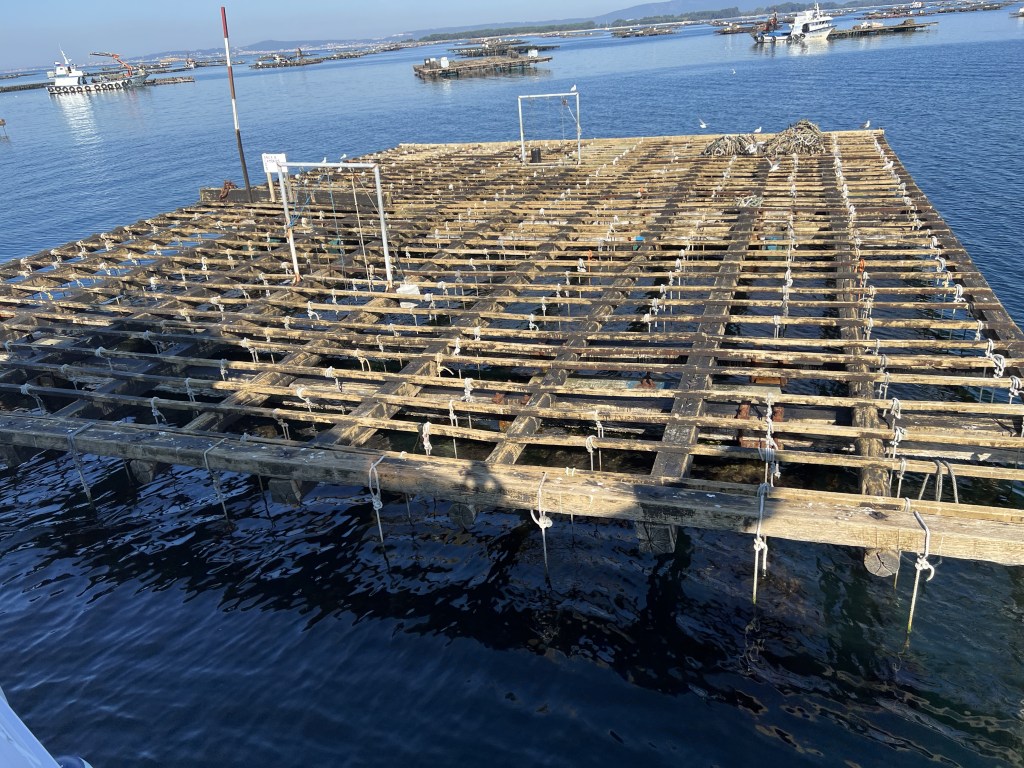
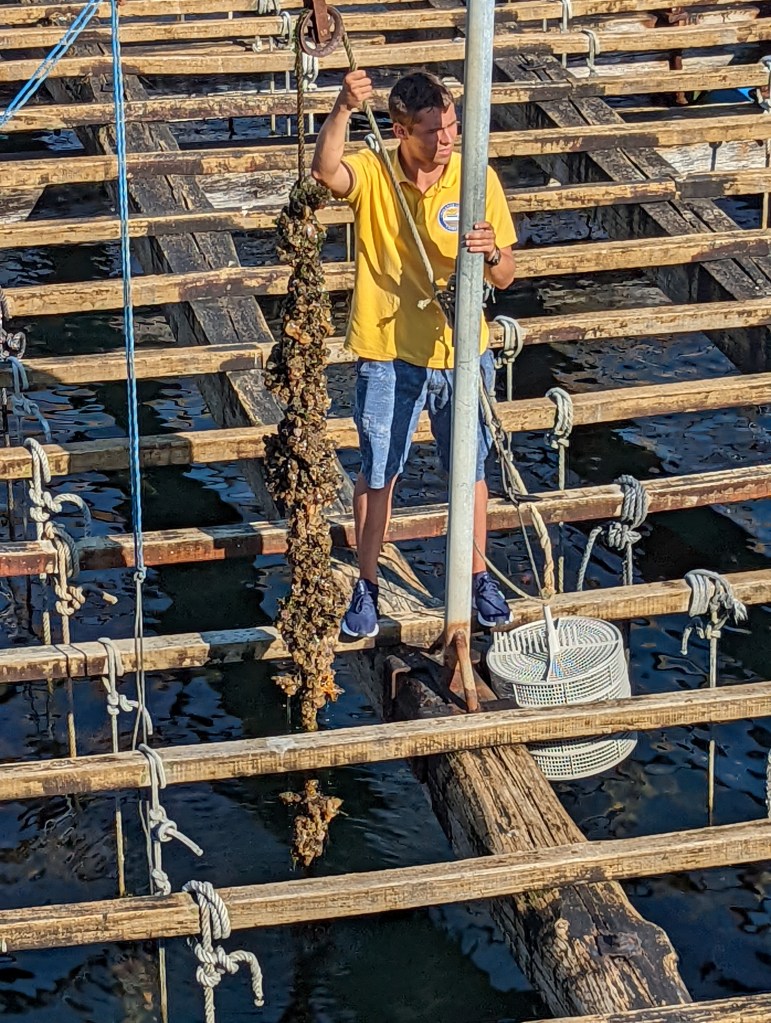
We took at short ride from our hotel to the town of O Grove where we had a chartered boat for just our group. They took us out into the Ria de Arousa where there are over 2,200 of barges or “Bateas” where they raise enormous amounts of shellfish. I was listening to the captain explain the process and taking pictures of one of the crew on one of the bateas, so I did not take notes so this summary is from memory and I hope reasonably close to correct. Each of the bateas has 420 ropes hanging down into the water 5-10 meters in the water. Each rope can be used to raise mussels, scallops, or oysters. The picture shows one of the crew members on the bateas with a rope for each kind of shellfish. Each is seeded with tiny baby shells and put down in the Ria which is very rich is the ocean plant life that the shellfish thrive on. The rope with the mussels can grow about 20 kilos of mussels on each meter of rope in two years and there are about 300 mussels in the picture below. The scallop and oyster ropes each grow a few dozen full sized shellfish in 3 years. Because of the 2-3 year time required, thousands of bateas are needed so a significant crop can be harvested each year.

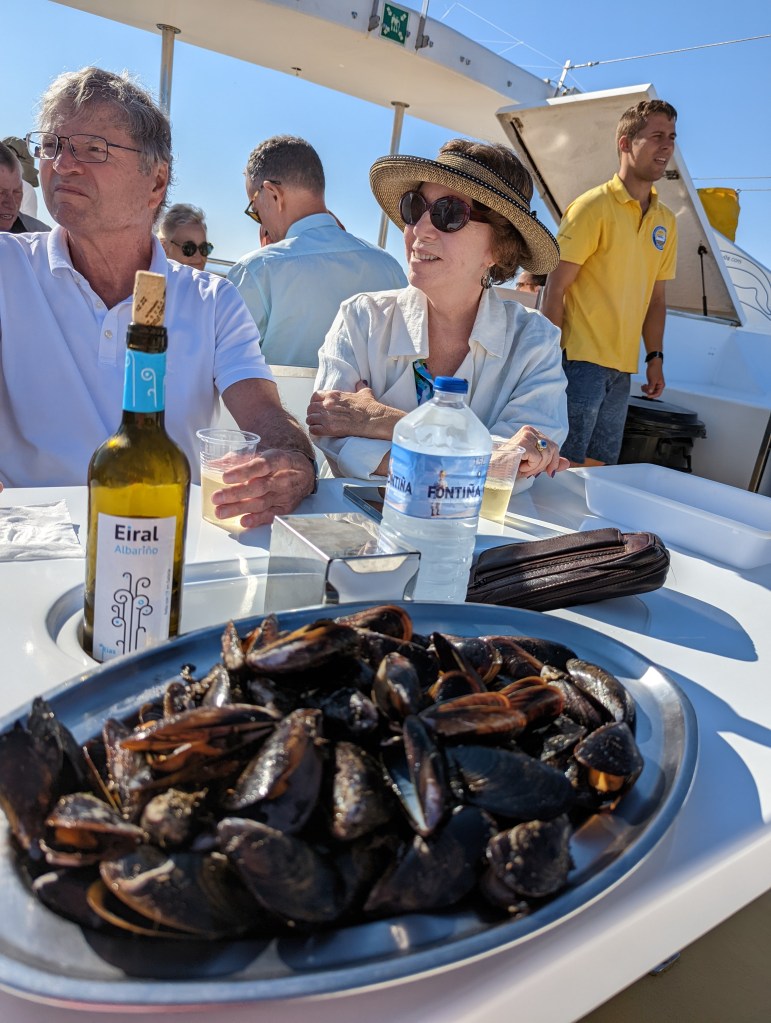
We were sitting in groups of six on the top deck of the boat and were then served a platter of very large and very fresh mussels along with a nice bottle of Albariño for each group as shown in the picture. Not surprisingly, the bottle of wine for our group must have had a leak because it was empty very quickly, but a new full bottle rapidly took its place.
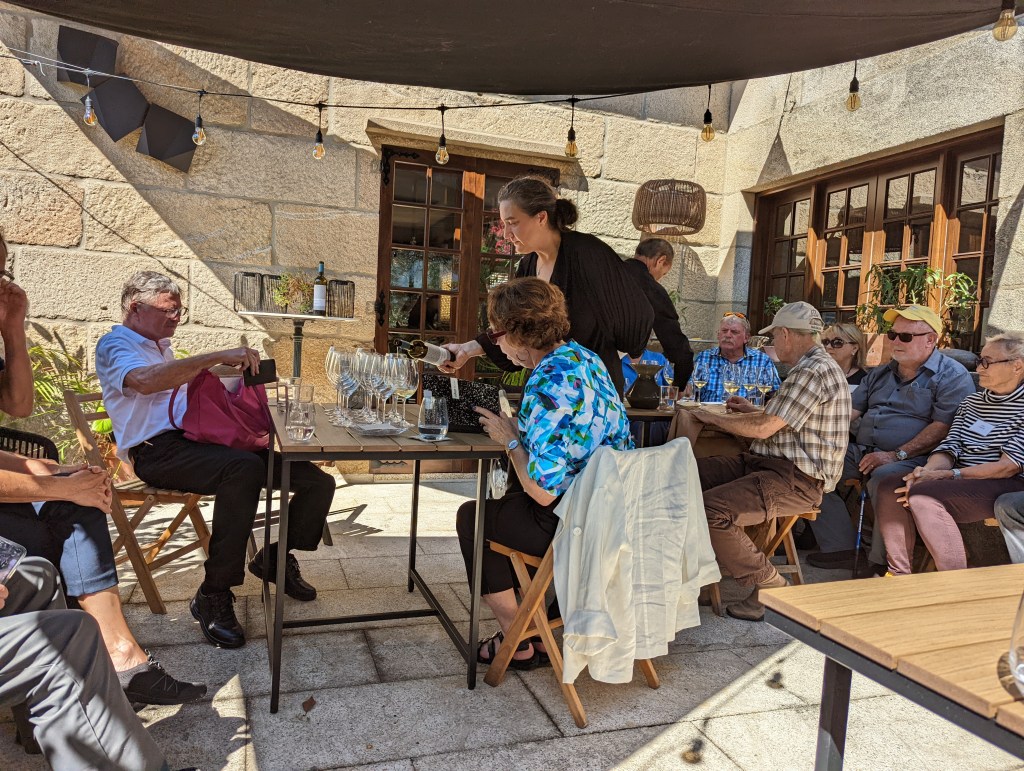
With that very nice start to our day the bus then took us to the town of Cambados where Yayo Daporta, a Michelin 1 Star restaurant is located. This is a tiny family run restaurant on the second floor of a building. We started out on the patio where they did a wine tasting for us of the five white wines shown in the picture and then took us inside where we had a delicious meal with these wines accompanying them.
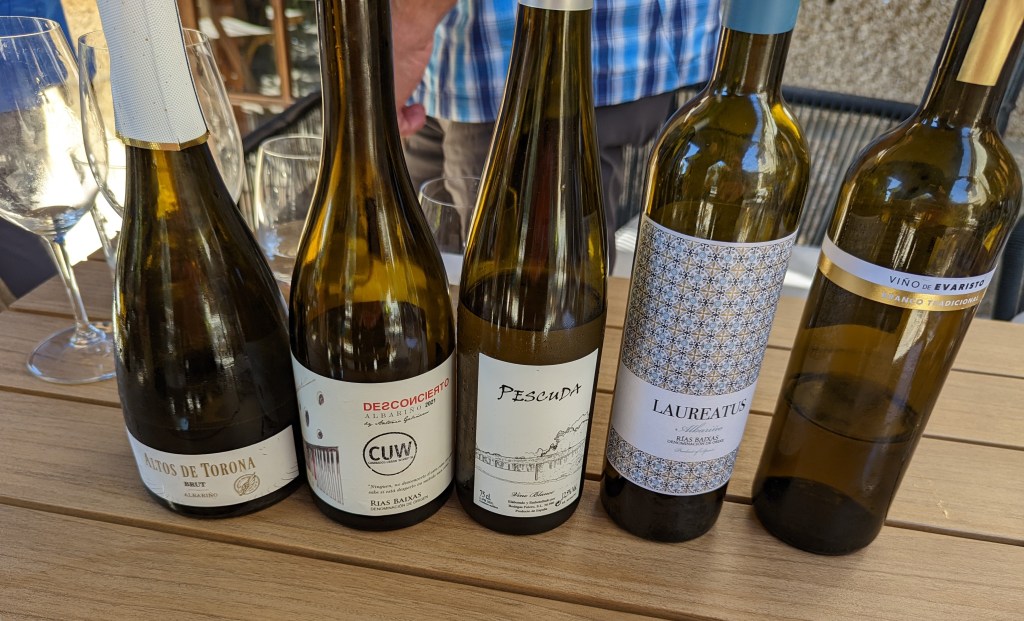
I very much liked the three different Albariños and am researching if any of them are available in the States. The third and fifth bottles in the picture were two other local wines that were also very enjoyable.
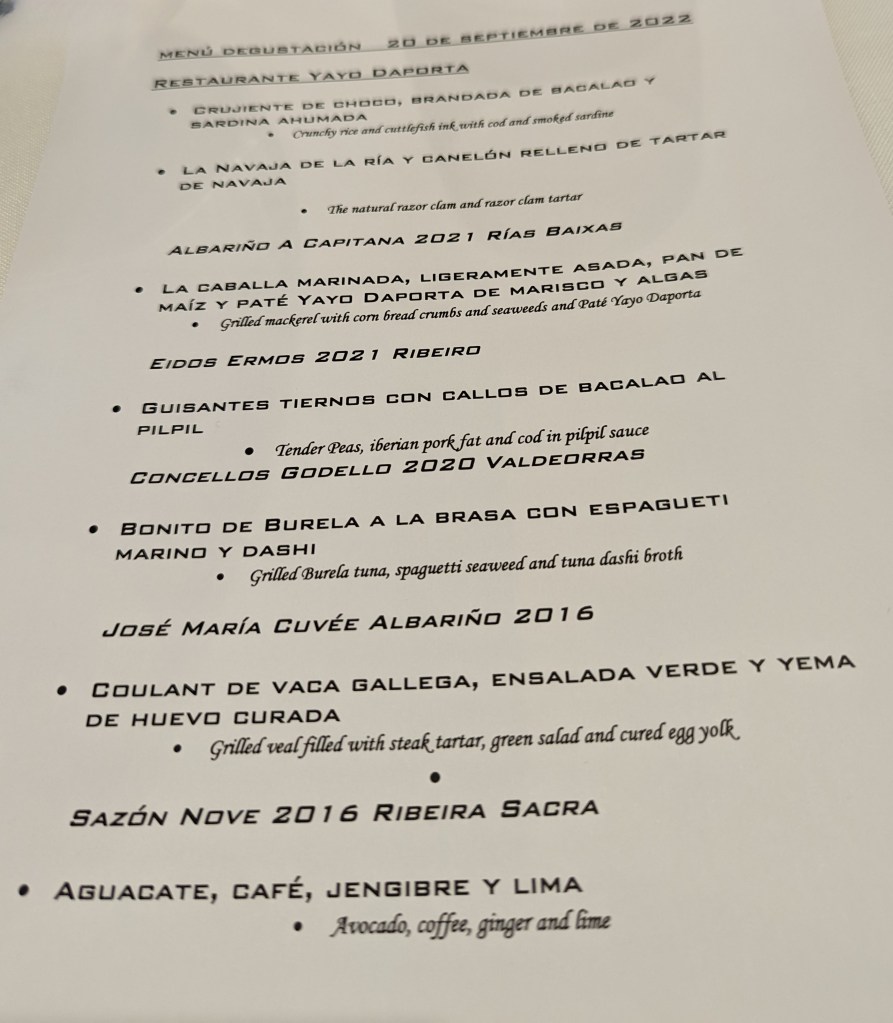
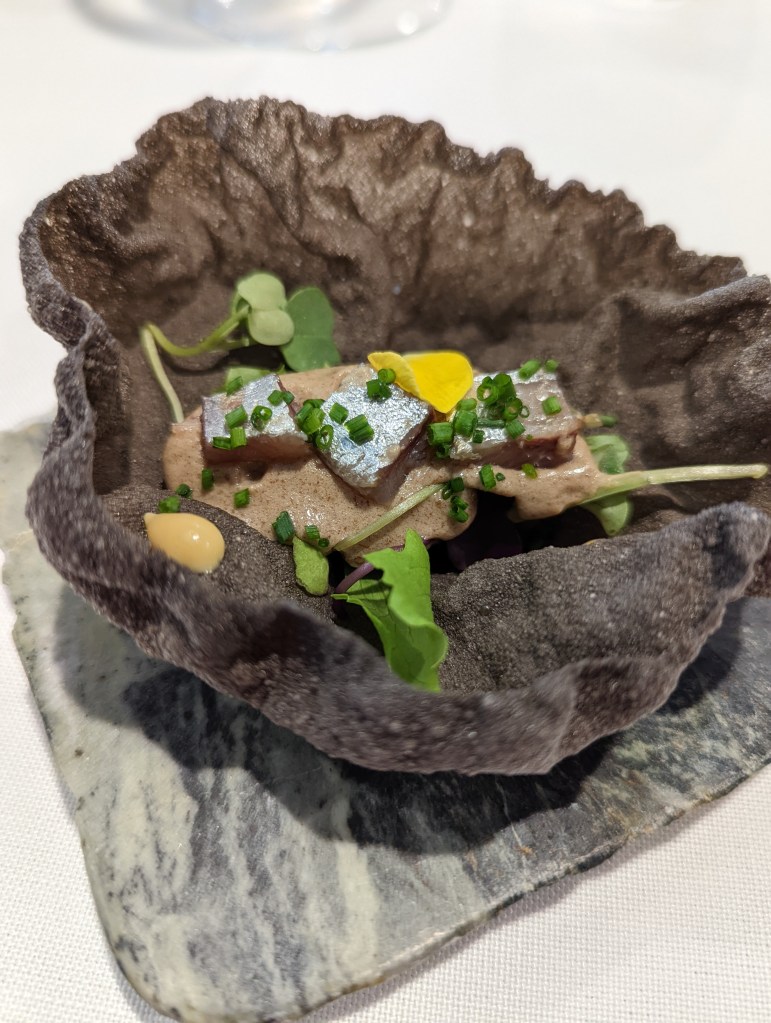
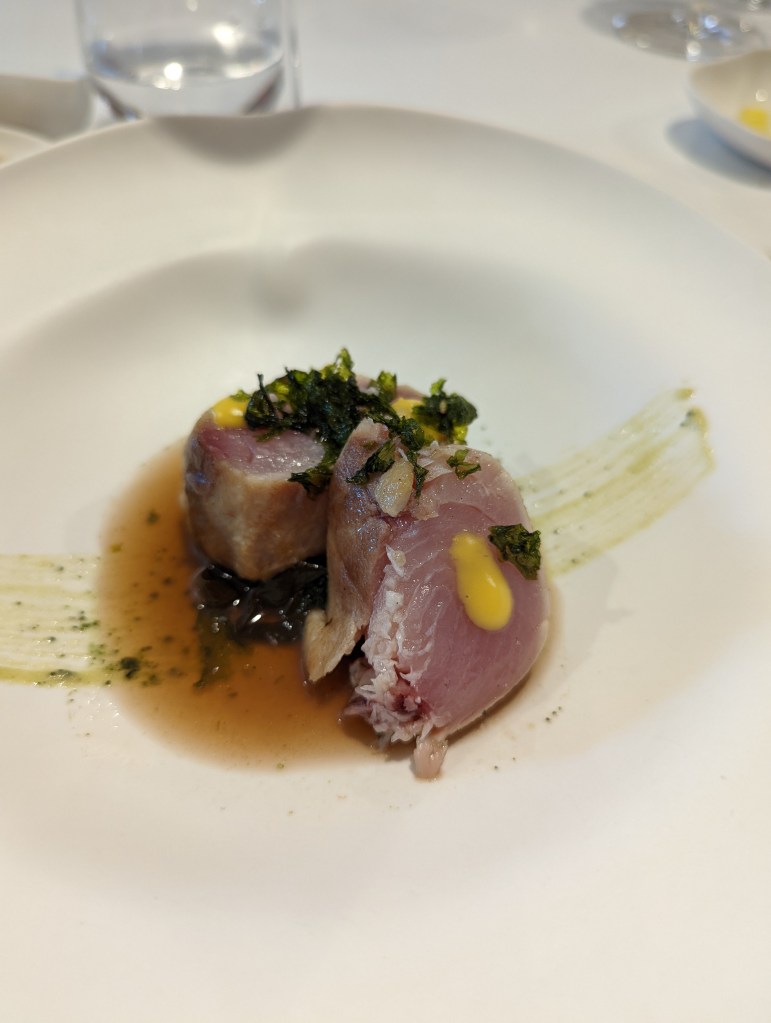
The Menu is shown here along with pictures of the first and sixth course they served. As a tasting menu the portions were thankfully small but beautifully presented and delicious. Other than the small sign saying this is a Michelin 1 Star restaurant, you would not be likely to walk into this small restaurant. But it was one of the very best meals we had on this trip and that is a very high bar to clear.
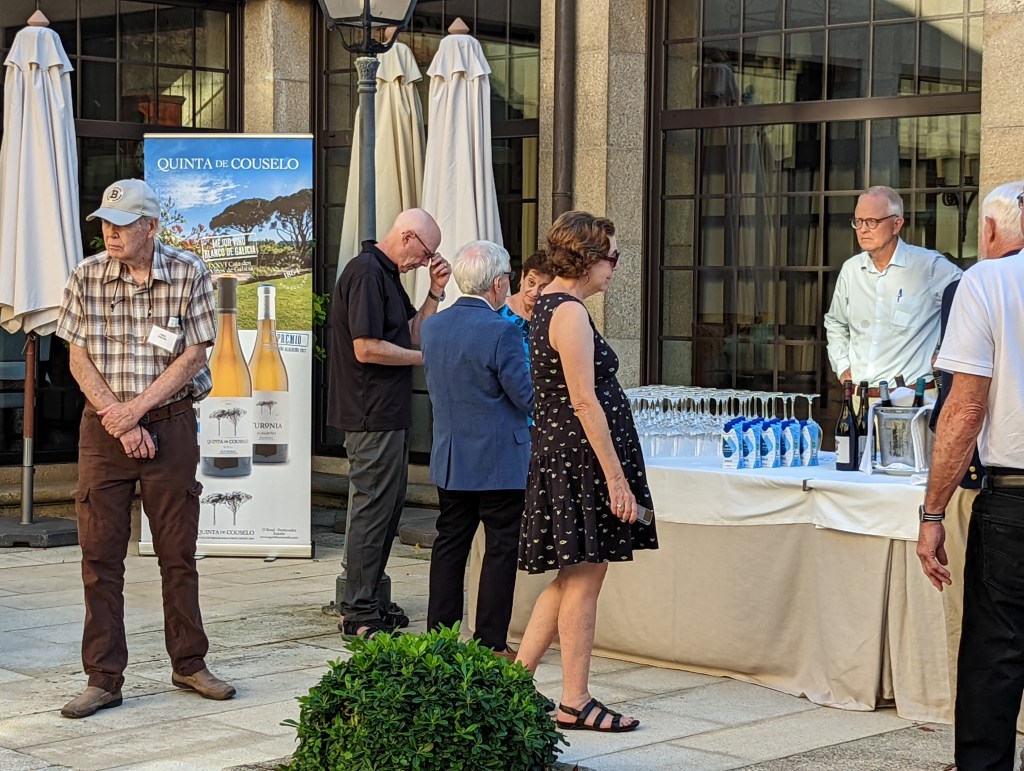
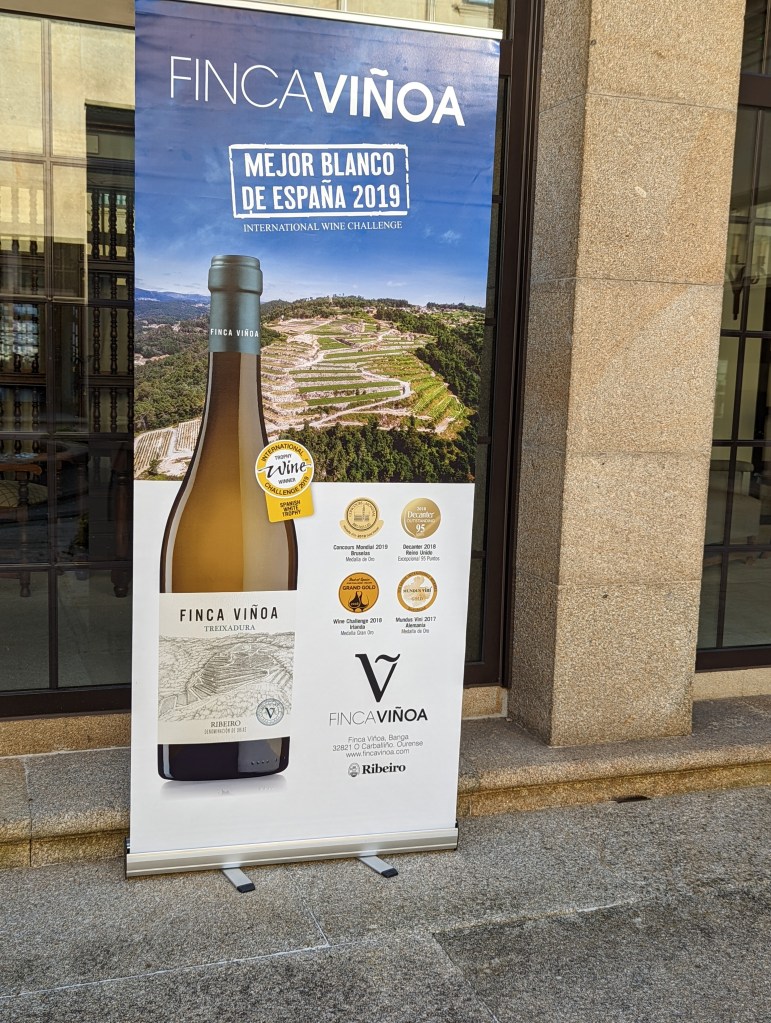
Howard had also arranged a wine tasting for us when we got back to the hotel where we had three very nice Albariños from Quinta de Couselo in the Rias Baixas DO and the Finca Viñoa from the Riberio DO which is 90% from the Treixadura grape with some Albariño, Godella, and Loureiro grapes.

Note: Spanish pronunciations – God has given me many gifts, but languages is not one of them. I believe I am fluent in about 0.8 languages. I apologize for any major errors in this set of blogs on anything related to the Spanish language. In this note I will try to address two pronunciations, one simple, the other a little more difficult. The ñ character adds a “y” sound the word so Albariño is pronounced Al bar EEN yo. The letter “x” is pronounced “sh”. Rias Baixas is pronounced Ree as BY shes and the Treixadura grape is pronounced Tresh a DURA. That is a lot easier than trying to figure out how to ask for that wine if we had to use the American pronunciation of all the letters.
There are five Spanish wines that Beth and I were familiar with and really liked before taking this trip.
- Cava – the sparkling wine from the Penedes region outside of Barcelona that is a very strong competitor to French champagne in under $50 price range.
- Rioja – the most famous Spanish red wine and we learned we should say La Rioja
- Ribero del Duero – my favorite Spanish red wine region
- Rueda – IMHO the best white wine from Spain, made from the Verdejo grape
- Albariño – one of my two favorite seafood wines, along with Sancerre from France. We got hooked on Albariño about 3 years ago from a special sale that Calvert Woodley, one of the two best wine stores in DC, did on Martin Codax. It was a delicious dry white wine for about $15 and I could almost smell the salt air from the vineyards right on the Atlantic coast just north of Portugal. Martin Codax is a Co-Op that buys the Albariño grapes from many small farmers and makes a very nice wine from the mix of grapes from many small vineyards in the Rias Baixas DO. I will talk more about DO’s in an upcoming post but I strongly recommend only getting Albariños that show on the label that they are from the Rias Baixas DO. A small step up is La Caña which is owned and operated by Jorge Ordoñez. It consistently gets 90-92 points from the reviewers and is about $18 and is now our house Albariño. Several of the Albariños that we had were is another step up in quality and I am looking at which ones are available in the States.
In Spain a glass of house Albariño is about 2-3€ and generally comes with a complementary bowl of potato ships or nuts. In a Tapas restaurant a bottle of Albariño is generally in the 8-12€ range, more in the high-end restaurants.
The three wines from Quinta de Couselo and the Finca Viña were very good and all are available in the US.
- The Barbuntin is a lighter wine made from younger vines, generally less than 30 years old. It sells in the $12-15 range. I like the richer Albariños and would take either the Martin Codax or the La Caña over this one.
- Quinta de Couselo Rosal is in the $20 price range, and I found it delightful
- Quinta de Couselo Turonia is the best of the Couselo Albariños and fully worth the $24 price that on line retailers in the US have it for.
- Finca Viñoa is carried by both Calvert Woodley and Macarthur and has made me a fan of the Treixadura grape and I now have some in my cellar. It is very dry with stone fruit flavors with some minerality that gives it some nice depth and structure. One other white and one new red were the other discovers that we really enjoyed and are working to get them in our cellar and I will cover both in upcoming posts.
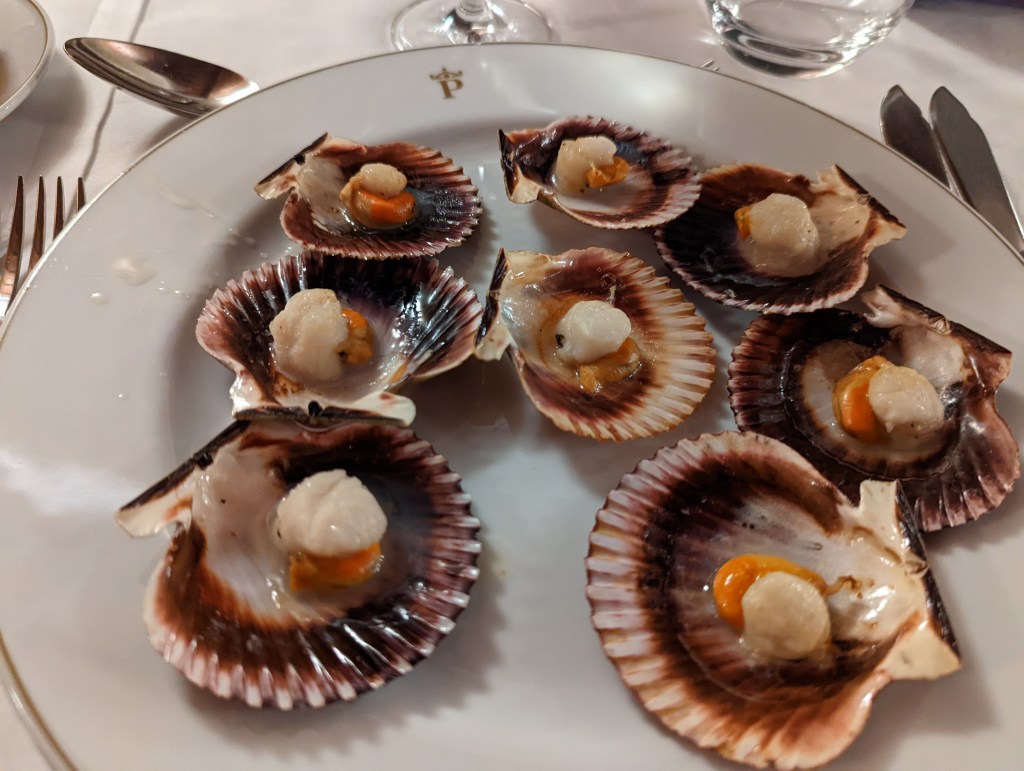
After the wine tasting Howard had a welcome dinner for us in the hotel with some lovely scallops and a delicious dessert. We certainly did not need any more food or wine, but that did not stop us.
This was a remarkable day as shown below in a summary.
- 12 different wines tasted, all much more than a taste with two very knowledgeable people leading each of the two guided tastings, one with five wines and one with four wines. Seven of the 12 wines were different Albariños, giving us a great indication how good this wine is.
- A lovely breakfast at the hotel including a sparkling wine for Mimosas
- A tasing lunch at a Michelin 1 star restaurant
- A very nice welcome dinner hosted by Howard
- A second night at a beautiful and very comfortable Parador
This turned out to be good basic training for what Howard had in store for us as the trip progressed.
 Bill's Thoughts on Wine, Travel, and Food