
We left the beautiful Parador in Baiona Wednesday morning and had our first visit to a vineyard on our way to Leon, where we stayed the next two nights. That vineyard was Bodegas Do Campo which is in the Ribiero DO. I will cover what DO means and the organizational levels for Spanish wine at the end of this post. Do Campo is a fairly small winery that has been run by the same family for four generations. They own 6 hectares of vineyards and buy grapes from suppliers they have know for years who have an additional 12 hectares. They use the Mencia grape for their red wine and Treixadura, Godello, Torrontes, and Palomino for their white wines. They make more white wine than red wine and we tasted four of their white wines at a luncheon we had with them after the vineyard visit. Unfortunately their wine was not able to attract a following in the US with so many other Spanish vineyards offering very good wine from the same grapes so, to the best of my knowledge, none of their wines are currently available in the US.

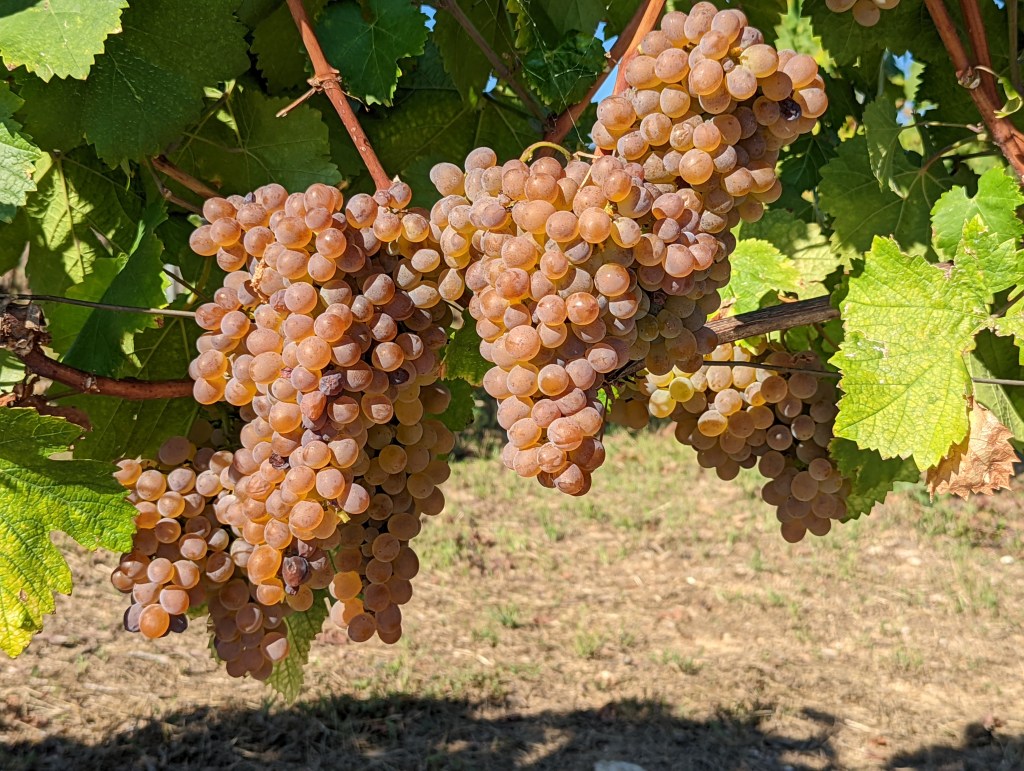
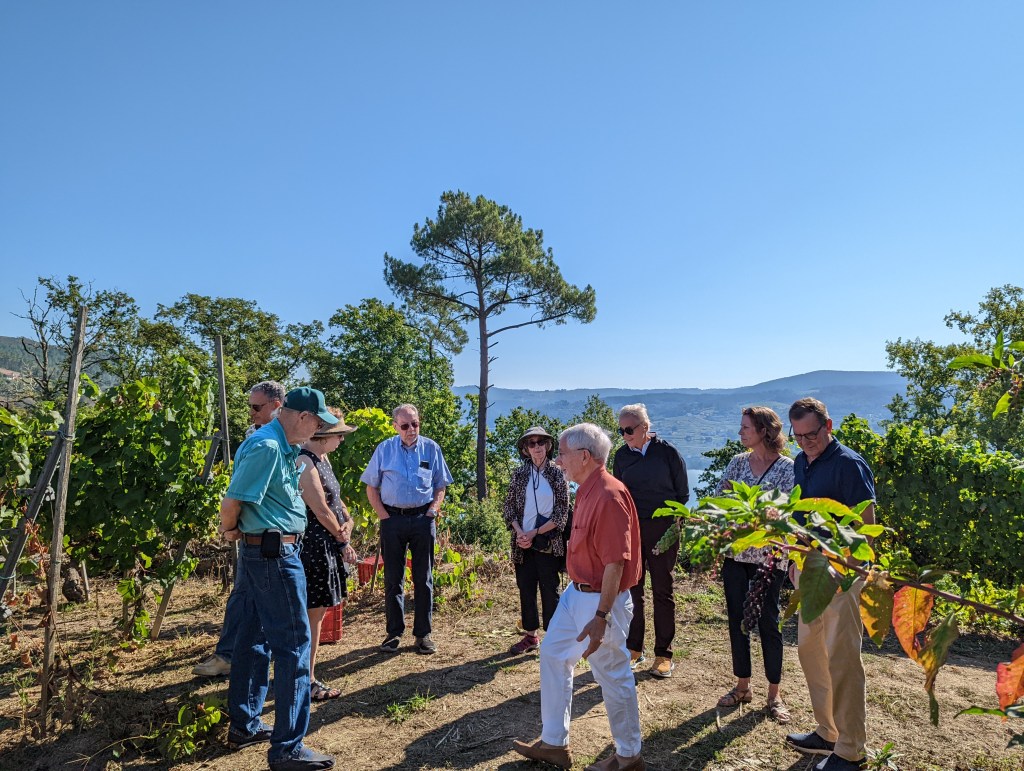
This visit to the vineyard was our introduction to Howard having us get much more involved and participating in in the wine making process. We walked through the Treixadura vineyard right outside the winery where the grapes were fully ripe and being harvested. As you can see in the picture above, many of the grapes had gotten to an amber color by that time. While we sampled some of the grapes off the vine, the owner of Do Campo talked about the different vineyards they owned and the ones they bought grapes from. Most of us were not familiar with this grape and we were all commenting on how sweet the grapes were. The owner explained to us that the Treixadura wine is a dry white wine and we would see that over lunch. During fermentation the yeast eats the sugar and produces carbon dioxide, which is vented off into the air, and alcohol so the end product is a nice dry white wine.
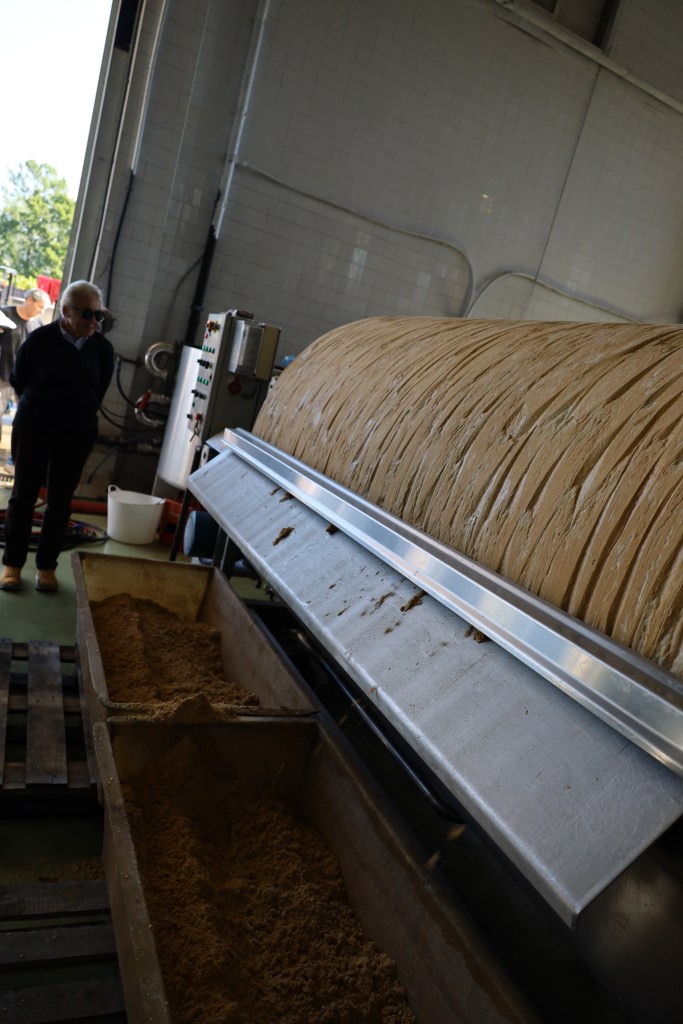
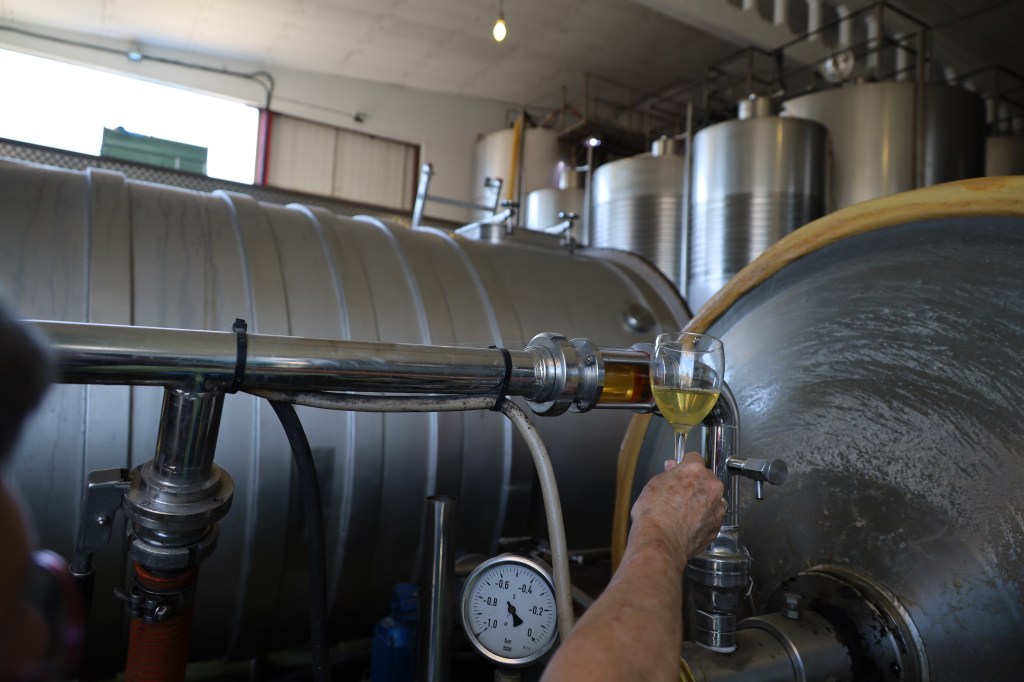
He then took us in where the grapes were being pressed and gave us glasses of the “flower”, the freshly pressed grape juice, which was delightfully sweet with natural sugars, not at all like artificially sweetened drinks. Several people wished they could have a glass with breakfast. We were standing next to the machine in the picture with a giant cylinder turning and some residue coming from it into the bin below. He explained this was filtering off anything left in the juice after pressing and held a glass of the juice up next to a small window of the fluid coming from the press into this filtering system. You can see it was dark gold going in with the sediment that was suspended in the juice and light clear yellow after the filtration process.
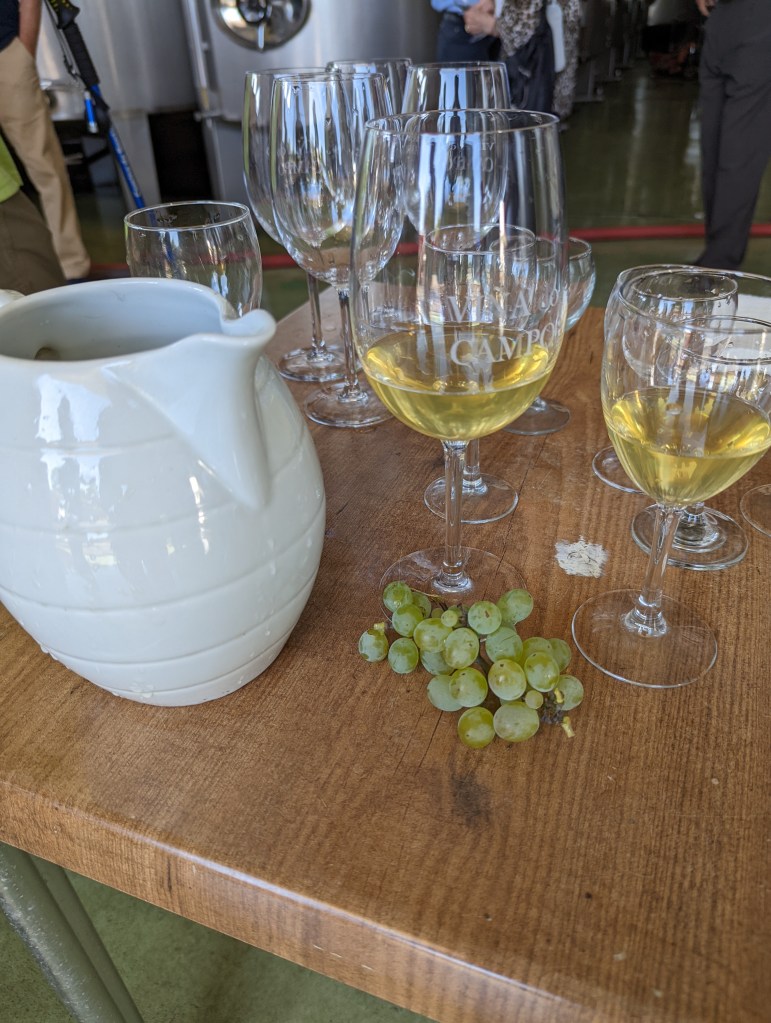
The juice went from there into big stainless steel tanks for fermenting. He went to one of the tanks that had been filled three days ago and was just beginning to become wine and poured out a pitcher from that tank for us. We could then compare the freshly pressed juice just going in to be fermented with the taste after it had started the fermentation process. This picture shows that pitcher and with two glasses and some grapes. The larger Do Campo glass has the “wine” and the smaller glass to the right has the “flower”. Picture artistically composed by Beth. There is very little difference in appearance between the two glasses, but the “wine” was a little less sweet and starting to have a little more taste after just three days of fermentation. The big tanks have ribbons around them that are used to cool the tanks during the 14 days of the fermentation process. If the wine is going to be blended with other grapes such as Torrontes, that happens at this stage and the final wine is then bottled. They do barrel age one of their white wines, but we did not taste that one. All the ones we tasted were just done in stainless tanks.
Beth and I have been on many vineyard tours in the US and all the major wine producing countries in Europe. Several times we were there when the grapes were ripe and ready for harvest and had a chance to taste the grapes off the vines and then taste wines made from those same vines in earlier years. We found that tasting first the grapes and then the wine really helped us understand what the winemaker’s goal was with those grapes. A few times our guide helped us find very old vines and very young vines and taste the difference in grapes from the old vines. We had a chance to do all of that here but we have never had the chance to be in the middle of the wine production process and able to see, smell, and taste the voyage of the grape from the vine to the bottle. At seven of the other wineries that we visited we were given similar opportunities to get hands on during their production process and see some of the things that their winemaker did to put his stamp on the wine. Everyone had some unique elements.
We have never learned so much about wine in any of the other wine trips we have taken. If you really enjoy wine, I recommend that you seriously consider taking this trip. Howard is planning on doing the trip again in 2023 but is not sure how many years after that he will do it. At our age we all reach the point where we recognize it is time to hang up our spikes and leave the game to younger participants. He is semi-retired from his import business so the opportunity for this unique exposure to great Spanish wine and the wine making process likely has a limited remaining life. I encourage you to each out to Howard at hfriedo@verizon.net and start a dialogue on joining one of his trips while he is still doing them.
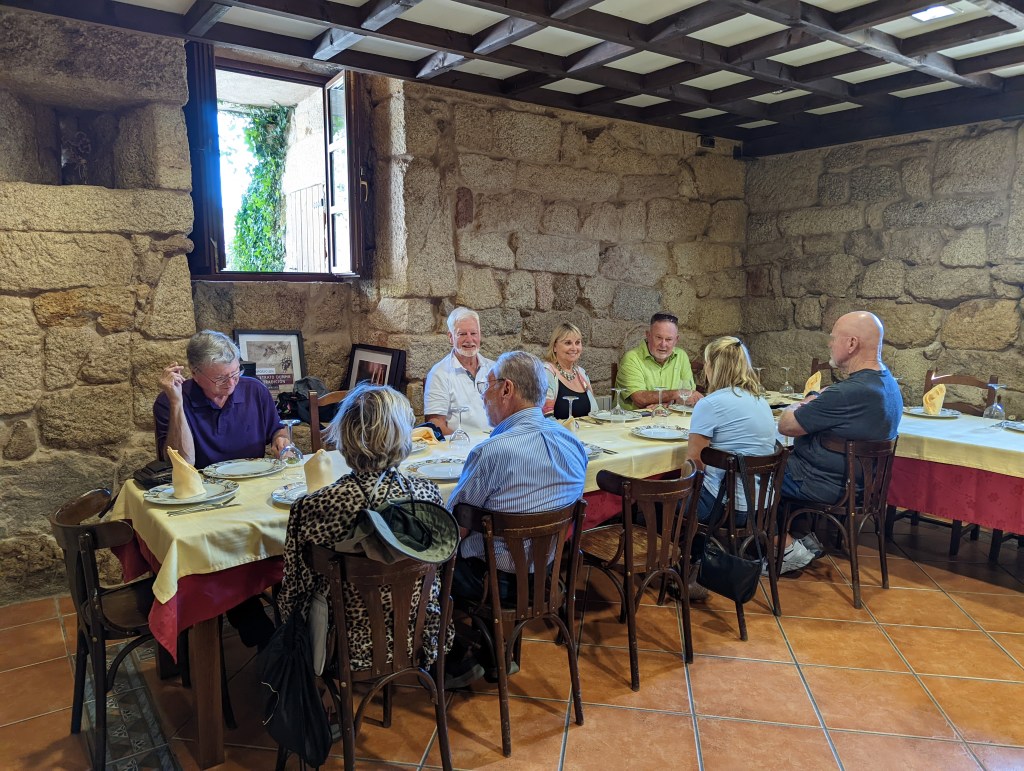
We had a short walk downhill from the vineyard to a small inn where we had a private 2-hour luncheon hosted by Bodegas Do Campo. We started with a nice charcuterie board of ham, salami, and cheese with some great bread. We then had Eye Round of Beef with French Fries and finished with three delicious deserts. Four of their white wines accompanied the luncheon and if a bottle was emptied another immediately took its place. The white wines had good body and depth so they were fine with the roast beef.

My favorite was their 2021 Vino do Campo Godello, which won some awards last year. This was Beth and my first exposure to that white grape. We really loved this dry wine with nice body and a little minerality in the flavor. While I can’t get the Do Campo in the US, I have found several other Godellos that are available in the States and are in the $12-20 price range in the store. I am giving each one a try so I can pick the one or two that will be standards in our cellar. This grape was another challenge in Spanish pronunciation. The double l is silent, so it pronounced Go DAY ho. Our favorite Spanish white wine is from the Rueda DO and is made from the Verdejo grape, which is pronounced Ver DAY ho. When said with a correct Spanish accent, and often at a rapid pace, the two sound very similar and I was not always sure which grape a speaker was talking about 😊.


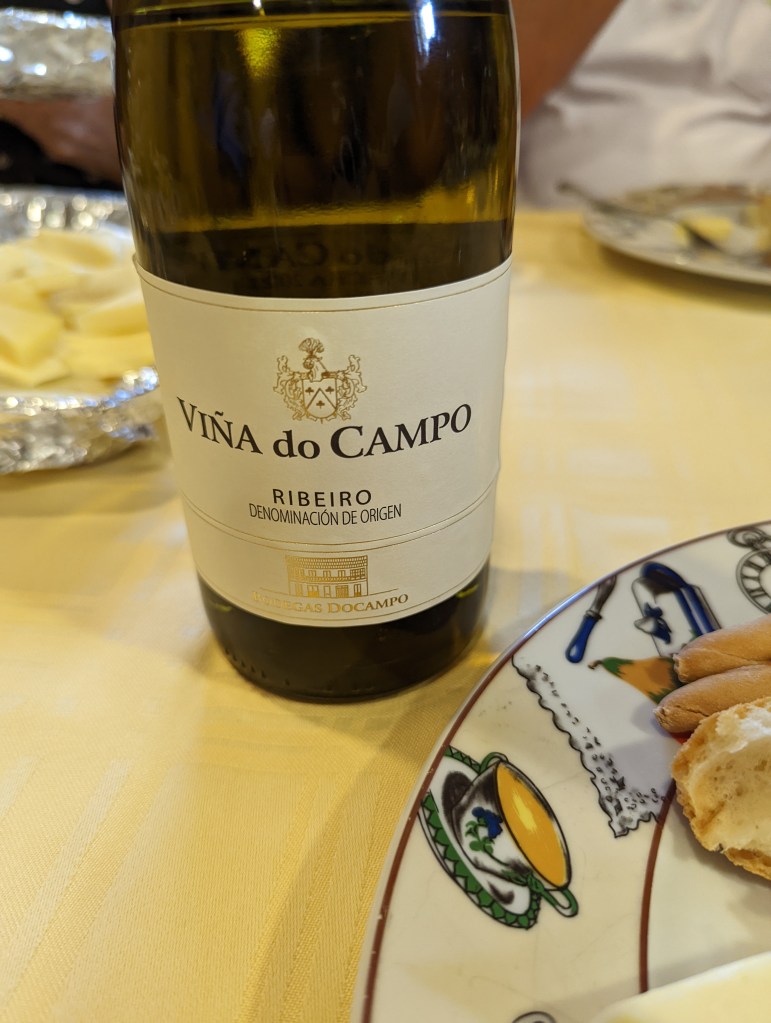
We also had three Treixadura wines that were very good and that was the grape we had followed through the production process. They were the Pazo Carballo (I believe their best white wine), the Vino Do Campo Cosecho, and the Vino do Campo Ribeiro, their vineyard of the field or the wine people would make in the cellar from the vines in their backyard.
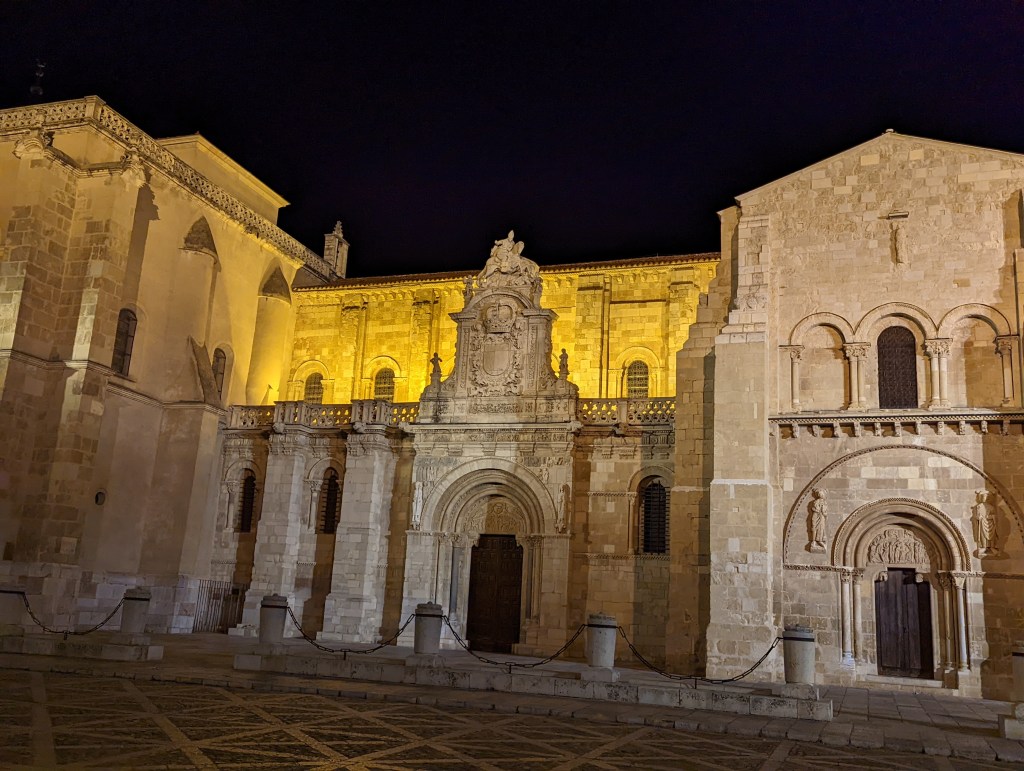
We then had a 3-hour drive to the city of Leon. In Leon we stayed at the Conde Luna hotel which is a 5-minute walk to the lovely Cathedral located in the heart of downtown. Beth and I and one of the friends we made on this trip walked up to the Church of San Isidero where they have some lovely mosaics and beautiful illustrated books. The three of us enjoyed a light dinner at a café in the square outside this church.
Lesson #2 – The Organizational Hierarchy of Spanish Wine
If you really know the vineyards of Spain or are looking for a specific wine from a recommended vineyard, then the information on the label is probably not very important to you. If you are like me and learning about Spanish wines, then there is one rule that can really help you improve the chance that a wine you select off the shelf or from a restaurant wine list will be one that you will enjoy. That rule is to buy a wine that has a DO on the label. This “Denominación de Origen” (designation of origin) lets you know that the wine you are considering met a set of standards defined by the leading vineyards in a specific geographic area and therefore is likely of good quality. It may not be to your taste, and any bottle can have a bad cork or have been exposed to too high or too low temperatures in transit into this country – so there are no guarantees. But wines that do not have a DO have not committed to those standards of quality and therefore are a much higher risk.
Spain is divided into 17 Autonomous Communities (AC), which are wine making regions, and they are shown in the map below, which can also be downloaded. In each of those AC’s, wine makers in some of the smaller geographic have banded together and defined a set of standards that a wine must meet in order to put DO on the label, e.g., DO Rias Baixas in the Galicia AC. Each DO has a group of members that monitors compliance with those rules and determines who can put that designation on their label. There are approximately 70 DO’s in Spain. Below are the six AC’s we visited and within them the nine DO’s where we tasted wines. All of the vineyards that we visited were members of the DO for their area.
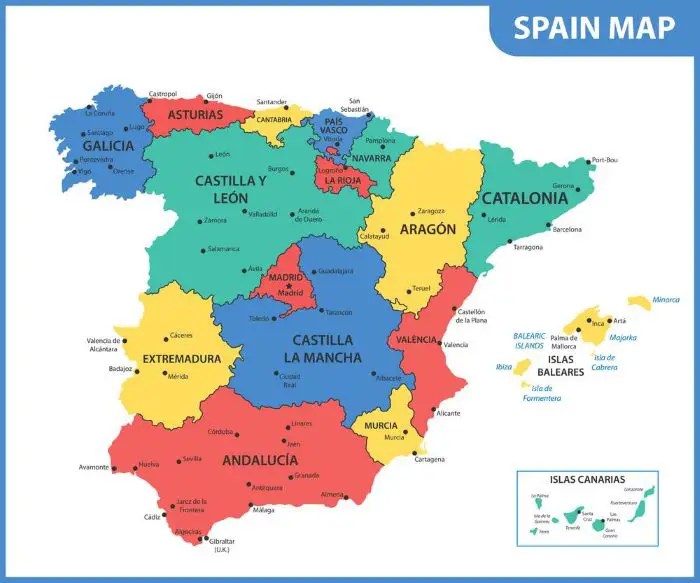
- Galicia – Risa Biaxas, Riberio
- Castilla Y Leon – Rueda, Beirzo, Ribera del Duero
- Basque Country – Txakolina, Getariako
- La Rioja – Rioja
- Cantabria – Cider-sidra
- Madrid – did not visit any vineyards in the Madrid DO
Having a DO defining a fairly small geography lets the standards be set for their terroir. Every DO that we were exposed to has a standard for the yield that can be produced, most commonly 20,000 liters of wine for each hectare of vines. That standard requires that vines be pruned to limit the volume of grapes that they produce.
The taste of the grape is primarily dependent on what nutrients and related trace elements that their root system delivers to the grapes. The root system matures and delivers more elements to the grapes as the vine ages. The root system of each vine delivers X volume of different elements to the grapes on that vine. That is divided up by the number of grapes on that vine. The more grapes, the lower percentage of X that they get and the less flavor the wines made from those grapes will have. If the vines are pruned to produce fewer grapes, they will have a higher percentage of X and bring more flavor to the wine. 20,000 liters per hectare was frequently referenced as the highest yield allowed by the DO covering the winery we were visiting. But every one of those wineries we visited was committed to a much more aggressive pruning for most if not all of their wines to ensure the taste quality they wanted to deliver. 12,000 liters was common and for some wines it was down as low as 8,000 liters.
Asking a winemaker in any country about his yields is a very good way to start a good discussion with them and understand where they are trying to position their wines in the quality/price continuum. It also shows that you can have an intelligent conversation with them about their wine and sometimes that will positively impact the quality and quantity of wines that you get to taste.
Within the Galicia AO the Rias Baixas DO is right on the coast of the Atlantic region while the Riberio DO is more inland, so they have entirely different soil, rainfall, and other conditions. Each DO has standards defined by the growers in that specific geography so they fit the terroir of that area and the grape varietals that are being grown there. I will only buy Spanish Albariño that has DO Rias Baixas on the label.
In short, look for a DO on any bottle of Spanish wine that you are not totally familiar with.
 Bill's Thoughts on Wine, Travel, and Food
Another great post, Bill.
LikeLike