
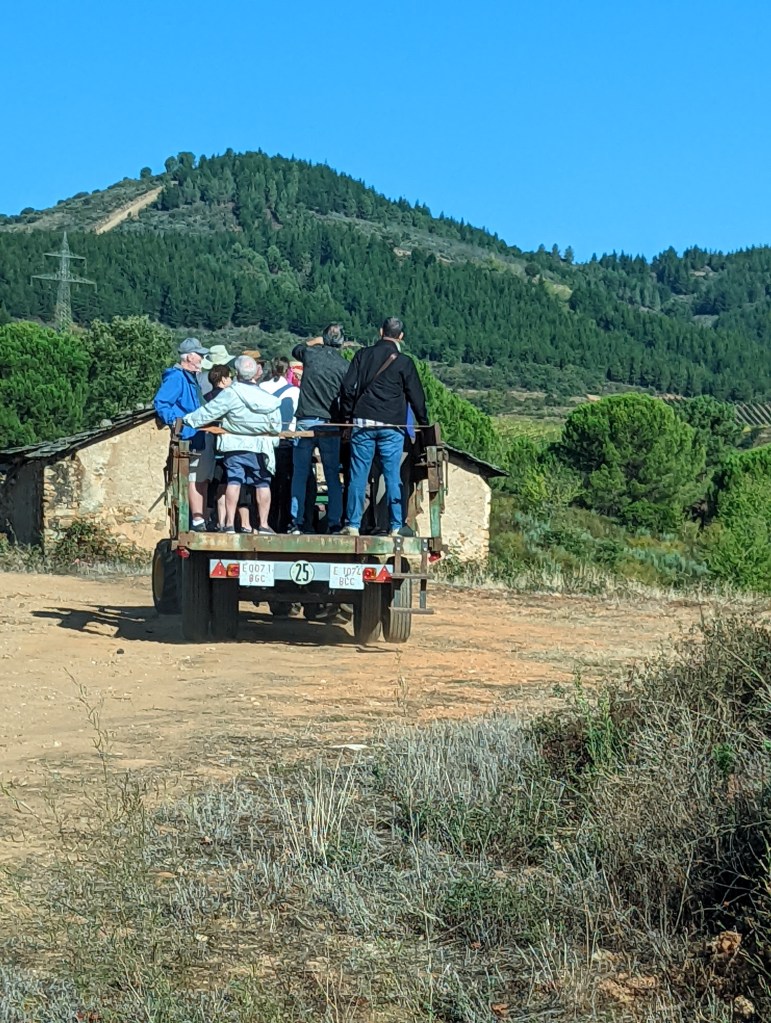
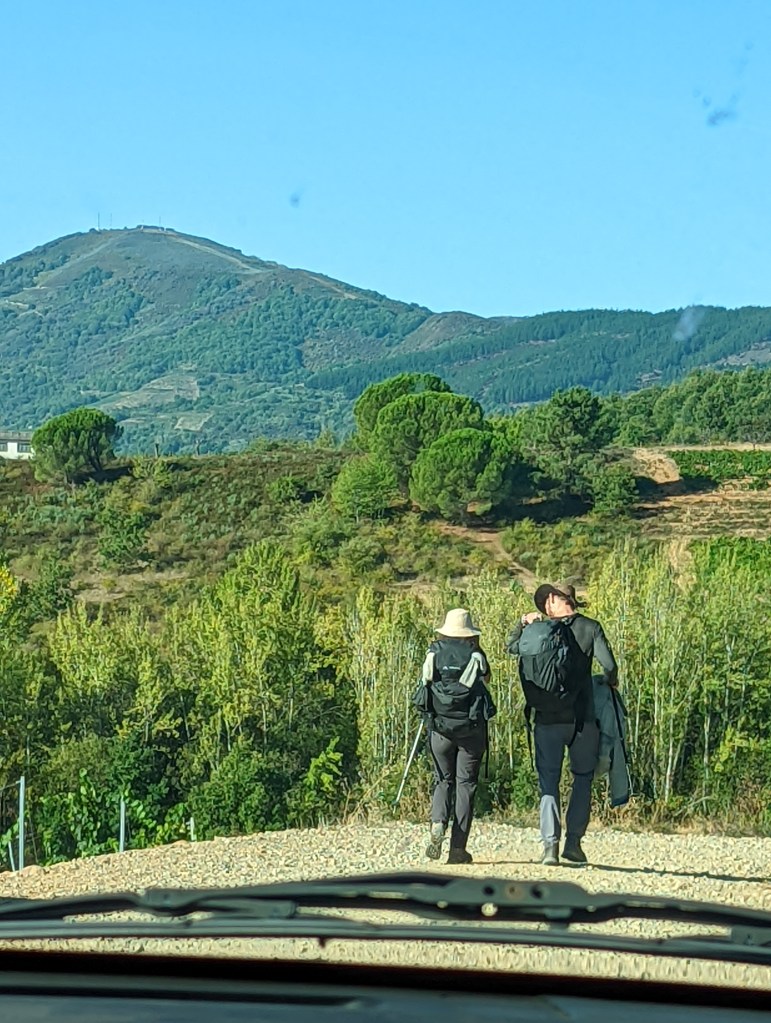
When the bus stopped for us to visit the Casar du Burbia vineyard in Bierzo, we were a little surprised. We were on a small two lane road, that became a one lane road when our bus drove down it, and there were no winery buildings anywhere in sight. When we got off the bus we were led to the truck shown in the picture and told to climb up and hold onto the ropes. A couple of tour participants would have had great difficulty climbing up into the truck so there was a car following the truck that they could ride in. We then drove up into the hills on smaller and smaller roads until we stopped at a vineyard. Along the way we passed several hikers on their pilgrimage to Santiago de Compostela.
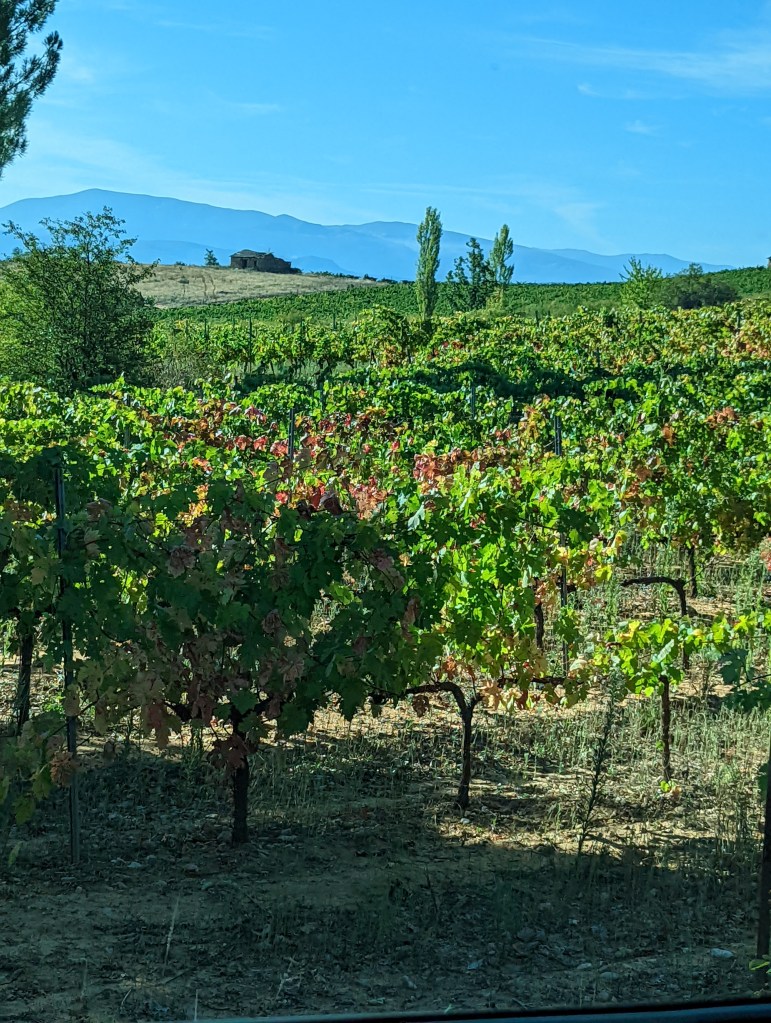
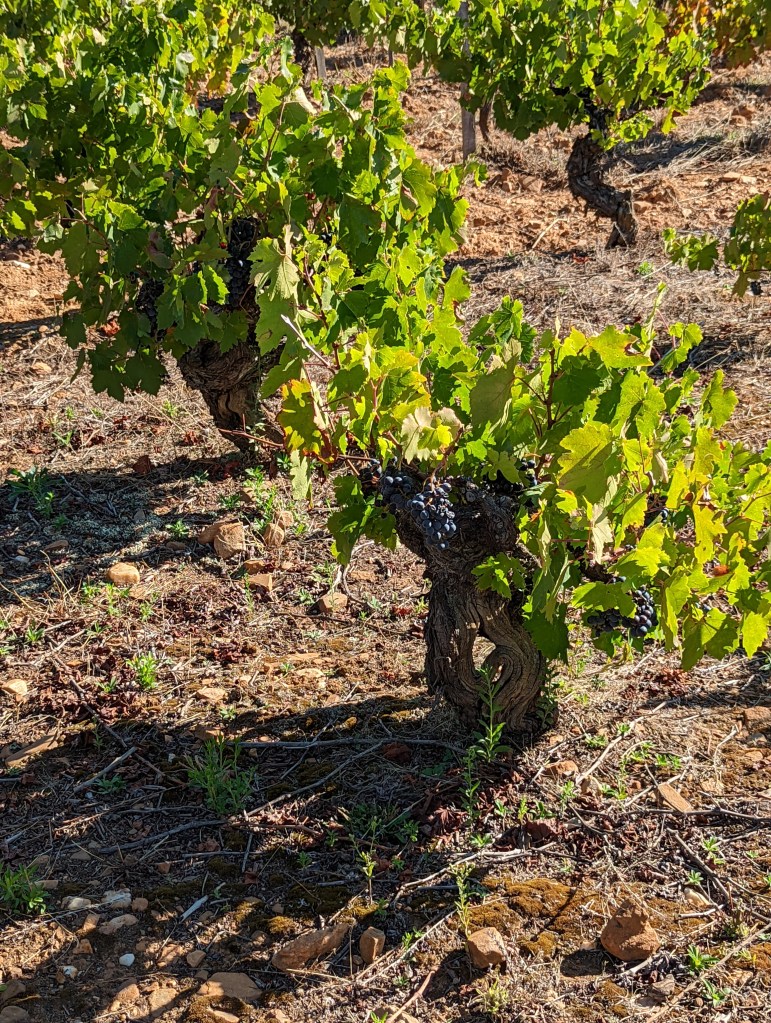
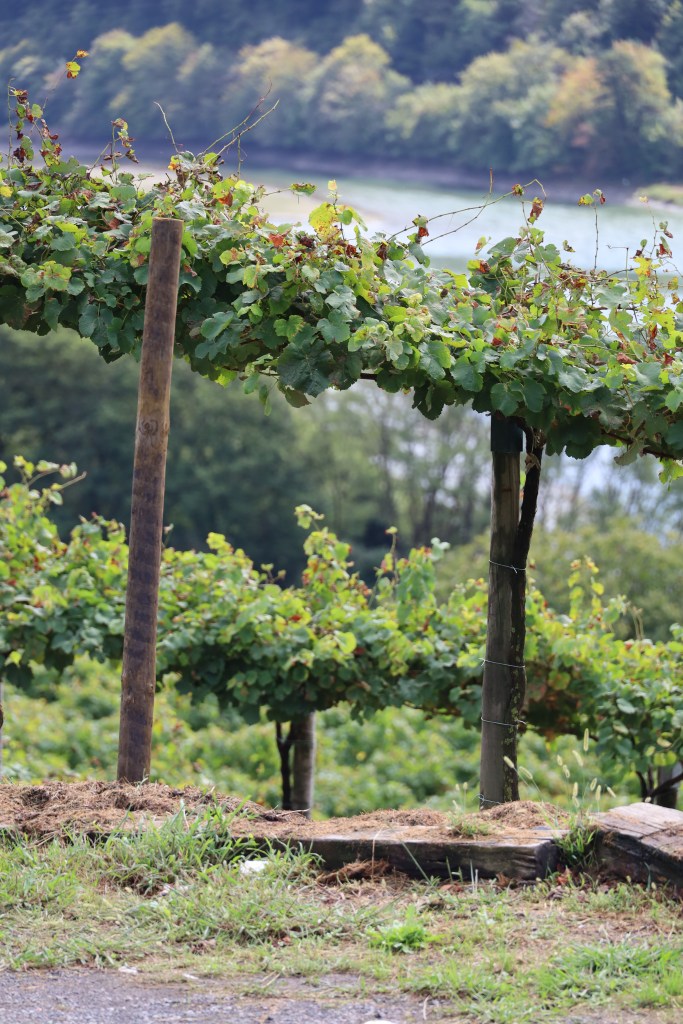
We climbed off the truck and went into the vineyard where our host talked about their different vineyards. The standard for most vineyards around the world is grape vines planted in a row with the branches of the vine trained along wires as shown in the big picture below. The Spaniards call this vineyard style Espaldera. Howard had told us that there are two other approaches to how a vineyard is planted in Spain and here we saw the second one, which was next to one using the wires that we were very familiar with. This style is called En Vaso and each vine is trimmed to stand on its own, like a rosebush, and this is shown in the picture on the right. Because wine making in Spain goes back many centuries, this was the approach that was originally used before wires were available and used to train the vines. Many of the vineyards that still use the En Vaso style, do so because it has been a long tradition at the vineyard. There is a third style called Pergola which is shown in the picture on the right. I will talk about why this style is used in the post for Sunday the 25th when we visited Bodega Katxina where I took the picture below the other two.
As I mentioned in an earlier post, one of the discussions that we had at most of the vineyards was what yield they want to harvest from their different vineyards. For many of the vineyards used to make their top wines, the vines were pruned to yield 12,000 liters/hectare, well below the maximum of 20,000 liters/hectare allowed by most of the D.O.s. For this first En Vaso vineyard that we visited they were very proud that they managed it to produce only 8,000 liters/hectare. The more the vines are pruned to produce fewer grapes, the more flavor each of those grapes will have and that generally means wines with more flavor. But if you compare the middle and upper pictures you will see that the Espaldera vines on the wires are able to be planted closer together while the En Vaso vines have to stand on their own and are therefore planted further apart. IMHO pruning each vine to produce fewer grapes yields move flavor in each grape but having fewer vines per hectare would not have as much impact. If the En Vaso vineyards were planted with he vines as close together as the ones are in the Espaldera vineyards, they would produce more than 8,000 liters/hectare. However, it was very apparent that this topic has high emotion associated with it and those that had En Vaso vineyards felt strongly they were producing very superior grapes. I therefore chose not to ask about the number of vines per hectare any place we visited that had En Vaso vineyards.
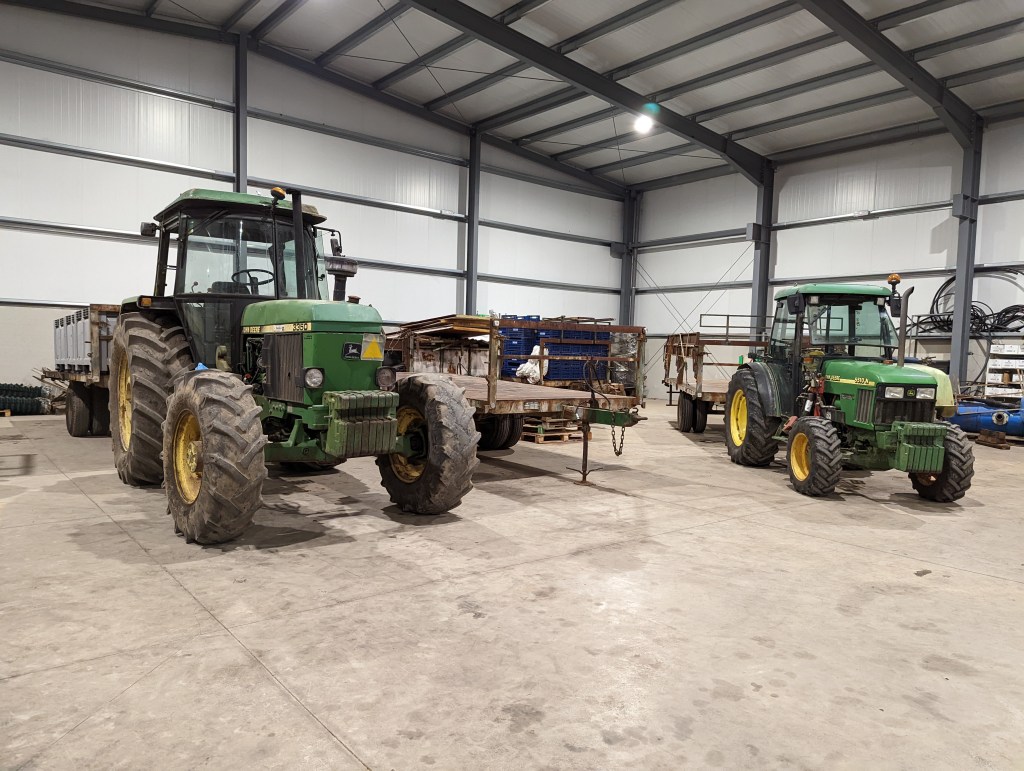
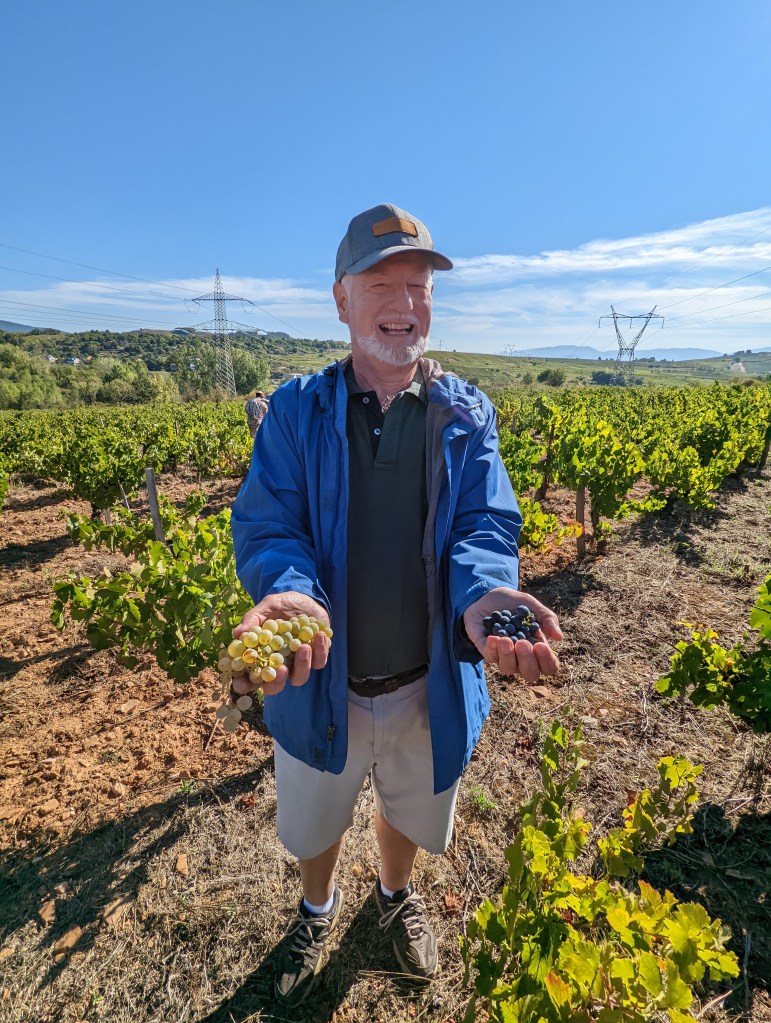
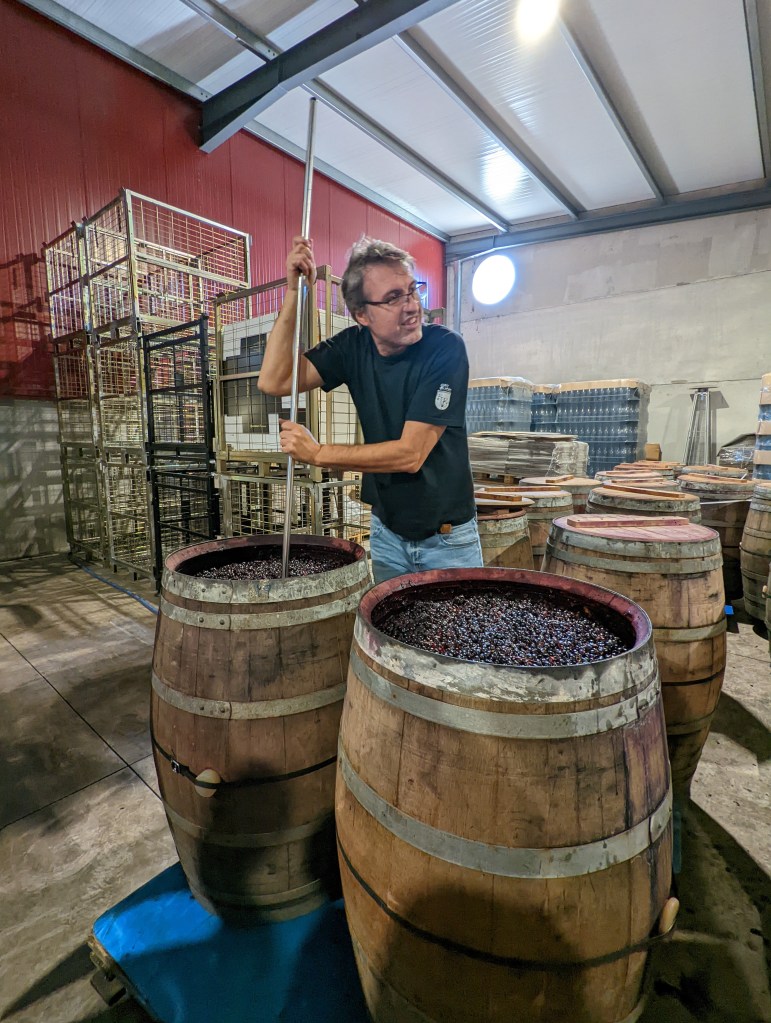
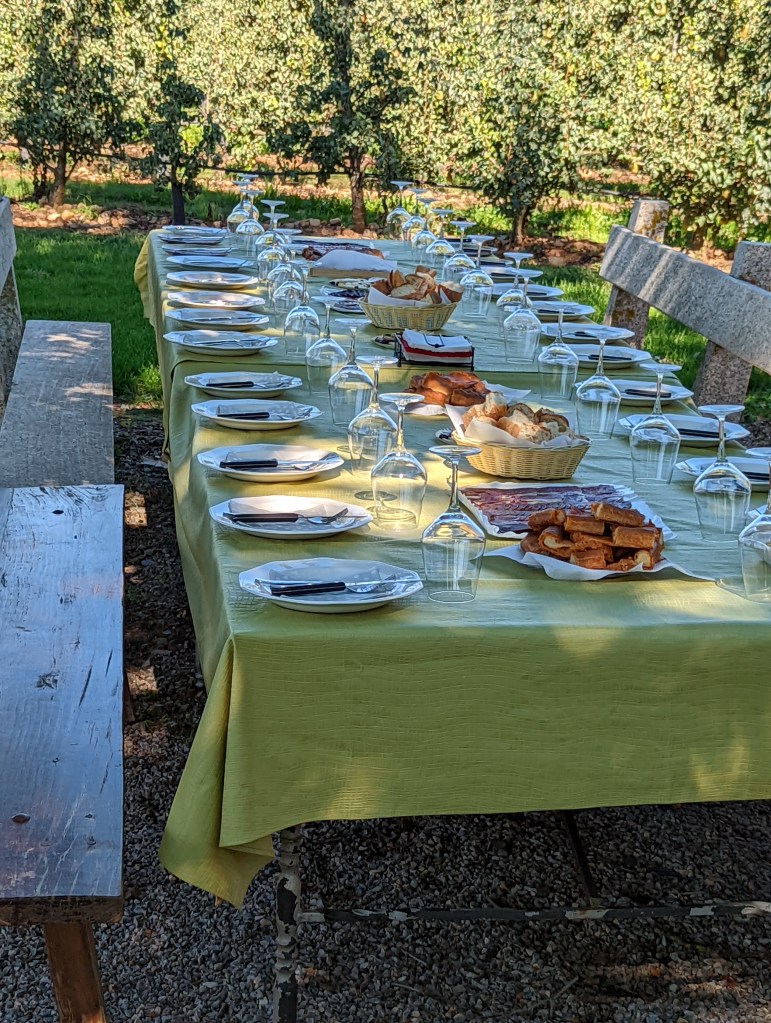
We tasted the Godella and the Mencia grapes from a number of vines and then got back in the truck which took us back to the bus and that drove us to the Burbia winery. It was about 11 AM when we got there and they first took us through the winery which was in production and showed us how they punched down their red wines by hand to keep the skins in contact with the juice to pull all the flavors out. We laughed at seeing the John Deere tractors but they were the standard at every vineyard where we saw their tractors. Our hots had set out a lovely long table in the shade with a wonderful spread of charcuterie, bread, and cheeses as shown in the picture. We know that we were going a restaurant specializing in great steaks for lunch in a couple of hours, but the spread was so good we ate too much along with the delicious wines we tasted.
The first two wines that they took us through were Godella. Their standard 2020 Godella has a retail price in the US of $15 and we loved it. They also do an oaked 2019 Godella that has Barrica on the label. It has a retail price of $22. Some of the people really preferred that wine but I liked the unoaked better and have purchased some for my cellar. We were then introduced to their wines made from the red Mencia grape and Beth and I quickly fell in love with it. Mencia is to Tempranillo, the red wine Spain is famous for, as Cab Franc is to Cabernet Sauvignon, softer and rounder with less tannin but great flavor. Their basic Mancia has a retail price of $15 with cherry, blueberry, and floral aromas with polished tannins and long bright mineral finish. I apologize that I did not capture a picture of that bottle. Then we had the 2019 Hombros Mencia which has a retail price of $20. This was aged longer than the introductory Mencia and is very worth that price but unfortunately seems to be harder to find in the US than their other wines. We finished up with the 2016 Tebiada Mencia which has a retail price of $25. It had several years of aging and was juicy with a medium long finish. The dry, medium body had black cherry, violet, blackberry, blueberry, plum, oak and granite flavors and aromas. It was my favorite wine of the day. The pictures of these four wines may help you find them. I highly recommend all of them.
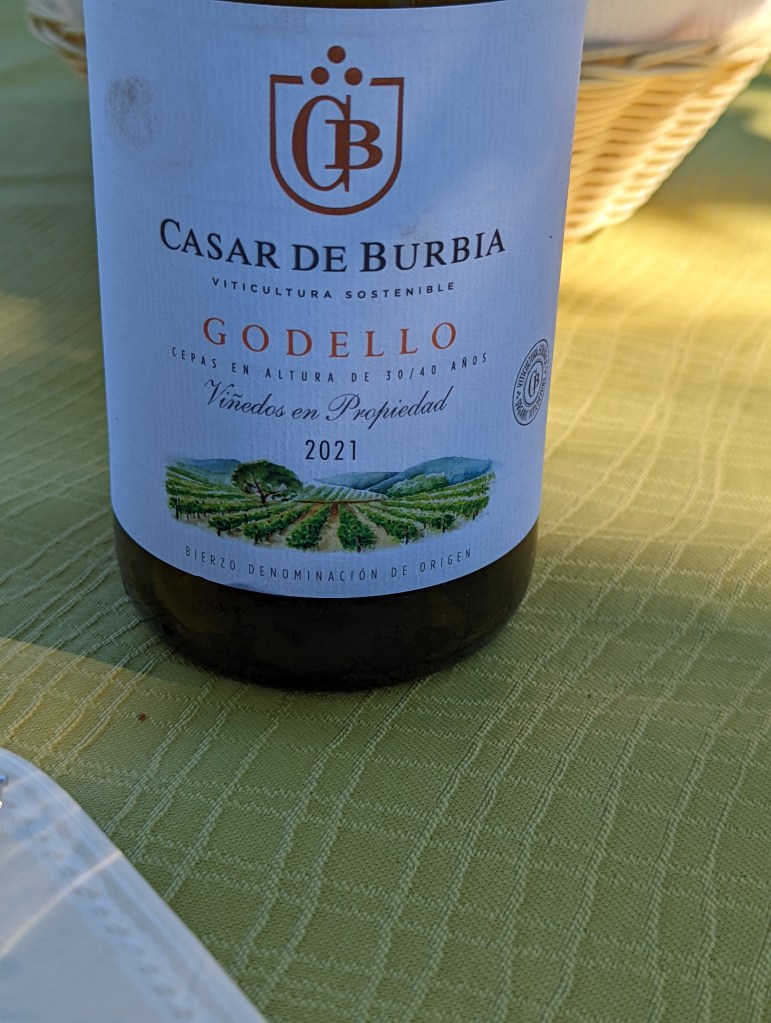
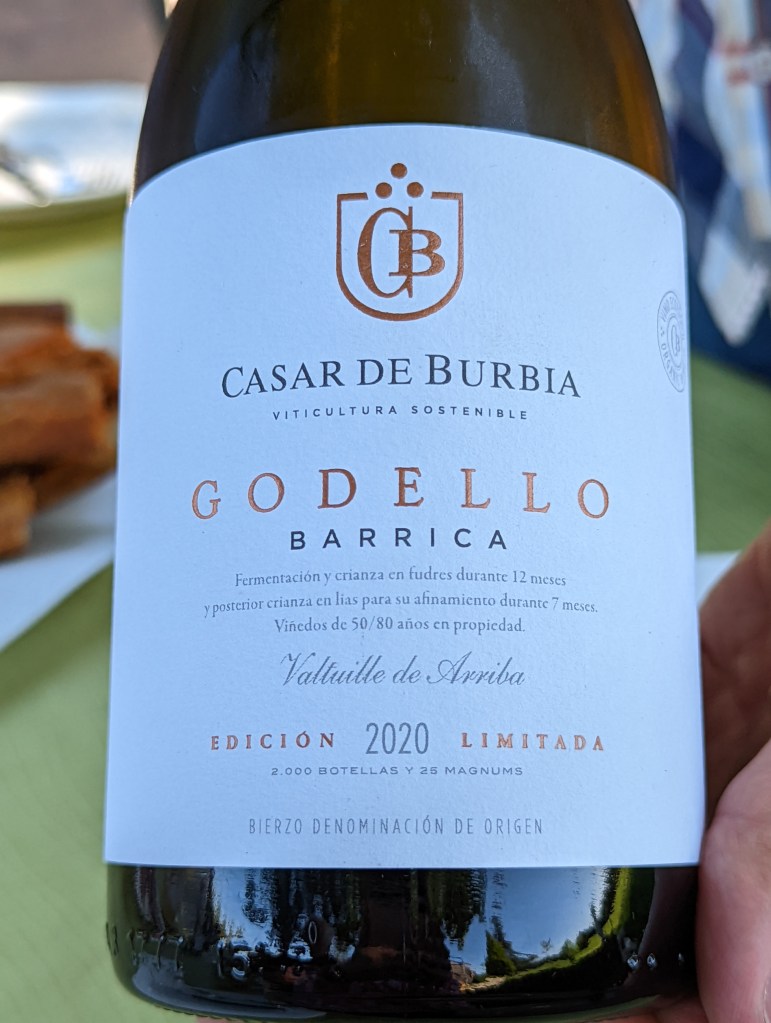
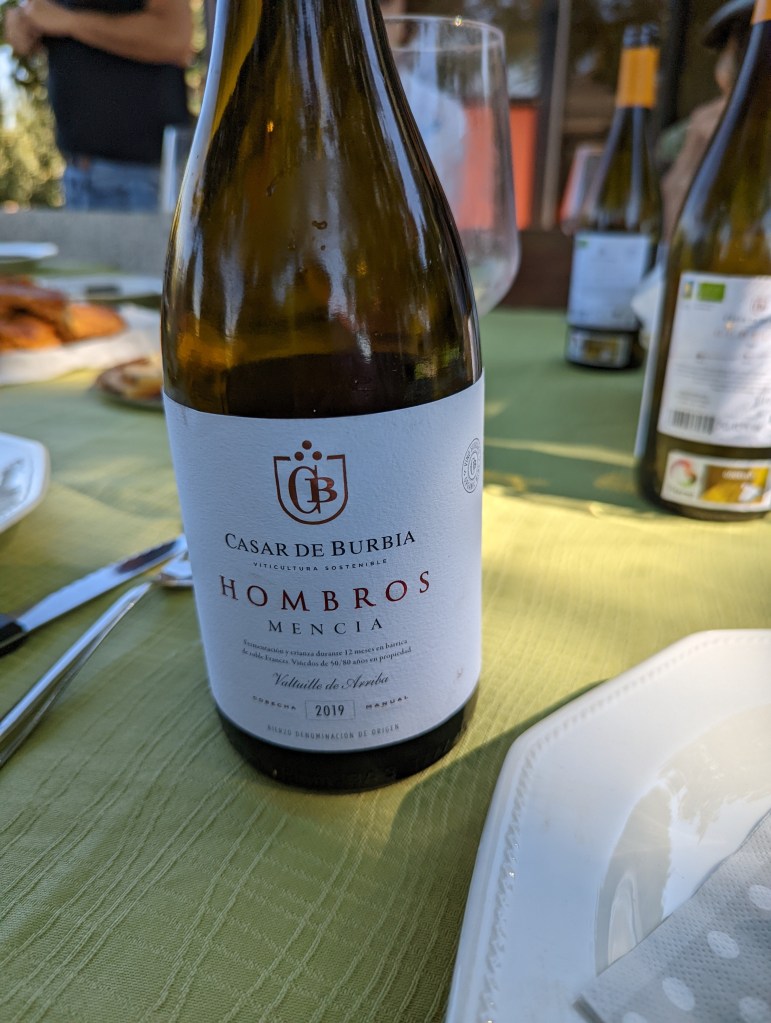
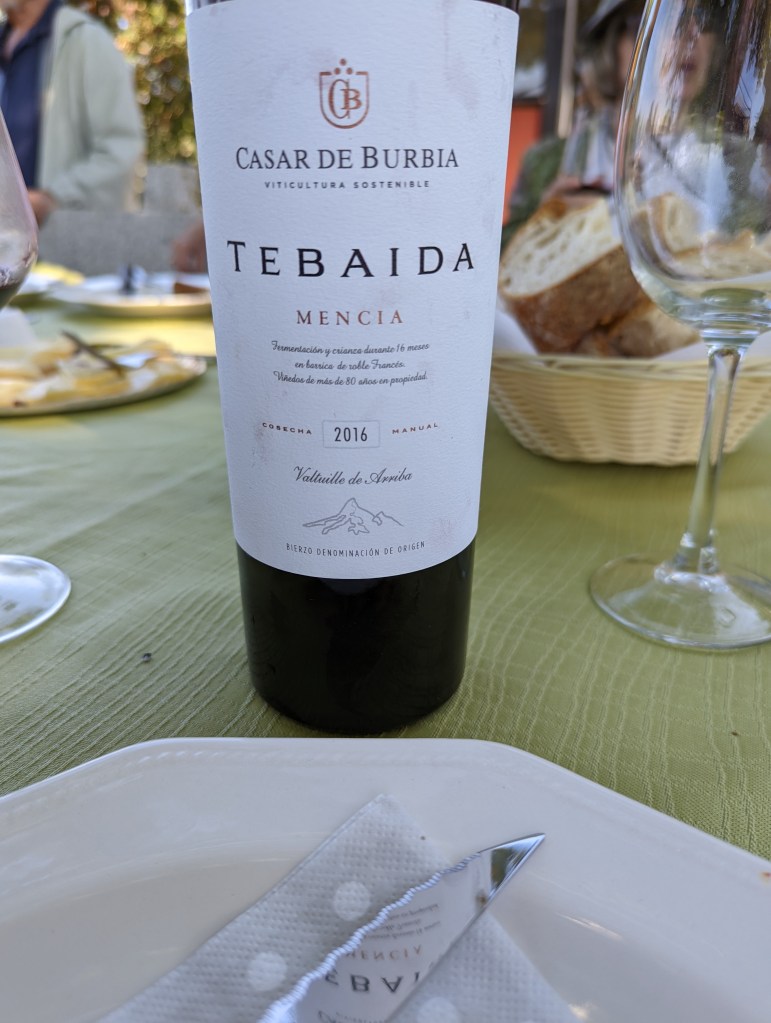
This was just a wonderful tasting.
They poured us all a nice taste and talked about each of the wines. In addition to the taste that they poured, they left bottles of it on the table if we wanted more. We were sitting outside with great weather and that delicious food. The charcuterie plate had Iberico ham or course but also beef and tuna cured int he same way as the ham.
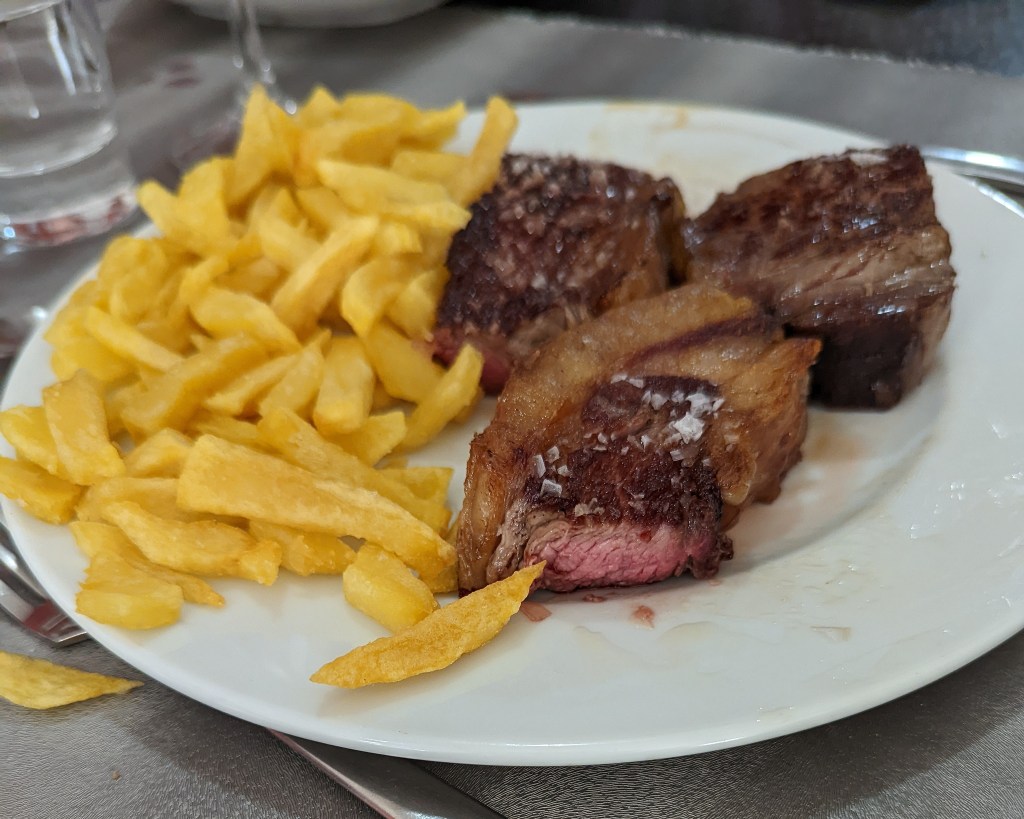
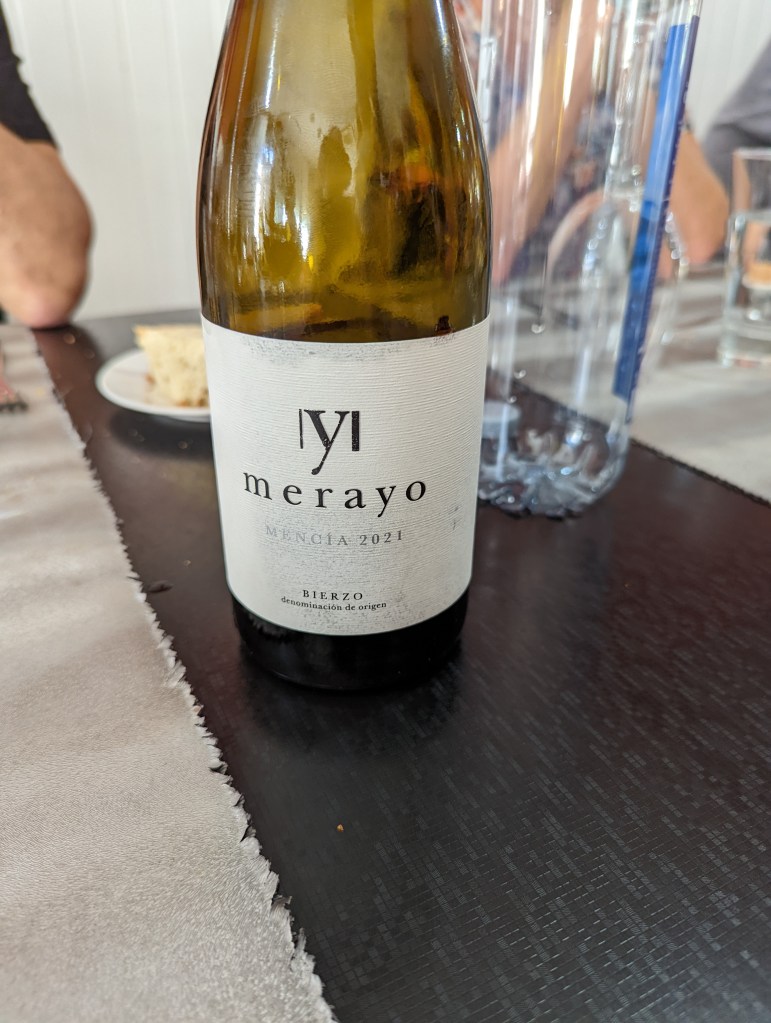
We then took a short bus ride to the town of Ponferrada and had lunch at the Venecia Restaurant which was included in our tour price. Their specialty is steaks from all over the world and we had a lovely grass-fed steak from Argentina with fries as shown in the picture. Spanish food is delicious but having a change of pace to a premium steak and fries was very enjoyable. Lunch was accompanied with another Mencia wine which is shown in the picture. It was a 2021 so no aging but very nice with the steak. I do not know if this wine is available in the US. Lunch started about 3 PM which is typical in Spain.
We then had an hour bus ride back to the Conde del Luna in Leon and were able to visit the Cathedral there which has an astounding display of stained glass from the 13th century. I forced my self to only include one picture of the stained glass which gives just a hint of the why this is considered one of the most exquisite Cathedrals in Spain.
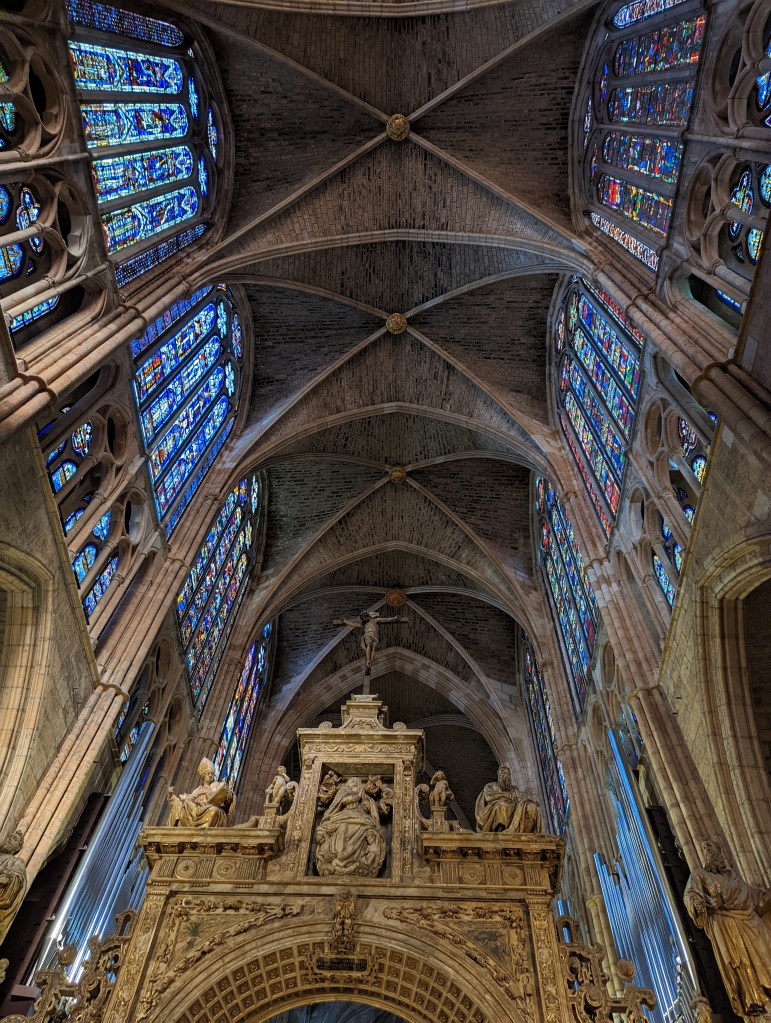
Based on all of the food we enjoyed at the winery and then our delicious steak lunch, we did not feel the need for any dinner that evening.
 Bill's Thoughts on Wine, Travel, and Food