
2 Great Italian Red Wines You Might Not Be Familiar With
We know that the Europeans put the wine region on the front of the bottle, not the grape. Chianti is a region in Tuscany, not a grape. (I confess that I was several years out of college before I figured that out!) Then what the heck is this Amarone wine from Italy, and why are people willing to pay $60-70 for it? And then I see adds for something described as “Baby Amarone” and on the label it says Ripasso. There is no geographic region of Italy called Amarone or Ripasso and there are no grapes by that name either. What are these two wines?
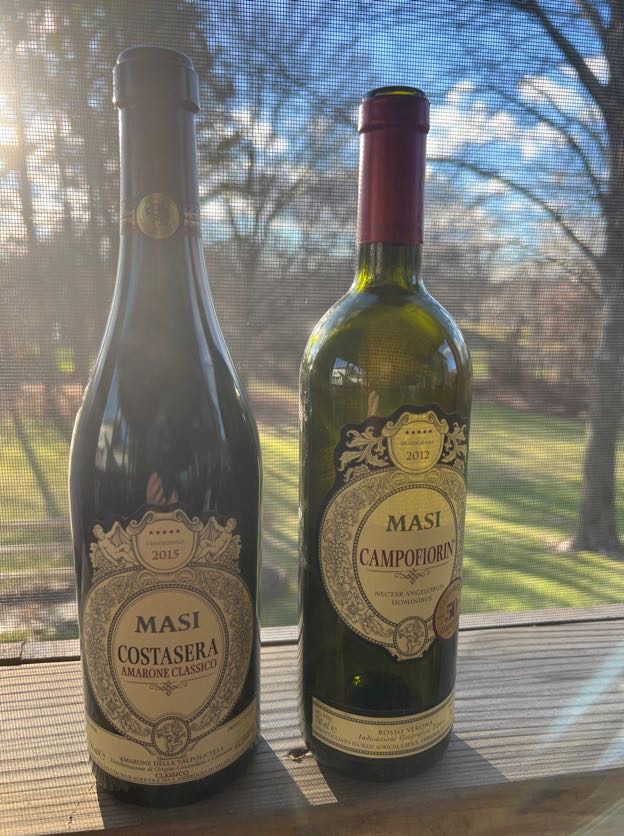
If you like very full boded red wine with a big mouthful of flavor, you want to try an Amarone. If you like nice full bodied red wines for under $20, you want to try a Ripasso. Amarone and Ripasso are ways that this wine is made. The full name of Amarone is Amarone della Valpolicella, so the Italians did put the region on the label, but usually the last two words are in smaller print, barely visible at the very bottom of the bottle on the left in the picture above. Valpolicella is a province in the Veneto region of northeastern Italy, and is north of the city of Venice.
Attached is a description of the process used to make Amarone and Ripasso, taken largely from very good write-ups from Wikipedia and Wine-Searcher. It also has a list of five good choices for each wine that I recommend.
The short version (something I seldom do ) is that the red wines from the Valpolicella region generally do not have much depth because of the cool growing conditions in that region. Amarone was an accident that happened when the winemakers were making a strong sweet wine called Recioto and that accident produced a big wine that now has a very loyal following. Ripasso was a byproduct of that process, creating a wine in between the light Valpolicellas and the very full bodied Amarone’s that I think is a great bargain.
The short version of my recommendations is the picture above. My favorite Amarone is Masi Costasera Amarone Classico for around $60, and my favorite Ripasso is its younger brother, Masi Campofiorin for $18-19. Yes, the bottle of Campofiorin is empty. We enjoyed the last bottle in the cellar with dinner last night and that prompted me to write this blog post today.
I hope you enjoy Amarone and Ripasso as much as I do. It will be interesting to see how many views this summary gets compared to how many downloads the discussion of how each is made, and the larger list of recommendations gets.
 Bill's Thoughts on Wine, Travel, and Food
They used to use metal grate to “dry” the grapes on for amarone. Some producers went to plastic and some consumers decried the loss of the “iron” taste in the profile.
LikeLike