
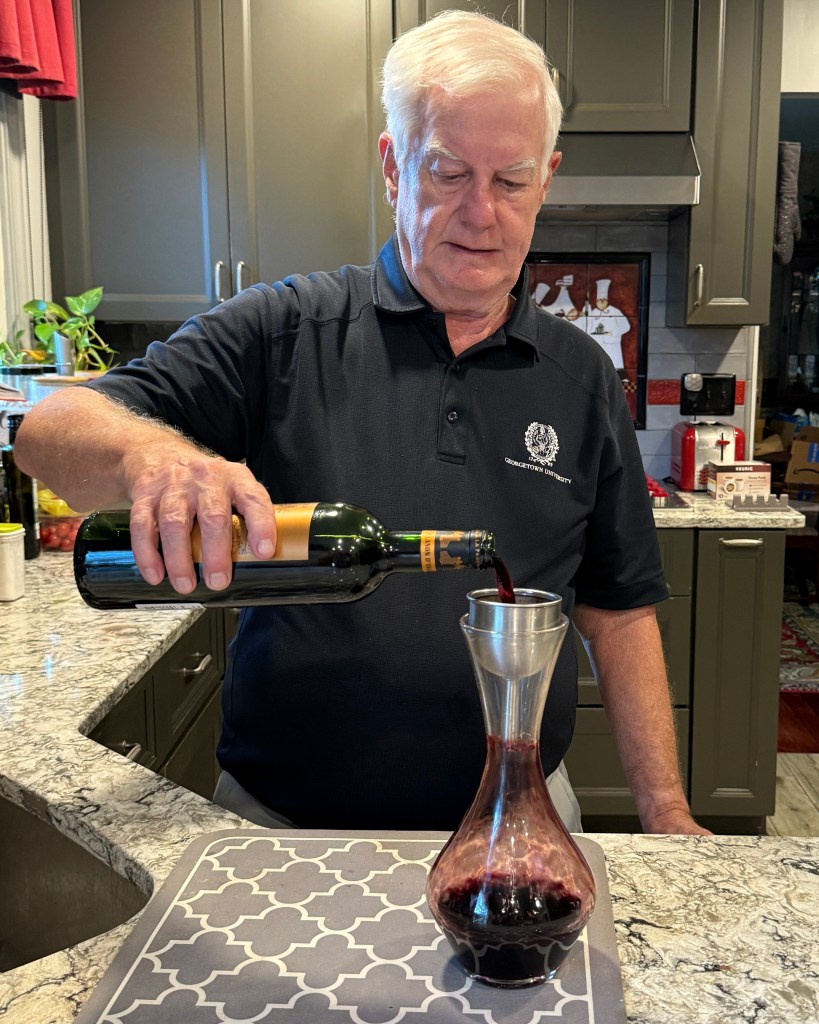
Decanting wines can significantly improve their taste. If you are not currently decanting any wines this post will help you understand why decanting can have a very positive impact on the wines you are drinking and what wines benefit the most from decanting. I will share some suggestions on how long you should decant it before you plan to drink the wine. I will walk you through the process I use when I decant wines. And I will talk about different kinds and shapes of decanters with suggestions on where to get them if you want to start enjoying your wines decanted.
If you don’t think decanting is something that you want to get involved with, I encourage you to try a simple experiment. Open a bottle of red wine like a Cabernet Sauvignon. It can be an inexpensive bottle, but you will see more results if you go at least as step up from the mass-produced wines like Cupcake or Dark Horse to something in the $20 range. Pour a glass of the wine and put the cork firmly back in the bottle and let both sit for at least an hour. Take the cork out and pour a second glass of the wine and compare the tastes. I will be very surprised if you don’t find the wine that was in the glass for an hour more enjoyable than the second glass that was just poured from the bottle.
Why Decant Wine
There is a popular misconception that only very old red wines should be decanted to separate the wine from the sediment that has accumulated in the bottle. That is a good reason to decant old wines, but the better reason is that many wines will taste much better when they are decanted. I decant virtually every bottle of red wine that we drink.
The reason for this is the same as why many wines taste better when they have aged for years in the bottle. The reason is oxidation. Rapid oxidation is wood burning. Sow oxidation is rust forming on metal. In both cases the oxygen in the air is reacting with the wood or the metal and that reaction changes the wood or the metal. With wine, the very small amount of air that is trapped inside the cork, or inside the screw top, reacts with the wine and changes it. Because there is so little air, the change happens very slowly. With wine the oxygen is reacting to some of the elements in the wine and one of the byproducts of that reaction is sludge forming in the bottle, like the flakes of rust on metal or the ashes left when the wood is fully burned.
One of the elements that reacts to oxygen is the tannins in the wine. Tannins are most prevalent in red wines but in the next section I will talk about decanting some white wines.
If you take a sip of red wine and swirl some under the inside of your upper lip, you are likely to get a burning sensation, either a little or a lot. The nerve endings there are very sensitive to tannin. When red wine is first made the tannins are strong and rough in taste. As the wine matures over the years the tannins can get softer, and more gentle. You will hear reviews of wine talk about tannins being nicely rounded after the wine has matured. While the mature tannins may be one of the most noticeable changes in the taste, the oxidation that happens as the wine ages in the bottle also helps it develop more depth and character.
Decanting causes many of the same reactions to happen in a few hours instead of 5-25 years. Let me be perfectly clear. A good wine that is properly aged for 10+ years will taste better than that same wine decanted shortly after bottling. But if we don’t want to wait 10 years to drink that wine, decanting it will cause that wine to taste much better than if you pull the cork from the bottle, pour it into a glass, and start to drink it.
The reason is that the decanting process causes much more of the wine to be exposed to much more air then when it is kept in the bottle corked. So the reactions happen much faster than they do in the bottle. Pouring the wine into the decanter exposes all of it to air. More so if the wine flows down the sides of the decanter as it is poured. When the wine sits in the decanter it has a much larger surface area exposed to the air than just the tiny amount in the small neck of the bottle. And there is much more oxygen available to the wine than just the little amount inside the cork.
So, the answer to why decant wines is that it rapidly speeds up the process of wine aging and developing more character and nicer tannins than if you just pull the cork and pour the wine.
What Wines Should Be Decanted?
I decant virtually every red wine that I open. But I decant only one white wine from certain regions. The two flowcharts below from Wine Enthusiast show the different processes for making red wine and making white wine and this will help me explain why decanting is much more common with red wines than with white wines.
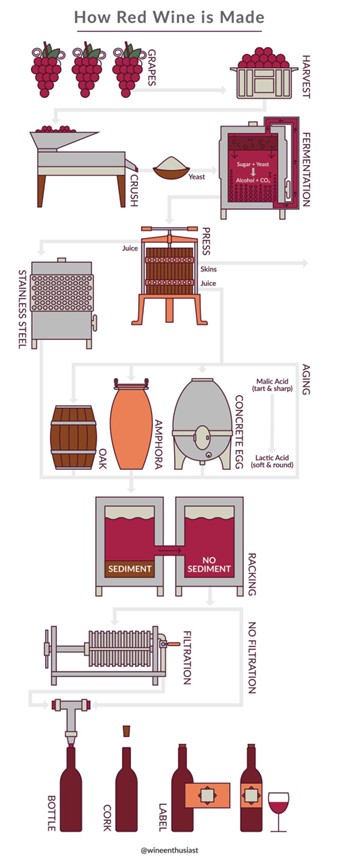
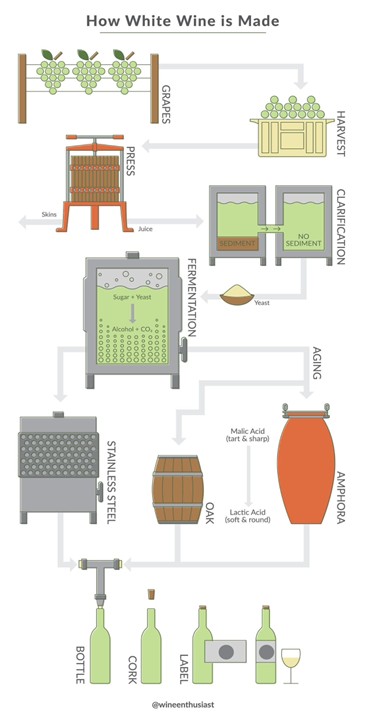
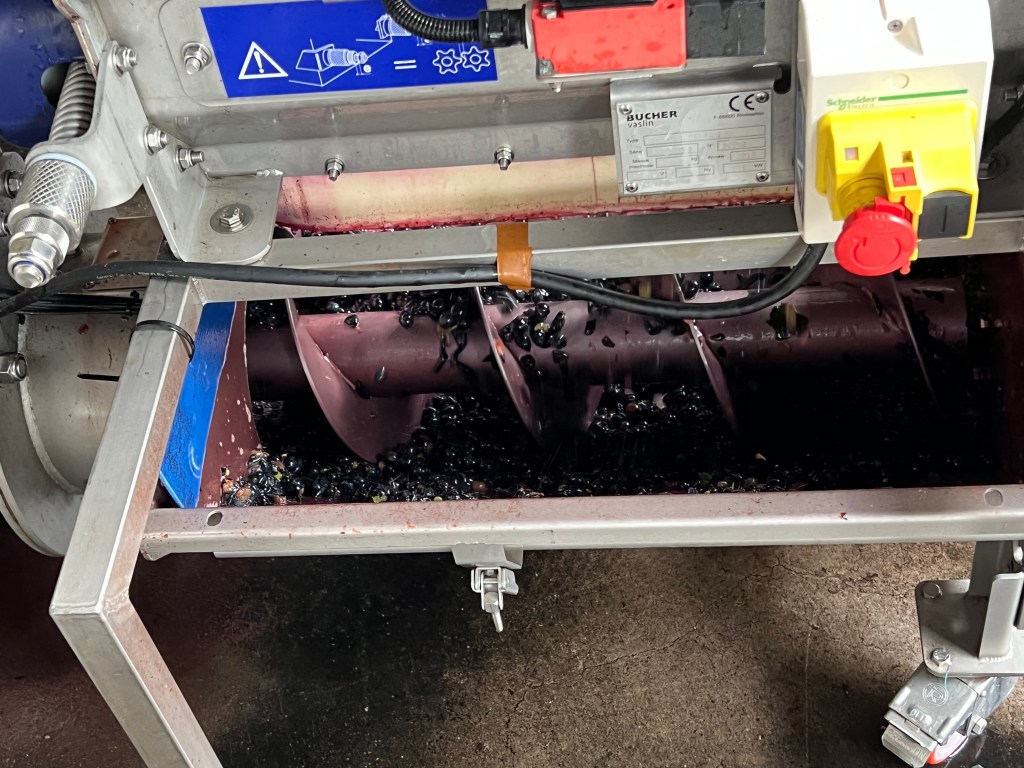
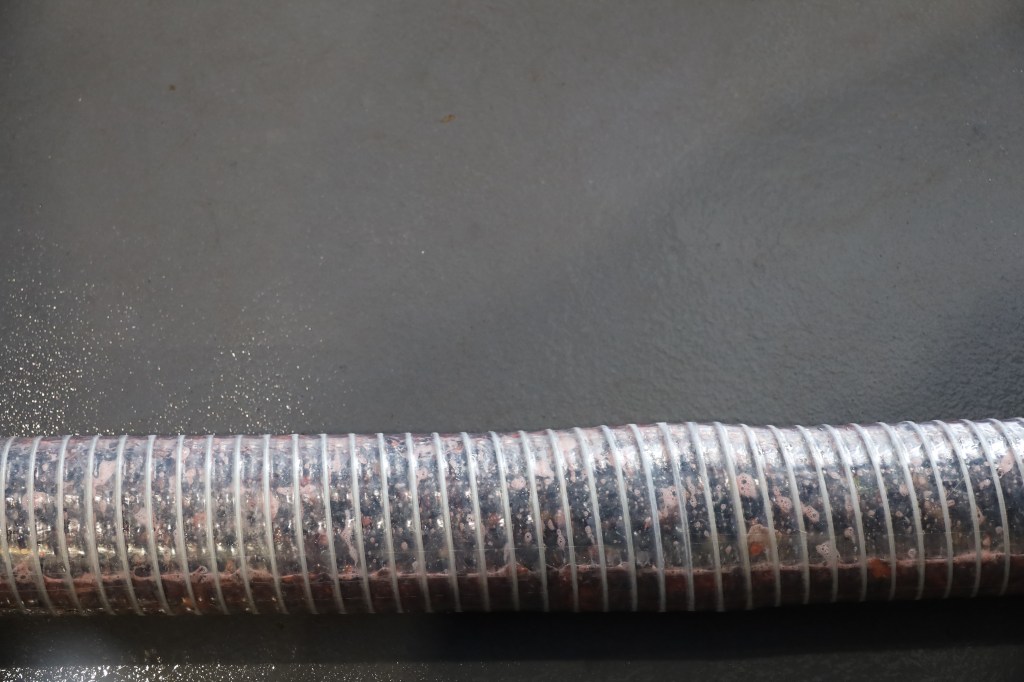
Almost all red wines, except those made in the bulk wine process, are crushed to get some of the juices from the grapes, but the crushed grapes are then put into the fermenting barrels along with the juice that came from the crushing process. This is done because the skin of the grape contains much more flavors than just the juice that comes when the grape is pressed. All the color in the wine comes from the skin of the grape. If you press a red grape the juice will come out clear and very good white wines are made using the juice from red grapes. Just one example is the legendary French champagne where generally 2/3 of the juice used to make Champagne comes from two red grapes. The two pictures below show first a grape crusher and second the large hose that is taking the crushed grapes and any juice that came out from the crushing and pumping that mixture into a fermentation tank.
Most white wine is made from just the juices pressed out of the grapes with no chance to pull all of the goodness that is in the skins of the grapes, that wine will not age well. My rule of thumb is that white wines need to be drunk no later than 5 years after the date on the bottle. They just get darker in color and stronger in taste as they get older. The two noteworthy exceptions to this is French Champagne and Chardonnay that is specifically made to be age worthy, both of which can age for years.
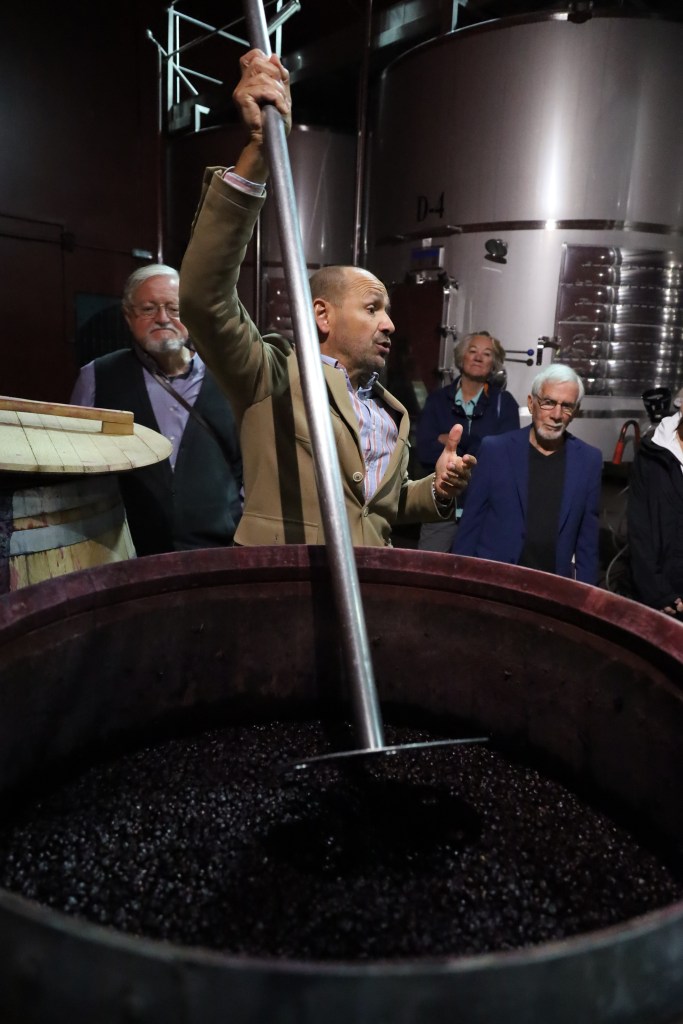
The crushed red grapes sit together with the juices in the fermenting barrel generally for at least several weeks, what is called the juice sitting on the lees. This lets the juice extract the color and flavors from the skin of the grapes. As the fermentation process happens the yeast give off CO2. That gas gets trapped in the crushed grapes and causes them to rise to the top of the barrel and form a mat of crushed grapes floating on top of the juices. The intent is to have the skins and the juice together in close contact, so it is necessary to break up that mat and mix the two together whenever that mat forms on the top of the fermenting barrel. There are several ways this can happen. Punching down the crushed grapes with some kind of tool is the most common and the picture below shows that being demonstrated. Pumping the juice from under the crushed grapes to be on top of it so gravity breaks up the mat is another way this this can be done. How often and how it is done is part of the winemaker’s individual process and contributes to wine from adjoining estates having very different flavors, based on the way the wine was made.
Some white wines are crushed and then go through the same process of sitting on the lees as described above. The skin of white grapes will not impact the color of the wine like red grapes do, but they do add tannins and other flavors to the wine. I think the best example of this is White Burgundy. This is made from just Chardonnay grapes but having the juice sitting on the lees adds complexity to those wines that lets the top producers in Burgundy get hundreds of dollars a bottle for Chardonnay wine. Those wines can age for decades in a cellar, and they benefit from decanting, especially when drunk younger. California Chardonnay is not made to be age worthy and should be drunk within five years of the vintage date and not decanted. However, most winemakers in neighboring Oregon closely follow the Old World or Burgundy style of wine making for both their Pinot Noir red wine and their Chardonnay. If you are paying over $40 for an Oregon Chardonnay, list price from the winemaker, not restaurant price which has at least doubled the list price, you are getting an age worthy Chardonnay that will benefit from 5-10+ years in the cellar and should be decanted like red wine.
You may see some articles talk about double decanting. What that means is that the wine is poured from the decanter back into the wine bottle using a funnel. Some people do this because they like people to be able to see the label on the bottle when they are pouring the wine. The initial pouring from the bottle into the decanter provides the a great deal of exposure to oxygen so a second pour back into the bottle is a second major oxygen rush. If I want to double decant I would leave the wine in the decanter for an hour at most before doing the double decant back into the bottle. If I have not been able to decant the wine and I am opening it very close to the time it will be served, double decanting will give a similar impact to 3-4 hours in the decanter. I think the couple of hours sitting in the decanter is gentler and I prefer that to double decanting whenever possible.
When Should I Decant The Wine?
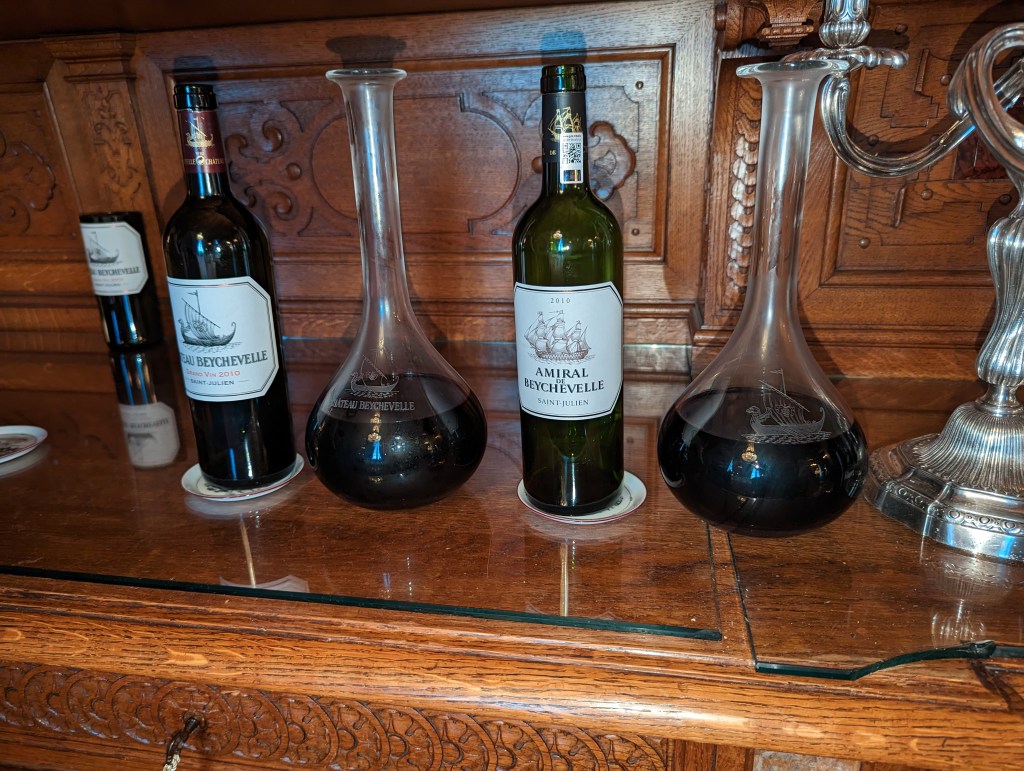
The picture above is from a wine tasting dinner that my wife and I attended at Chateau Beychevelle in Bordeaux two years ago. The six wines we were served included two from 2010, and one each from 2005, 2000, 1996, and 1986. All of the wines they served us with that dinner had been decanted, not just the older vintages. I asked when they had decanted those wines and our host said right after lunch that day! If I am planning a red wine to accompany dinner, whenever possible I now go down to my cellar after lunch and select the wine and decant it. I usually serve it between 6:30 and 7:30 PM. I do this for $9 table wines and for $75 Pinot Noir. It is easier for me to do this now that I am retired and am home most days. If I have lunch away from home, then I do the decanting as soon as possible after I get home.
Decanting adds a great deal to the taste of the wine, but serving wine at the wrong temperature can hide many of those delicious flavors and complexities. One of the recurring themes in my blog posts about wine is that we in America drink our red wine too warm and our white wine much too cold. When wine is decanted, especially if it is sitting on the counter in the decanter for hours, it will be at room temperature. For the reasons explained below, red wine almost always shows it best flavors at 60-63°F. I have a small wine fridge that lets me stand up some bottles, so I have a place to put a full decanter of wine. I keep that little wine fridge set at 55° and take the decanter out and leave it on the table for 30-45 minutes before pouring the wine to get up to at least 60°. If you have heard my rant about wine temperature before you can skip down to the next section about types of decanters and sources for them.
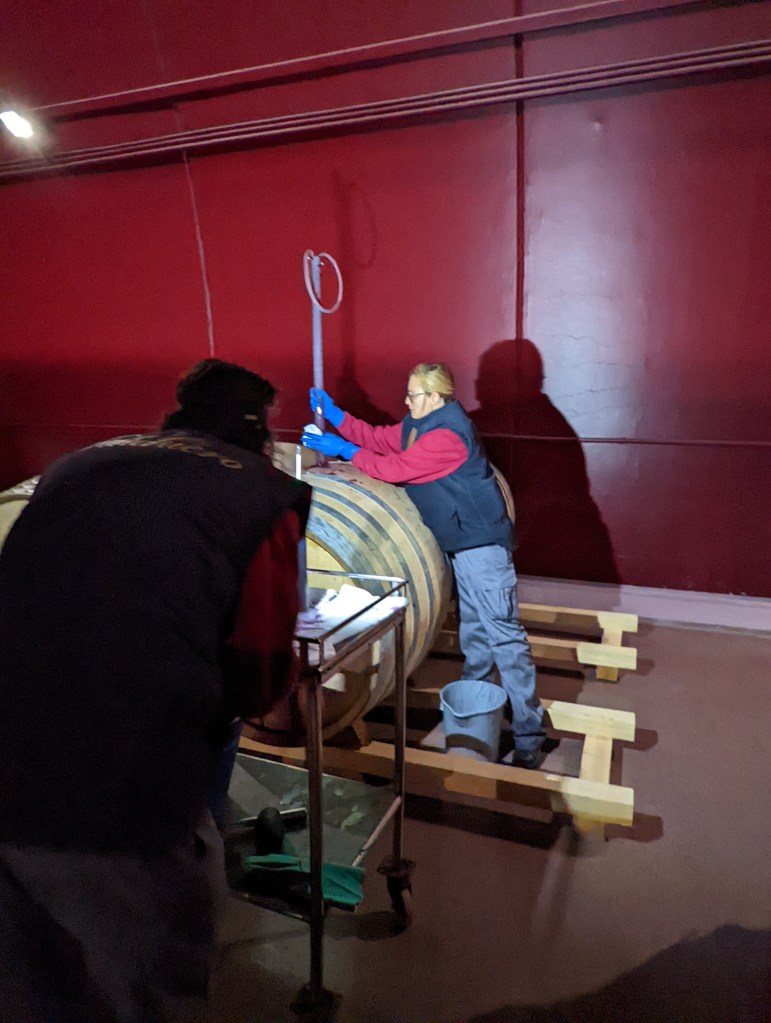
Most good red wine is made in cellars which are kept at 15°C or about 59°F. After the fermentation the wine is aged in different vessels, most often stainless steel tanks or oak barrels, and kept in a cellar kept at that temperature. The winemaker then blends the wine from different tanks or barrels into the finished product. The wine he or she is tasting to do that blending is at the cellar temperature. See the winemaker wearing a vest as she tastes the different barrels for blending in the picture below.
Even if it is a single varietal wine like Pinot Noir or Cabernet Sauvignon, the wine is typically a blend of different plots of that grape to get the specific flavor the winemaker is looking for. If the winemaker is tasting wines at 60° to find the right blend, he or she is creating a wine that will taste the best when consumed at that same temperature. If you go to the winery web site and they have a data sheet on the wine, sometimes that will have a suggested serving temperature for that wine. 60° is not cold wine. It is cool to the taste.
Most white wine is made to be consumed at 50-55°F. Wine served right out of a refrigerator that is at 40° will hide much of its flavor. If I had that wine in my wine fridge, it would be a little too warm at 55°. I put the open bottle standing up in my kitchen fridge for about 30 minutes to bring it down to 50°. If it was in my kitchen fridge for some reason, I take it our 40-50 minutes before serving to warm up to at least 50°.
Another simple experiment is to try two glasses of wine at the different temperatures. One would be at the temperature I am suggesting and one if you just open the bottle and taste it. To do an experiment with the red wine, pour a glass and put that glass in the refrigerator for 30 minutes. Take it out and pour a second glass from the bottle that has been sitting on the counter. For a white wine experiment put a bottle in your refrigerator overnight. Take the bottle out, open it, and pour a glass and leave it sitting on the counter. Put the bottle back in the fridge for 45 minutes. Take it out and pour a second glass. In both experiments the wine in one glass will taste different from the wine in the other glass. I think you will find that the wines at the temperatures I am suggesting have more flavors.
In a restaurant I have no control over what temperature they bring the wine to me. But I ask them to leave the white wine bottle on the table and not put it in an ice bucket. When I order a bottle of red wine in a restaurant I always ask if they can decant it. About 80% of the restaurants are happy to do that. Sometimes the waitperson has a totally blank look and has no idea of what I am asking. I then ask them to ask their manager if they are able to decant the wind that I just ordered. Even if it just sits in the decanter for 15 minutes until the food is served, that will make the wine taste better. It also delivers a message to the staff the I am knowledgeable about food and wine.
How Should I Decant The Wine?
Here are several pictures to help the discussion of how to decant wines. I use an aerator that has a cup that I slowly pour the wine into, and the bottom of the stem that is inside the decanter has eight small openings. As you can see in the picture below, this causes the wine to go in multiple small streams down the side of the decanter. This is letting much more wine have much more exposure to the oxygen in the air so the initial process of pouring the wine into the decanter has even more impact.
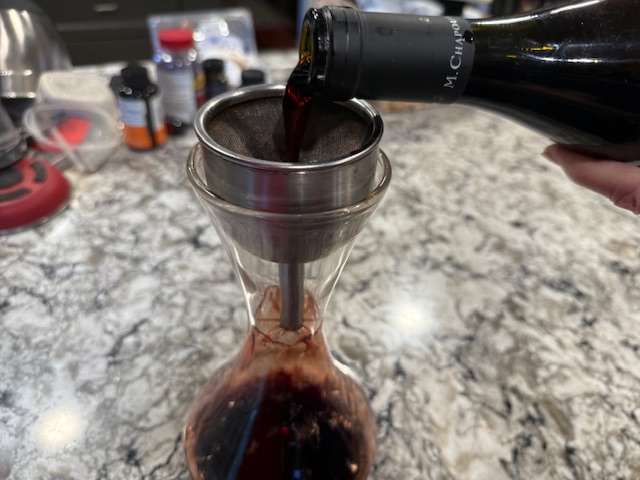
A small wire basket sits inside the cup to catch any sediment in the wine and any bits of cork that came off when the cork was pulled. The second picture shows the two pieces which were bought as a package on Amazon. It is listed as 3in1 Steel Funnel with Strainer (Wine Shower + Aerator + Filter) and the link for it is below. It is listed as Amazon’s Choice with a rating of 4.5 stars and over 900 reviews. Amazon has hundreds of wine aerators listed so feel free to pick the one that most appeals to you.
https://www.amazon.com/dp/B06Y1Y9WTB?ref_=ppx_hzsearch_conn_dt_b_fed_asin_title_1&th=1
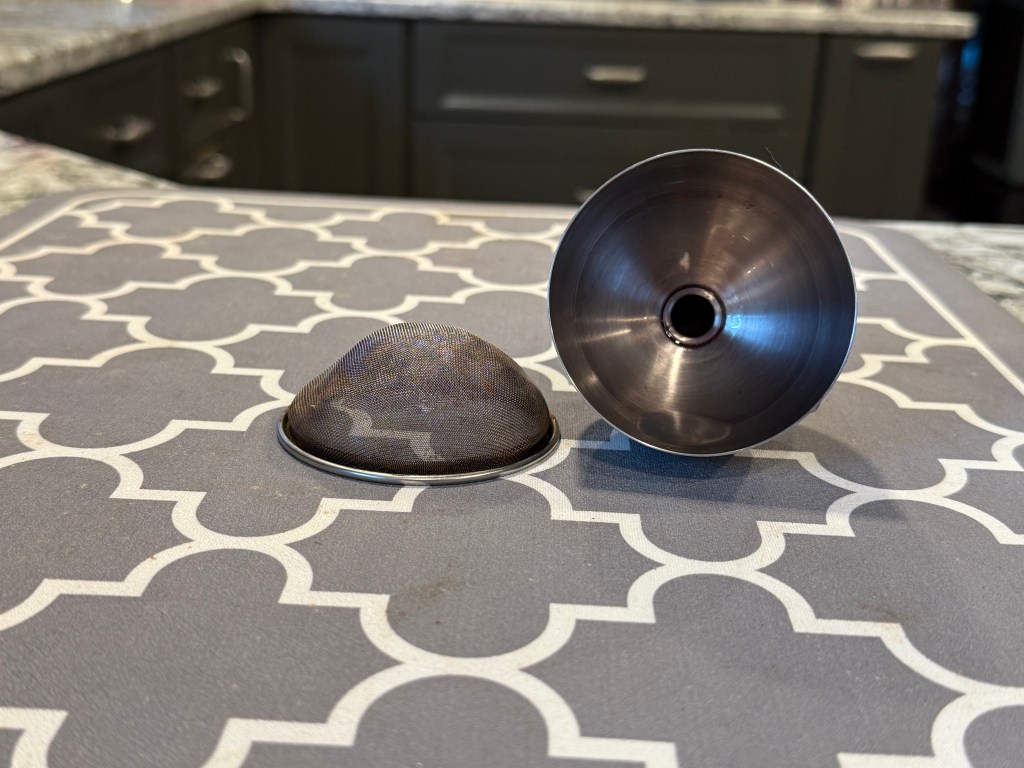
NOTE: This blog is a retirement hobby and not intended in any way to make money. When I list a product, like the one above, it is only to make it easy for you to evaluate it. I get no incentive or recognition for any product that I recommend.
The picture at the very beginning of this blog shows me decanting a bottle of wine. The more that you can make a smooth, even pour that does not overflow the cup or lets it empty out, the better. But it is not any issue if you get interrupted for some reason and have to stop the decanting and then continue it a few minutes later.
There are also mini wine Aerators that you plug into the neck of the wine bottle. They use different means to swirl the wine around before it gets into your glass. Any aeration is better than pulling the cork and pouring a red wine into a glass, but these mini aerators have nowhere near the same positive impact as decanting the wine. I am not a big fan of these mini aerators.
What Decanter(s) Should I Buy & Where Can I Buy Them?
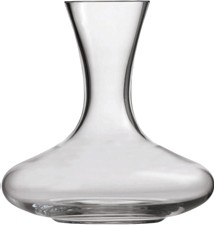
If your Grandmother has some decanters in a cabinet which look like this picture, please do not accept them as a gift so you have a free decanter. The very large base does give even more wine exposure to the air but these decanters have a huge base that takes up an enormous amount of space on the table. They also take a great deal of practice to pour the wine into a glass without a flood of wine going all over the place. I don’t want to pour nice wine on the table just to practice.
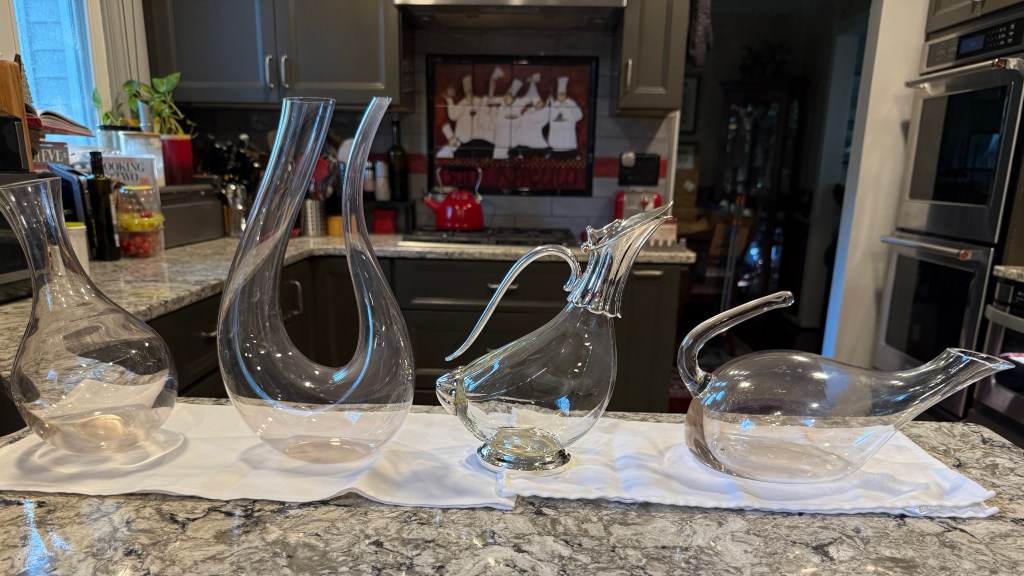
Below is a picture of the four decanters that I really like and use when I have a party with multiple wines available for tasting. I will talk briefly about each of them individually. Amazon has an excellent selection of decanters and generally their prices are pretty good. The website for Wine Spectator also has a good selection of decanters. Just for fun, check out all the decanters that Reidel has at Riedel.com. Four pages of decanters, some of them very attractive and some of them look like a puzzle of where does the wine come out. Some of them are $650 each but three of them are just $55: Veloce, Performance, and Merlot. The decanter used in the pictures of me decanting the wine is the Riedel Merlot decanter, but we got it at Bed, Bath, & Beyond for much less. I think most if not all of their stores may be gone by now but their website is still operational and that decanter is there at a price of $36.73. Amazon has that same decanter for $50 and if you get free shipping as an Amazon Prime member, the net price could be pretty close to Bed, Bath & Beyond. Lots of availability to get a good general purpose decanter to get started with at a reasonable price and see how you like it.
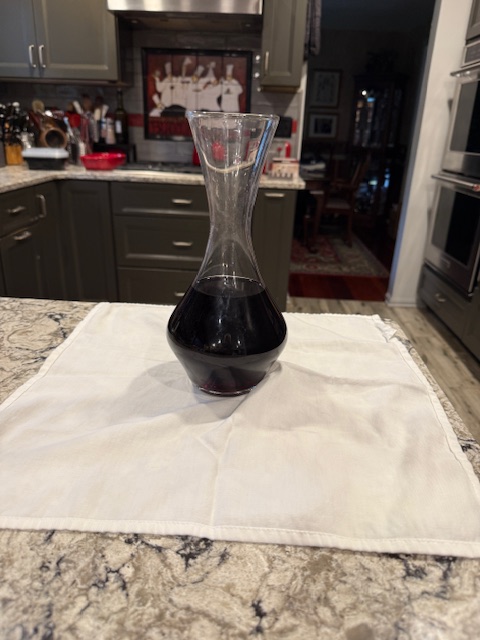
the picture below is our everyday decanter. As noted above, it is the Reidel Merlot decanter purchased from Bed, Bath, and Beyond. I don’t drink California Merlot but the Riedel Cabernet Sauvignon decanter looks very similar and is 2X the price. I am pretty confident that my palette could not tell the difference if the same wine was decanted into the Merlot decanter and the Cab decanter, so I am fine with the much lower cost one. I use it for every different kind of red wine that we drink (which are many) and are very happy with the results each time. When I am doing the dishes I first rinse it with soapy water first, shaking the decanter to get overall coverage, and then a rinse with clean water to get all the soap out. I have a little gadget on the counter with four spikes standing up in the air. I put the decanter upside down over one of the spikes to dry. I can put any of our water bottles over the other spikes. Every few weeks I take a long handled brush and use it to scrub the sides and bottom of the decanter. About every three months I put into the dishwasher with the dinner dishes for a thorough cleaning. Riedel lists it as dishwasher safe. Because the other decanters listed below are used much less often, they just need the two stage rinse after each usage.
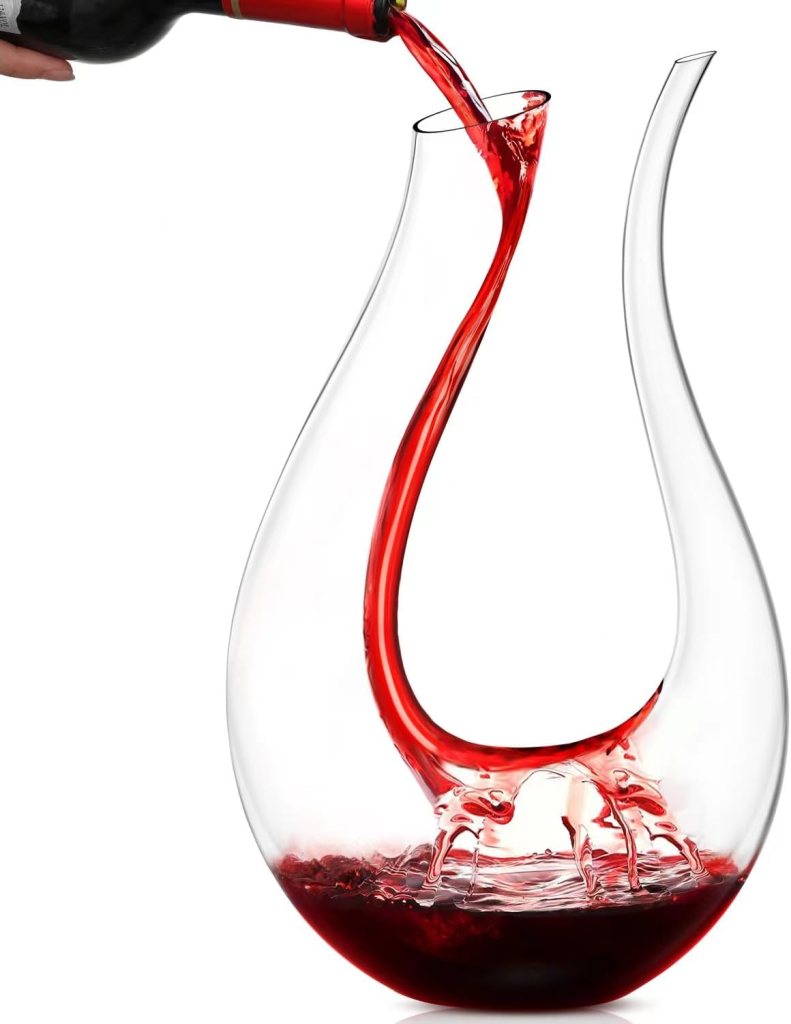
We saw the decanter below at a wine tasting and fell in love with it. If you checked out all the Riedel decanters as suggested below, you saw that having them bend in all different directions is very popular now. The wine is poured into the decanter through the larger opening and I can put by aerator into that opening with no problem. The wine is poured into the glass through the narrow opening. If you just experiment with pouring some water into a wine glass when you first get it, you will find it is easy to use and control the pour. Amazon has this decanter for only $37! It really impresses guests who are not very into decanting. Having a decanter for each wine when you are serving several makes it easy to taste and compare different wines.
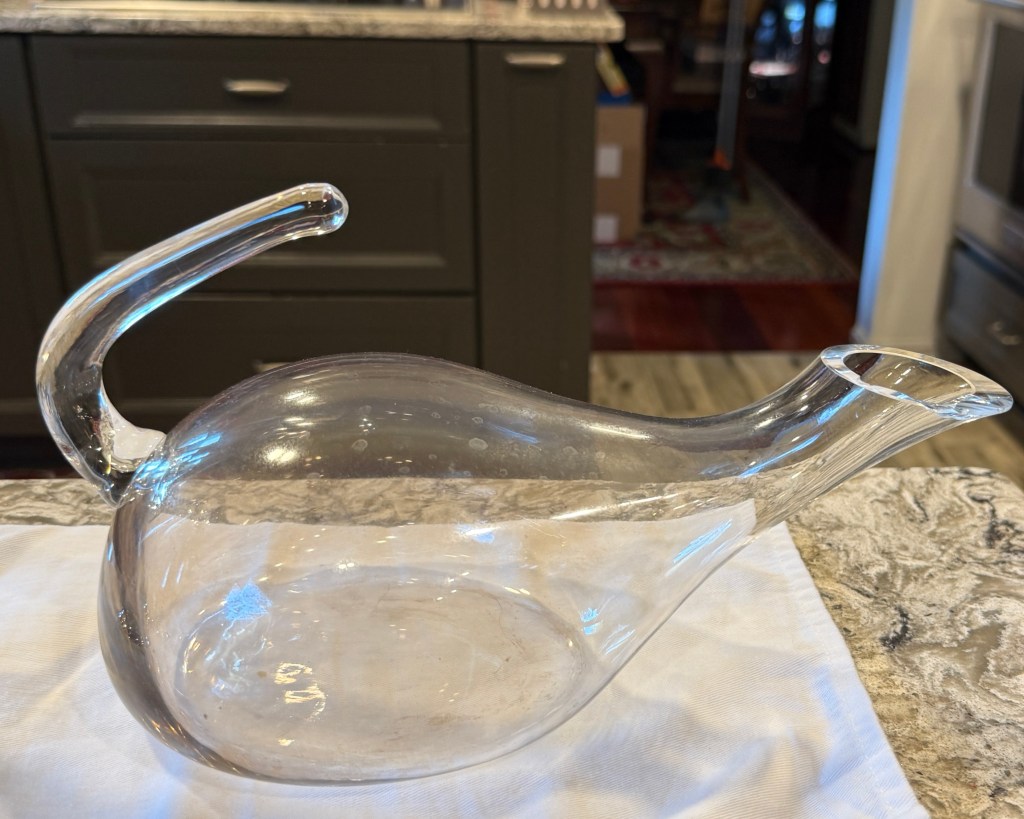
For my most expensive wine this is the decanter that I use. It has had Lafite Rothschild in it twice. It provides the most surface area for the wine to interact with the oxygen in the air, and it is a very attractive decanter. I don’t remember where we got this decanter so I can’t suggest where to look for it or anything about its price.
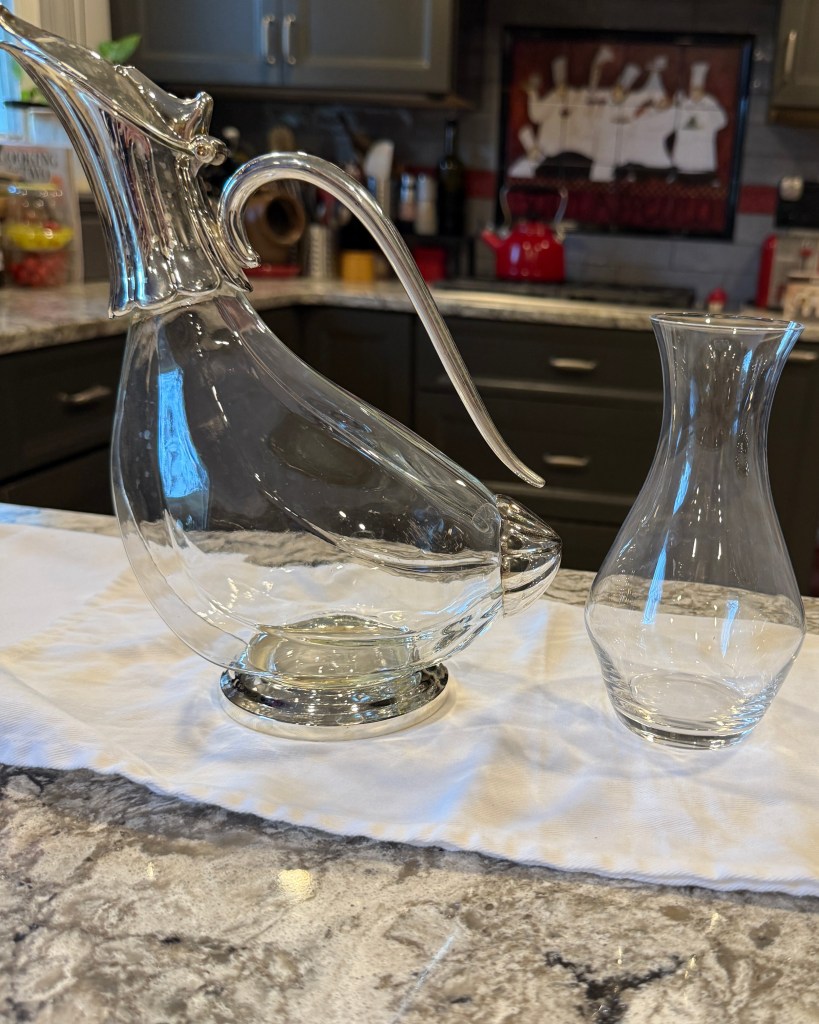
For a long time the classic decanter is fine restaurants was the Duck Decanter. We have one that is also for special occasions. But because we do not want to polish the Sterling Silver that this decanter has, we keep it sealed up so the sliver does not tarnish. It is a great style of decanter to give the wine lots of surface area to breathe and is very attractive.

I also have a mini decanter as shown in this next picture. If my wife or I are dining alone and want a glass of wine with our dinner, we can pour it into this mini decanter and put a stopper in the rest of the bottle for another day.
I hope you have found this blog post on decanting interesting and informative. I’d love to hear if you decide to make decanting part of our standard routine to serve and enjoy wine.
 Bill's Thoughts on Wine, Travel, and Food