Wine – Bill’s Red House Wines Under $15

Wine is the answer!

Now what was the question?

There is a House Wine wine tradition in Western Europe that has just not translated into the US.  If you go into a café, bodega, or trattoria the menu will have a handful of red wines for under €12.  The vineyard that produced those wines is probably less than 25 miles away and there are no plans for export outside their local area.  And these wines are delicious.  The winemaker is not looking to make wines they can sell for €100 or win prizes at international competitions.  They are looking to make the best wines they can from their terroir and have the local restaurants and shops buy all that they can make.  They work hard on making good wine since their customers are their neighbors.  Wines under $15 that are made in the US are almost exclusively mass-produced wines like Cupcake, Barefoot, or Dark Horse and international offerings like Yellow Tail are similar.

My cellar falls into four tiers of wines:

  • Tier 4 – House wines under $15
  • Tier 3 – Nice wines for under $35, the largest segment of my cellar, maybe aging them for a couple of years
  • Tier 2 – Selected very good wines for under $75 that are aging for at least a few years
  • Tier 1 – Wines in the $75-130 range that are exceptional (IMHO). I have less than a dozen of them laying down.

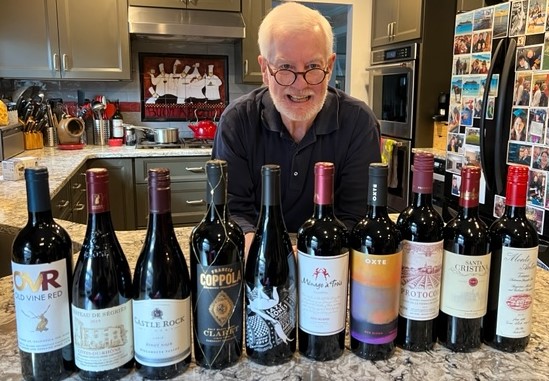
Over the years we have found 20 wines that are under $15 that are our everyday house wines, also called Table Wines.  We cook with them, and we enjoy them with simple meals and leftovers.  Ten of them are red wines and those will be the topic of this blog.  Five of them are imported wines, four are from California, and one is from Oregon. 

These red table wines are meant to be drunk young but I often buy them by the case so if a few bottles are on the shelf for more than a year, there is no problem.  I decant all my red wines, especially the table wines.  Because they are young, they have lots of tannin and often an edge to them.  Decanting them and letting they sit in the decanter for 15-30 minutes softens those tannins and lets the wine really open up and makes the wines closer to what we pay $20-25 for.  I will be doing a blog on decanting soon. 
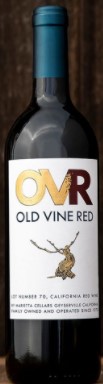
Marietta Old Vine Red (OVR) – This was our very first house wine and a bottle has always been in our cellar for over 40 years.  Not the same bottle 😊.  It is now just scraping under the $15 threshold when I find it on sale, but it will still be one of our house wines when inflation takes it over $15.  We hate the new label with the big OVR on it, but we still love the wine inside.  Marietta is in Sonoma Valley and the grapes for this wine come largely from Geyersville.  Marietta makes nine wines and the three are in the OVR series which are their entry level wines.  We have only had the OVR Red.  I am not sure if the Lot # changes from year to year but currently they are selling Lot 73.  It is predominantly Zinfandel (generally about 80%) with some Syrah, Petit Syrah, and Cabernet Sauvignon added to get the flavor they are looking for.  It is a very good food wine that goes with all red meats.  This wine made the recent Food and Wine Magazine list for Best Affordable Red Wine, $15 and Under, https://www.foodandwine.com/wine/red-wine/best-15-dollar-and-under-red-wines.  It is widely available, and we typically get it from Calvert Woodley in DC where they have the lowest price. 
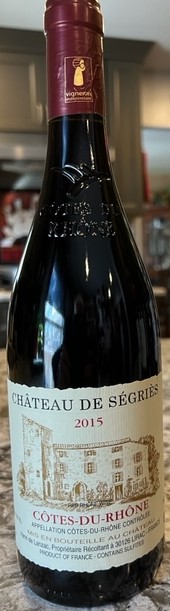
Chateau Segries – This is the second longest tenured wine in our cellar, over 30 years, and it is also bumping up against the $15 threshold.  We are big fans of Rhone wines, and this is an everyday simple Cote du Rhone wine that we love.  It is 50% Grenache, 30% Syrah, 10% Cinsault, and 10% Carignan with just a little oak influence.  It is a dry wine that is rich and round with black fruit and spice aromas and flavors.  In addition to enjoying it with meals, we also cook with it.  If we are doing a recipe that calls for a cup or more of Cote du Rhone, we don’t want to open a lovely Gigondas or Chateauneuf-du-Pape for that.  And we want the entire bottle of very good Rhone to enjoy with the meal.  In the recipe for the Beef Daub that I posted in an earlier blog, I used 2 bottles of Rhone wine to marinate the beef, cook it in the marinating liquid, and then reduce it for the sauce.  I don’t want to use two bottles of a $50 wine for cooking, but I want to dish to be in sync with the lovely wine I am serving for dinner.   The Segries gives me that same Rhone blend but at a price I can cook with.  Chateau Segries also has a more expensive label called Lirac Cuvee Reserve, but I strongly prefer the taste of the Chateau Segries.  It is pretty widely available. 
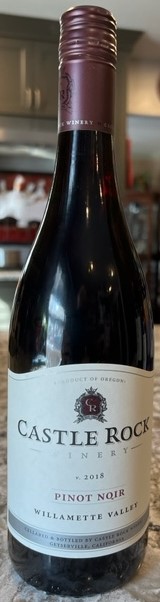
Castle Rock Willamette Valley Pinot Noir – Our other favorite red wine is Pinot Noir and this wine from Castle Rock is our basic Pinot Noir table wine for burgers, meat loaf, pork chops and the like.  It also works very nicely as the cooking wine, or the wine that goes into the sauce, when serving a nice French Burgundy with the meal.   Castle Rock makes 7 California Pinot Noirs, one from the Columbia Valley in Washington, and this one from the Willamette Valley in Oregon.  I have not tried their other Pinots.  I suspect they are made in the New World style of Pinot Noir with lots of Jammy fruit and oak, but I could be wrong.  This one is made more in the Old World style of Pinot Noir where the goal is to let the grape show its complexity, not to try to enhance its flavor with things like new oak.  We are Old World Pinot drinkers, and this gives us an inexpensive table wine, around $13, that fits our tastes.  Pick the Castle Rock Pinot Noir that you like most but don’t expect that their wines from different areas will all taste the same.   Castle Rock wines are widely available but not always the Willamette Valley Pinot Noir.  Between Calvert Woodley, Total Wine, and Wine.com I can generally find it.
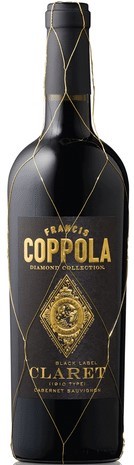
Coppola Claret – We do not have a Cabernet Sauvignon house wine.  We have flirted with several, most recently Dark Horse, but never found one that we really liked in the house wine price range.   They just had too much edge to them.  Instead, we have gone with two blends that have a significant Cab component.  The Coppola Claret is one of Frances Ford Coppola’s most popular wines and one of his most inexpensive.  It is a blend of 78% Cabernet Sauvignon, 9% Petit Syrah, 6% Syrah, 5% Petit Verdot, and 2% Segailin.  It has 14 months in French oak which gives it some aromas of roasted nuts and vanilla with tastes of clove and caramel.  On the Coppola site it is listed for $21 and Wine.com charges $18 for it but many retailers are more aggressive, and you can find it for $13-14 at Total Wine, Sam’s Club, Costco and others, so it meets the cost requirement for one of my House Wines. 

Ménage a Trois Red Blend –This other Cab alternative combines Zinfandel, Cab, and Merlot in a taste that we really enjoy along with the $12 price tag.  For a dollar or two more you can get their Decadance, Silk, Sultry Red, or Midnight blends and we have enjoyed all of them, probably the Decadence the most.  They also have two Cabs that are excellent value if you prefer the single varietal taste.  Menage a Trois wines are widely available and are in the same category of mass-produced low-cost wines as Cupcake, Barefoot, etc. that I criticized above.  This is one where I think the taste they deliver is a step above those other bulk producers but you should make your own decisions based on your tastes.  The good news is that Menage a Trois wines are readily available.    
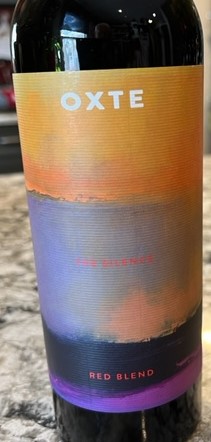
Oxte The Silence Red Blend – This wine is a total steal from Trader Joe’s which privately labels this Spanish wine from Axial Vinos and is the sole source for it in the US.  It is just $5.99!  It has a great blend of 40% Tempranillo (the primary red wine grape in Spain), 25% Garnacha, 25% Syrah, and 10% Cab.   In a blind taste test you would put this in at least the $25 price range.  Trader Joe’s has some excellent wines, not “2 Buck Chuck”, at very good prices.  Some like this one they exclusively private label.  Below is a link to a good web site for wine bargains, Reverse Wine Snob, and their list of recommended wines from Trader Joe’s which is how we first found it.  They have a similar list for COSTCO wines.   For yesterday’s Super Bowl we had a large pan of nachos for dinner and this wine was a great accompaniment.  https://www.reversewinesnob.com/search/label/trader-joes/
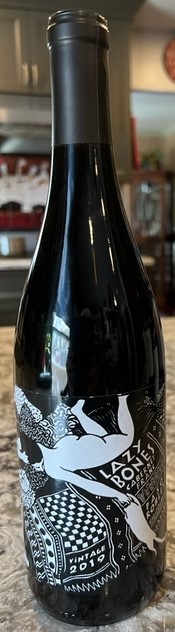
Lazy Bones Cabernet Franc – This is another wine from Trader Joe’s and even more of a great buy in my opinion at $6.99.  The naked woman on the label has nothing to do with that judgment.  I am not sure if Trader Joe’s has the exclusive on this wine from the California Central Coast but they almost always have it in stock at a great price.  For those not familiar with Cab Franc, a little before the Revolutionary War a winemaker in France grafted the Cabernet Franc and the Sauvignon Blanc grapes together and created the Cabernet Sauvignon grape, now the grape grown in virtually every wine making region of the world and making some of the most popular wines.  In the Bordeaux region of France the three grapes primarily used to make their top wines are Cabernet Sauvignon, Merlot, and Cabernet Franc.   Cab Franc is gaining in popularity as a single varietal providing a variation on the Cabernet Sauvignon taste.  Some Virginia wineries are making it along with some California wineries.  Bottom line – We really enjoy sipping this wine and having it with many different food dishes.  When we think that about the price for it, we are smiling broadly while we drink it.     
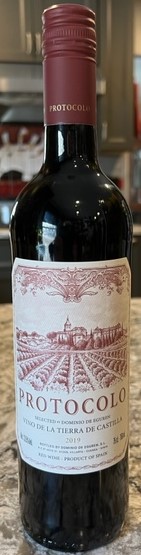
Protocolo – This is another long-time resident of our cellar and one that has not had the same price increases that the OVR and Segries have.  Spanish wines are increasingly great bargains for very good quality at attractive prices, even up to Gran Reserva Riojas.  This wine is still $6.99 at Total Wine and Calvert Woodley and $9.99 at Wine.com.  It is made by the Eguren family in Spain with vineyards in Manchuela, Rioja, and Toro.    It is 100% Tempranillo.  It is our first choice as a cooking wine if we are not pairing the dish with a specific wine to serve with the meal and is definitely the cooking wine of choice if we are serving a nice Rioja or Ribera del Duero.   Not strong enough for a Sangria in my opinion, at least for the Sangria recipe that has been handed down in our family for one generation. 
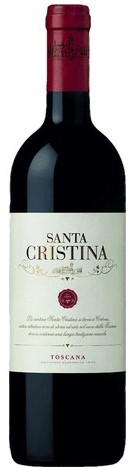
Santa Christina – the last two of our Table Wines are for Italian meals.  Santa Christina is a $10-12 Rosso wine.  The Santa Christina winery is owned by Antinori, the finest winemaker in Tuscany in my opinion.  Interestingly, they do not list Santa Christina as one of their wines on the Antinori website.  The Santa Christina vineyard is on a hilltop near the town of Cortona, not far from Siena.  It has been making wine since 1946.  It is a blend of Sangiovese (the primary grape of Tuscany) with some Cabernet Sauvignon and Syrah.   The exact percentages differ from year to year based on the harvest.  This wine has pared beautifully with any Italian dish that we have had.  At a third of the price of a nice Chianti Classico Reserva, it is very enjoyable with spaghetti and meatballs, sausage and peppers, or lasagna.  At the price it is also an excellent choice for any wine called for in an Italian recipe.  It is widely available including Calvert Woodley in DC, Total Wine, and Wine.com. 

Monte Antico – A second Italian Rosso, generally a dollar or so more expensive than the Santa Christina.  The 2016 got 90 points from James Suckling.  The name translates into “ancient mountain” and is grown in Tuscany on slopes 1,300 feet above sea-level.  The wine is a blend of about 85% Sangiovese, 10% Merlot, and 5 % Cabernet Sauvignon.   We were introduced to it years ago at a wine tasting.  Late in that tasting there was a half bottle left that had been open for over an hour.  Several of us politely finished that bottle and it jumped out at us how much it had opened up and expanded its flavor profile compared to when we had tasted it from the just opened bottle.  This wine definitely benefits from being decanted for at least 30 minutes.  Rosso wines like this and the Santa Christina can also be called Super Tuscans since that name just means other wines have been added to the Sangiovese in a blend.  It is not any kind of quality designation. 

We have had some other House Table Wines that we just cannot find any more.  Two of them are white wines that I will cover in an upcoming blog.  On the red side we are still in mourning for the Trader Joe’s Nero d’Avola that was $6.  They just cannot get it any longer and I have searched for someone else bringing the wine from that specific Sicilian vineyard into the US, but to no avail.  We have found some good Nero d’Avola wines, including one for $8 at Trader Joe’s but we keep feeling like we are paying more for a wine we like less and that has taken the excitement away from that grape. 

Our 10 white House Table Wines (no, not that White House) will be coming soon. 
Travel – Booked Another Viking Cruise

We were foolish enough to click on a web broadcast on Viking’s In Search of the Northern Lights that they announced in an email. In addition to a great 40 minute presentation, they took questions through the web site. We were totally captivated and decided we wanted to do that cruise which runs between October and March.

We looked at availability and found that January of 2024 was almost sold out already. by going out 22 months we got nice rooms on a good date for us and we got the inside scoop that If you take the London to Bergen itinerary you don’t have the same time in the northern Scandinavian cities as the Bergen to London itinerary and they recommend starting in Bergen which is what we booked.

The key here is that there is a huge pent up demand for travel that has been put off because of COVID for several years and many people appear to have put that money aside and have it available to spend as the latest surge appears to be over and some hopes that we will have lesser impact from COVID going forward, but not expecting it to totally go away any time soon if at all. If you have deferred some of your vacation plans and are ready to consider some travel again, popular destinations may be rapidly reaching capacity. Make your plans now and get your bookings in as 2023 may be fully booked already for some things like popular Viking cruises. Viking is very popular because of the fantastic job they do making their cruises very safe from COVID.

Website back in operation

I had an error in how I set up the website for this blog that caused it to shut down on Sunday. I did not get any notice and only found out Monday afternoon when I tried to see the Italian White Wine posting. I was able to get it corrected and everything is back in operation this afternoon. Sorry for the this happening. If you have not had a chance to look at the Italian White Wine posting, I encourage you to do so.

Wine: Excellent Italian White Wine

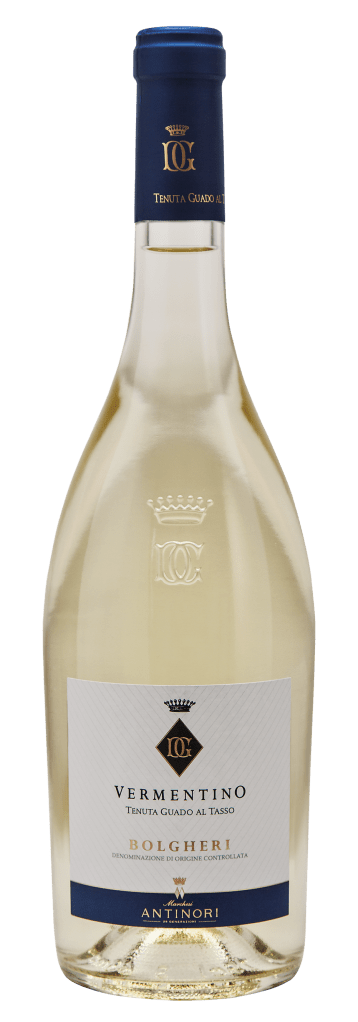
Guado al Tasso Vermentino

For very good reasons Italy is known predominantly for its red wines.  In my cellar Italian reds outnumber the Italian white wines by around 20 to 1.  But there are some very good Italian white wines: Gavi, Vernaccia, and Falanghina are some good examples and maybe a blog on Italian White Wines should be on my To Do list.  If I do that blog however, Pino Grigio would make that list only if I include one from the Alto Adige because I consider the rest of Italian Pino Grigio to be just Plonk.  You are welcome to disagree with my lowly opinion of Pinot Grigio. I am only saying that almost all Pinot Grigio is not to my taste.

But there is one Italian white wine that is very much to my taste and it is from my favorite vineyard in Italy, Tenuta Guado al Tasso, the Antinori owned winery in The Bolgheri valley of Tuscany.  It is their Vermentino, and that is the only white wine that they make.  Vermentino is a widely grown grape with lots of it from Sardinia and up the Italian coast into Southern France.  I have tried it a few times before the tasting I had with Guado al Tasso and Vermentino was solidly on my list of “Not Very Exciting”. 

That changed instantly when I had the Guado al Tasso Vermentino a few months ago.  When I recently shared with some family members who are not big white wine drinkers, they said it was the first white that was worth paying attention to.  The wine is straw yellow in color with greenish highlights. Excellent aromatic intensity with pronounced green fruit aromas of pear and grape with just a gentle touch of grapefruit and secondary aromas of cheese and wild flowers.  On the palate it’s dry and savory with the body and complexity that are generally only found with white wines at two to three times the $25 price tag of this wine.  It has medium acidity and alcohol with good persistence of flavors and a long pleasant citrusy finish. 

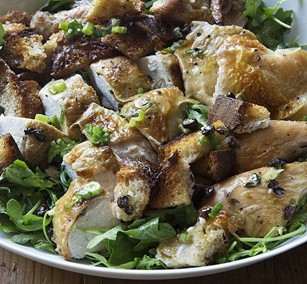
Ina Garten’s Roast Chicken with Bread and Arugula Salad

It is very good with seafood, including very flavorful dishes like Paella or Cioppino, which makes sense for vineyards right on the coast, as well as with white meats like Chicken and Pork.  We had it recently with our favorite chicken recipe, Ina Garten’s Roast Chicken with Bread and Arugula Salad shown in the picture to the left, and it was a perfect match.  While it is probably not likely to be on the shelf at your local liquor store, both Wine.com and Total Wine carry all the Guado al Tasso wines. 

It is no accident that the Vermentino from Guado al Tasso is very different from the Vermentino made in the vineyards of Sardinia and most of the others up and down the coast.  Guado al Tasso does not make any wines that are typical or expected from a Tuscany winery.  Because of the terroir in the Bolgheri Valley, they do not grow any Sangiovese grapes.  Their black grapes are Cabernet Sauvignon, Merlot, Syrah, Cabernet Franc, and Petit Verdot.  The “Bolgheri Blend” that they make compares very favorably with the blends of those same grapes from a highly regarded region of France. Their Bolgheri Superiore gets 98 points from Wine Spectator and is worth every penny of the $130 price tag it carries and it is one of the featured wines at Antinori’s lovely restaurant in Florence, Cantinetta Antinori.  Their Bruciato Red in the $ 23-30 price range stands up to any Cru Bourgeois from Bordeaux.  While Guado al Tasso is in Tuscany, their wines are totally unlike any other Tuscan winery and well worth getting to know.

DOC Bolgheri was only approved in 1995 and since then its wines have gained international recognition. The Bolgheri Amphitheater is surrounded by rolling hillsides that faces the Tyrrhenian Sea which sits between Tuscany and Corsica. This has created a unique microclimate with constant breezes that mitigate both the summer heat and the harsh winter weather and ensures a clear sky that gives excellent exposure to the sunlight. It is one of the most picturesque vineyards in Italy.

Dinner at Guado al Tasso

Beth and I joined a virtual wine tasting with Guado al Tasso put on by Wine.com in the summer of 2020 and then had the pleasure of following up with a visit to the winery in November of last year.  We enjoyed several of their wines in their lovely Tasting Room and then moved into the adjoining restaurant for a delicious dinner.

The challenge with visiting Guado al Tasso is that it is a 2 hour drive from Florence or 3 hours from Rome and there is really nothing other than Guado al Tasso worth visiting in the Bolgheri Valley. That is a long trip just to visit a winery.  Since you will be tasting some great wines, you don’t want to be driving.  My suggestion would be to hire a car and driver for the day to get you to Guado al Tasso by mid morning.  Their Tasting Room opens at 10:00 AM every day but Tuesday.  You could do a tasting, possibly a vineyard tour, and then have lunch at the restaurant there.  You can then have the driver take you to San Gimignano and get there about 2:00 when the crowds really start to thin out so you can walk that lovely town for a few hours, sample the lovely Vernaccia, have dinner there, and then get driven back to Florence to your hotel.  If this idea appeals to you, I suggest you make a reservation for lunch at the restaurant at Guado al Tasso.  I highly recommend either their daily special or their Steak Florentine which you can watch them grill on the fire at the back of the restaurant. 

Food: Bill’s Sweet Heat BBQ Sauce

Adapted from Aaron Franklin’s excellent YouTube Video on Brisket. Before he created his Master Class on Brisket that you have to pay for, he did a set of three videos on prepping, smoking, and carving brisket which were really good.

The goal of this sauce is to get the upfront sweet taste first and have the heat kick in later to get the sweet heat taste.  I do not cook with this sauce, it is on the table to be added to whatever BBQ you are having as people like. I think the Blackstrap Molasses is the ingredient that differentiates this from most tomato based BBQ sauces.

The ingredient list below has one column for 1/2 cup of sauce for 4-6 people and a second column for a full cup of sauce for a larger group. Obviously this sauce does not have any preservatives but it will keep for several days covered in the refrigerator if you want to make a larger quantity to cover left overs. I like to make the sauce a day ahead of time because sitting overnight lets the different chili powders settle in and lets you taste what the heat will really be. Easy to add Tabasco or some additional chili powders the next day if you want kick it up a notch.

Ingredients:

1/2 cup 1 cup Sauce

1/2 cup 1 cup Catsup

1 TBS 2 TBS Butter

1 TBS 2 TBS finely chopped onion

1 TBS 2 TBS Apple Cider Vinegar

1/2 TBS 1 TBS Light Brown Sugar

3 TBS 1/4 cup Orange Juice

3/4 TSP 1 1/2 TSP Chili Powder, total – I mix Guajillo, Ancho, and Chipotle

1/4 TSP 1/2 TSP Each Kosher Salt and coarsely ground black pepper

1/8 cup 1/4 cup Molasses – can substitute honey but I like molasses better

Dash 2 dashes Worcestershire Sauce

Heat – you can use any relatively mild chili powder or combinations.  Add different chili powders to get the level of kick that you want but you can’t really go backwards to make it less spicy so add in small increments. Guajillo is my base. Ancho adds some smoky flavor.  Chipotle adds some depth.  Habanero adds a lot of heat so be very careful with it if you want to add that to the mix.  You need to let the sauce simmer for at least 15 minutes after adding any chili powders to get any idea of the impact it will only be the next day where you will get the final taste. It generally has a little less kick and shows up a little later in the taste the next day.  I don’t have measurements if you want to use different chili peppers instead of powder so I can only say add to taste and again, that taste will evolve considerably over time. 

Making the Sauce:

In a stainless-steel pot melt the butter and cook the onions in the melted butter.  Aluminum pans may react a little with some of the ingredients so stainless steel is recommended.  When the onions are translucent add the other ingredients and, using a large wisk, combine them together.  Let simmer for at least 20 minutes and taste.  Correct to your taste buds, heat, sweetness, and acidity, and let simmer a little longer and then remove from the heat. 

Three choices to finish:

  1. Save as is with the onion making it a little lumpy. The finer the chopped onion, the less they will be noticeable. Some people do not like any lumps in their BBQ sauce.
  2. Put in the blender to liquify the onion.  If you use any chili peppers instead of powder blending is recommended.
  3. Run through a strainer to remove the onion chunks. This is what I usually do.

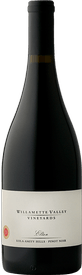
WINE – Willamette Valley Vineyards 2018 Elton Pinot Noir

In 2020 my focus was on Rhone Valley wines. In 2021 that focus shifted to Pinot Noir and especially (virtually) exploring the Willamette Valley in Oregon which I think is second only to Burgundy in the production of excellent Pinot Noir.

The Elton Pinot Noir from the Willamette Valley Vineyards is a great example. While only in the bottle for two years after 16 months in French oak, 29% new oak, it has a deep intensity and very full body. WVV suggests that the peak drinkability will be 2026 but I suspect this wine could continue to age very well for a few years beyond that and I will lay a couple of bottles down to see.

I did a quick taste when I opened the bottle and then I decanted it and let it sit for 45 minutes. What a difference!! It had fully opened up and the initial aromas of cranberry and a little raspberry were expanded to include blackberry as the lead aroma. The secondary aromas were some cedar and anise. The initial taste had only a medium intensity with a rich ruby color but giving it a chance to fully open brought the intensity level up to deep with a rich nose. The acidity is medium. The decanting definitely softened the tannins and let the complexity develop in my mouth. That is what makes me think this could easily age for 10 years or longer. The body was medium plus and nicely rounded with a lovely long aftertaste.

The price from the WWV web site is $60 with discounts available for club members. I have not found any local sources for WWV wines in the DC area yet so buying from the vineyard may be the best way to get this excellent wine.

WWV Estate Tasting Room

This is a single vineyard wine from 60 acres on the east/southeast slopes of the Eola Hills.

Note: This review is not totally unbiased. I own a few shares of preferred stock in WVV and get a 25% discount as a minority owner. Shares of the preferred stock are still available and if you would like a link to the web site to find out more about this, use my email from the Contact Me page to send you your email address and I will send that link to you.

FOOD – Fried Eggs

Significant portion of the whites have not started to cook yet

If you can’t fry an egg then you might be a candidate for the Worst Cooks show on Food Network. But there is a real challenge in properly frying an egg. How do you get the white all the way cooked and still have the yolk nice and runny? If you are putting that egg on top of a dish so the yolk runs out and provides a sauce for it, getting the egg cooked properly is not easy. It takes a long time for the white to fully cook, as shown in the picture, and by then the yolk is usually overcooked and turning solid.

For years I would order my eggs in a restaurant “over VERY easy” and most times them came out OK. Basting the egg in the fry pan with butter or oil works but is a pain and significantly adds to the calorie count of that meal. On Beat Bobby Flay he shared his trick for fried eggs and after using it successfully, I am passing it on here.

After 15 seconds under the broiler the egg is perfectly cooked

Before you start with the eggs, turn the broiler on in your oven and get it fully up to high heat. Then fry your eggs in a fry pan that can be put in the oven under the broiler. I like the MadeIn Carbon Steel pans for this but cast iron will also work well.

Leave the pan under the broiler for 15-20 seconds. Keep an eye on it because it can go from fully cooked whites to hard cooked yolks in just a few seconds. You can always pull it out to check and put it back for another couple of seconds but you can’t recover if the yolks have been hard cooked. In the picture you can see the whites are fully cooked now and the yolks are still soft and runny.

Egg on top of Corned Beef Hash

I then served the eggs on some Corned Beef Hash that Beth had made us for Brunch and the yolk provided a rich sauce for that delicious meal.

Poaching an egg is another approach and many recipes call for a poached egg to give that rich egg taste and the enjoyment of breaking it open with your fork and seeing the yolk streaming over the dish. But I don’t have any secret tricks on how to simply poach an egg and this approach that gives a perfect fried egg is my go to when I want to top off a dish with an egg that has a nice runny yolk.

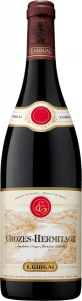
WINE – Guigal Crozes-Hermitage 2016

Chateauneuf-du-Pape is the the standard bearer for the Cote du Rhone and Hermitage is its counterpart in the Cote Roti at the north end of the Rhone valley. But just like Michael Jordan took a lot of the limelight away from Scotty Pippen, Gigondas in the Cote du Rhone and Crozes-Hermitage in the Cote Roti don’t get the same press while they produce excellent wines, and at a much lower cost. I promise to do a blog on Gigondas but today the focus is on the 2016 Crozes-Hermitage from Guigal.

Let’s start with Robert Parker calling the Guigal brothers the best winemakers in France. James Suckling gave this wine 91 points and there at not many wines under $30 that get that kind of ranking.

This is a big, full bodied red wine with a deep ruby color and pronounced intensity. It is 100% Syrah and the primary aroma is red fruit, particularly red cherries and the secondary aromas are leather and smoky wood from the 24 months that it is kept in large oak barrels after being fermented in stainless steel tanks. The 2016 had complex tannins that relaxed some when I decanted it. Like many Syrah/Shiraz wines, it has a fairly long finish that I really enjoy.

It will age for at least 10 years and improve significantly from that aging. I bought mine from Wine.com two years ago so it had just been in the bottle 2 years then. I have not done a vertical tasting to prove how the additional two years in my cellar improved the flavor but I put this Guigal wine very high on my list of wines that are a great bargain at under $30.

It has excellent availability with Total Wine and Wine.com carrying the 2017 and 2018 vintages and some online stores still have some of the 2016.

The vineyards are low yield on the hillsides around Crozes-Hermitage and controlling the yield concentrates the flavor. If you like bid red wines, I think you will be very happy paying less than $30 for this wine.

Travel – Viking Cruises – River vs Ocean

I am a big fan of Viking cruises.  Their approach is very much focused on what I want on a cruise: people over 40 and not families with children, good food and wine, a choice of excursions, and especially smaller boats and no huge crowds.  I have no issue with people who are looking for all the things that I am looking to avoid and we can each enjoy the kind of cruise that appeals to us.

I have done two Viking river cruises and one ocean cruise.  There are things I like about each of them and this blog will do a comparison that might help you with your travel planning.  Two major disclaimers:

  1. The river cruises I took were before COVID.  Some of the things that I will talk about that I really liked about river cruises may be different while we are dealing with COVID.  The ocean cruise I took was in November of 2021 and I give Viking the highest marks for the things they did to make us feel safe and protect the health of the passengers and crew.
  2. The ship we sailed on for our ocean cruise has a capacity for 930 passengers.  We only had 471 on board so just over 50% capacity.  The experience on the same cruise with the ship at full capacity might be different in some ways. 

As indicated, I am a Viking fan and am planning another cruise with them in 2023.  The things that I really like about any Viking cruise, river or ocean, are:

  • Very targeted marketing: The Viking cruises that I see on their web site are for an English speaking audience that is looking to cruise with people in the 50-75 year age range.  Some are younger and some a little older but while accommodations are made for those with handicaps, most of our fellow passengers were in good health and active.  The younger people on the cruise were generally mother/daughter or father/son combinations with the child at least in their late 30s.  The activities on board and the excursions were very focused on things this age group would enjoy.
  • Excellent service: The entire Viking staff is committed to help each passenger enjoy their cruise.  Within 24 hours of getting on board my stress level is at its lowest and I am enjoying excellent service and people trying hard to make my day very enjoyable.  On the recent ocean cruise we were totally spoiled with the service including being able to walk into any of the restaurants and have a table available.  When the ship has a full capacity of passengers, I believe having reservations at the different restaurants is required and the staff would have more people to wait on.
  • Very good excursions:  Both of the river cruises and the ocean cruise did most of their sailing at night, so we were at our next destination in the morning for that day’s excursions.  For the ocean cruise the only day time sailing we did was a few hours the first day from Civitavecchia up to Livorno.  On the river cruises we would start our morning excursion where the boat had docked, and it would sail up the river and we would rejoin it at that location.  There were a few times when we stayed on the boat and enjoyed sailing up the river instead of being on an excursion.  Every day has a at least one free excursion and several ones that cost extra.  On each trip we had one location where Viking really had a challenge finding excursions that were interesting and enjoyable and we took that as an opportunity to just crash for the day on board, sleeping in and just lounging around.  Viking gives each passenger a wifi receiver with headset and is linked to the guide for that excursion and the groups are generally no larger than 25 people.  This lets you clearly hear the guides, who are very qualified, and with the small groups, they have lots of time for questions.  The only negative I can say about Viking excursions is that they do not do a good job with excursions where wine tasting is a key element.  We skipped both of their wine tasting excursions in the Rhone Valley, one of the top wine regions in the world, because they were only tasing two wines.  We scheduled our own wine tasting through Viatour and enjoyed 8-10 different wines each time.   The Chianti wine tasting dinner we had on the ocean cruise was very poorly done and the entire group was very unhappy about it.  However, the wine tasting dinner on the Portugal river cruise was outstanding and the two other excursions that included wine tasting were mixed with one good one and one disappointing one at Sandeman’s Port Winery.  The excursions are generally excellent in quality and I only bring this up because it seems to be a theme that Viking does not have excursions geared towards people who are serious about wine.  For culture, history, scenery, and food – the excursions are all very high quality.
  • Dining – The food on all three of our cruises was excellent.  Very good choices and delicious.  My only criticism is that I think the menus could be more closely tied to the cuisine of the region being visited.  The Portugal river cruise did a pretty good job of this.  But the Rhone Valley cruise had one very good lunch buffet of local dishes but nothing else that was tied to that region.  On the ocean cruise we were doing Northern Italy, Southern France, and Spain; three regions known for their outstanding cuisine.  But the top restaurant on the ship, the Chef’s Table, had three different theme menus, none of them related to where we were cruising: The Spice Trade with spices from the Orient, California, and Mexico.  I am sure the dishes were excellent, but we did not come to the Mediterranean to eat Mexican food, even of the highest quality.  Again, as with the note above on wine tasting excursions, this is a complaint about just one aspect of an otherwise excellent dining experience.  Viking provides free wine and beer with lunches and dinners.  I highly recommend the Silver Beverage Package which is priced per person based on the length of the cruise.  It was about $130 per person on the three 8 day cruses we did.  Under this package you can select wines form a very good wine list at no charge to you and all drinks form the bar are included.  We enjoyed some nice after dinner drinks in particular and are big fans of the Silver beverage package.
  • Bundled travel – I have lifetime status on United and lots of points to get me in Business Class, so I have not taken the package with Viking that includes the airfare.  But I am very jealous of the people who do take that package.  They are met at their arrival airport by Viking with transit to the ship with their luggage taken care of and on the return Viking gets them and their luggage to the airport on time for their flight.  On several of the cruises some people were going from one Viking cruise to another and again, they had someone taking care of them the whole way.

River Cruises

What I particularly liked about the two river cruises we took was being on a ship with only less than 200 other passengers.  There is one dining room and everyone eats at the same time.  On our cruises most of the tables were for 8 people and you could meet different people at each meal.  On both cruises we met some lovely people and arranged to do excursions with them and join them for meals.  We did not get to know any other passengers on our ocean cruise.  This was very much due to COVID restrictions and the collaborative atmosphere that we really enjoyed on the river cruises may now be a victim of COVID.  For the both river cruises the bartender and the wait staff in the dining room was talking to me by name and knew what my preferences were because of the small number of passengers.

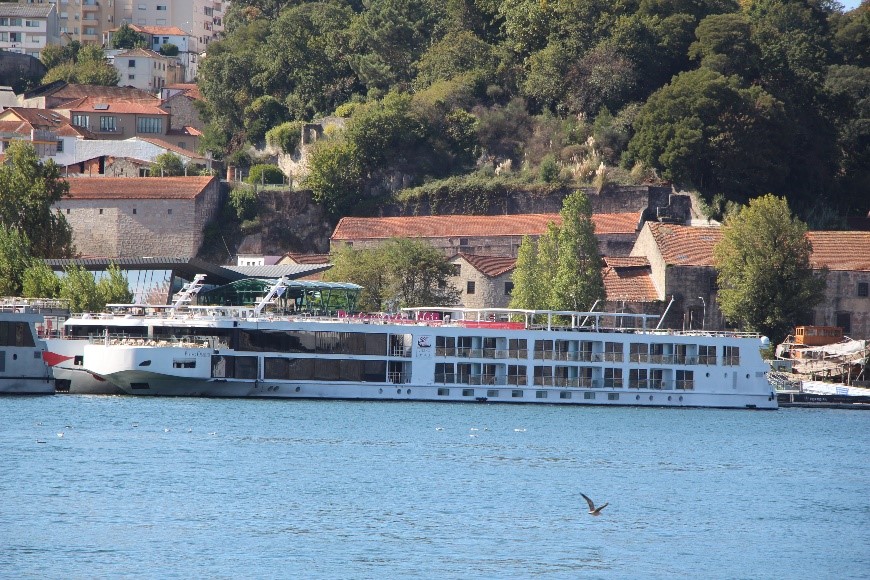
Viking Longboat in Porto Portugal

There is one bar serving drinks before and after dinner.  Before dinner there is a talk on the next day’s excursions and after dinner most evenings there is some form of entertainment for those who are interested.  Taking your after-dinner drinks, included in the Silver Beverage Package, up to the Sundeck is a very pleasant alternative if the entertainment is not to your choice. 

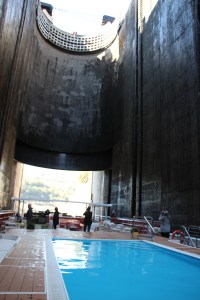
Most river cruises have locks that they transit and those are interesting, at least the first few times.  The lock we had in Portugal has one of the highest elevation changes of any lock in the world I believe.  Hopefully the picture conveys that.

For those who want a casino and different night club shows every night, river cruises may not be for you.  Also, they do not have pools or health clubs to work out in.  Before retiring my life had high stress levels with deadlines and many meetings.  I am looking for a vacation where things are at a slower pace, and I can be waited on while I sit in a comfortable lounge chair and watch the scenery and maybe read my book.  What I liked most about our river cruises was no crowds, the only schedule to worry about was when the excursion left, and good food and wine.

We will be taking the Viking River Cruise from Amsterdam to Brest in December where we will visit the Christmas Markets in 7 different cities. I suspect here will be lots of pictures from that cruise.

Ocean Cruises

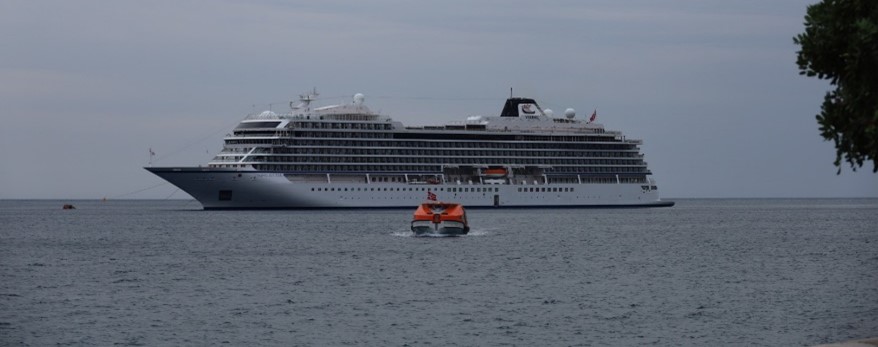
The very first cruise we did was a Princess Cruise from Vancouver to Alaska on a boat with 3,500 passengers.  The scenery was great but I didn’t really relax until we got off the ship for the land portion of the trip.  I had pretty much ruled out cruises from our vacation plans after that until we heard about Viking river cruises.  Having really enjoyed them and talking to several friends who took the Viking Mediterranean ocean cruise, I was willing to give it a try on a ship like the one in the picture with only 950  passengers.  I really enjoyed it and we are looking at several other itineraries for future Viking ocean cruises. 

Viking Ocean Ship anchored in Nice, France

The major differences for the ocean cruise are the broader range of choices available on the ship.

  • Dining – There were four major restaurants and several other smaller ones like the pool bar.  Two of them required reservations and based on how much you paid for your accommodations drove how many reservations you could have in each and how much ahead of your boarding the ship you could make those reservations.  As noted earlier, because of the low passenger count, we could walk into any of the restaurants and be immediately seated.  This gave us a very wide range of cuisines to choose from with each of the restaurants posting that day’s menus on line.  When the ships are back to carrying a full load of passengers, the dining choices each day will be much more limited and driven by reservations for a specific restaurant at a specific time.
  • Entertainment – Entertainment is not a high priority for us on a cruise and while the choices were much more than on the river cruise, they are nothing like the huge cruise ships with 7,000 passengers. The ocean ship ship had many more entertainment options including four different Viking resident musicians which were a solo guitarist, a harp player, a string duet, and two very talented singers doing popular and classic rock songs.  At different times they played in different locations so we could enjoy some lovely background music or more lively entertainment.  The closest thing to a night club type environment was the singers in the ship auditorium but with the head count even that had lots of open space.  Other entertainment options included:
    • A Viking Resident Historian offering a set of lectures and discussions on a variety of topics.
    • Guest lecturers on the art, architecture, music, and geopolitics of the places we were visiting.
    • Destination Performances – at least one cultural performing group from the region we were visiting.
    • TED Talks.
    • Port Talks on the next days excursions.
  • Pool and Spa – The ship had two pools, each with a Hot Tub.  At the very stern of the ship was an Infinity pool and mid ships was a larger pool with a sliding roof that they could open or close.  While we were in the Med, it was November so they kept the roof closed most of the time so passengers could take a dip in the pool or enjoy the hot tub.  They also had a well-equipped health club and spa and both my wife and I enjoyed a massage.  For us, the hot tubs and the Spa were things we very much enjoyed that are not available on the river cruises.
  • Nooks and crannies – The ship and many different places on different decks to sit and relax or talk.  The chairs were very comfortable, and it was never far to get a glass of wine.  We upgraded our room to the Junior Explorer Suite which had a sofa as well as two chairs with a curtain to pull between the sitting area and the bed so one of us could read without having a light on while the other slept.  But with the different nooks and crannies we never felt like we had to stay in our room and could easily find more comfortable chairs to relax in.  Again, with twice as many passengers on board, more of those nooks and crannies would not have been vacant.
  • Sailing vs mobile hotel – For our itinerary virtually all the sailing was done in the evenings and overnight.  We were at the dock in a new port most mornings.  That made the experience more like a mobile hotel than a cruise.  Talking to other passengers, mostly during the excursions, who joined the ship at an earlier departure point, they said they had some days where the ship was sailing, and they could sit out and enjoy it.  From Barcelona where we ended our cruise, the ship had a few other stops around the Med and then was going to South America so that would be several days at sea with no excursions.  If you want to enjoy some sailing time on the boat and not just a very nice mobile hotel, check the itinerary so see what will be available.
  • Motion sickness – The river cruises are never far from shore and did not have any time when they had any motion that could cause sea sickness.  Many times there was no sensation of movement at all.  Several times we finished dinner and walked in the companion way to see that while we were at dinner another Viking boat had some in and was between us and the dock and we needed to walk through it to get on and off.  But we had no idea the ship was moving to make that happen.  The big Princess boat we were on did go through one storm on the way to Alaska and even with its gyro stabilizers at least 1/3 of the passengers skipped dinner with waves breaking against the windows in the dining room.  But we had no bad weather in the Med during our cruise and virtually no sense that the boat was moving at any time. 

Summary

I really enjoyed both the Viking River Cruises and the Ocean Cruise.  But I have no interest in getting on any of the big cruise ships with 5,000+ passengers so I will stay on the much smaller boats like Viking has for any future ocean cruises.  In choosing between booking a Viking river cruise or an ocean cruise my recommendation is if you are primarily interested in what you will do each day when the ship is docked then a river cruise might be your first choice.  If you are very interested in what you can do on board the ship, especially in the evenings, then you might enjoy the ocean cruise more.  River cruises have things to do each night but nothing like the choices that the ocean cruise has.  Ocean cruises have great excursions but you are covering a much larger area from the start of your cruise to the end so you get breadth where the river cruises give more depth.  Our Rhone Valley cruise started in Avignon and ended in Lyon 8 days later.  You can drive from Avignon to Lyon in a few hours so we really had a chance to explore the Rhone Valley.  On the Portugal trip we sailed from Porto up the Duoro River to the Spanish border and then sailed back for 6 days on the boat.  For the ocean cruise we started in Civitavecchia, the port city for Rome, and went around the coast up Italy, across France and ended up in Barcelona.  Three different countries compared to two different cities.  Both are very good, just pick the itinerary that best fits your interests.

Of the three cruises we did the Portugal River Cruse was my favorite but we really enjoyed all three and are looking forward to our December cruise. I hope this post has been interesting and helpful to you.

Link to Viking River Cruises: https://www.vikingrivercruises.com/

Link to Viking Ocean Cruises: https://www.vikingcruises.com/ocean