The top wines of Bordeaux are some of the most popular and highest rated in the world, but also carry some pretty hefty price tags because of that popularity and those ratings. However, there are very good Bordeaux wines at much lower prices. In this post I will talk about one way to find some very good Bordeaux wines at what I think are attractive prices.
One of the things that is very confusing about Bordeaux wines is the multiple different classifications that the vineyards have. The vineyards with the very highest ratings in those classifications carry the highest prices, and they make great wine that lets them sell out their harvest every year at those prices. But many of those top rated vineyards also make a second wine. These second wines are not great, but they are very good. The current vintages generally sell in the $30-60 range, and I will provide more specifics on prices for five of them that I think are very good examples. Those same wines will carry higher price tags as they age. As of this writing in June of 2023, the 2020 vintage is generally available and the 2021 should hit the stores very soon and the prices that I will be talking about are for those vintages.
What is a “second wine” and what do I mean by “very good” as opposed to “great”? Second wines are usually made from same vineyards as the Grand Cru wines, but from younger grapes and from plots that were not completely used in the final blending of the Grand Cru wine. The grapes from younger vines do not have the same flavor as grapes from older vines because their root system is still growing and is not delivering all the trace elements from the terroir that a mature vine with a deep root system does. Also, some of the parcels may have been more impacted by weather, e.g. too little or too much rain, and their quality for this harvest is not up to the Grand Cru level.
There is no strict definition of what a second wine has to be in order to carry the name, it is totally up to the owner of the Chateau. But the market has determined that many of these second wines will sell at prices 25-40% of the price of the Grand Cru wine from that same Chateau.
What I like about these second wines is that many of the winemakers are saying these second wines are better than the Grand Cru wines they made 40 years ago. They have made major investments in their wine making equipment and processes, many of them in the last 10 years, and that has significantly improved the quality of their Grand Cru wines. Their second wine is made by the same winemaker and goes through the same processes with the same equipment and technology as the Grand Cru wine so it has also had a very significant quality improvement in recent years.
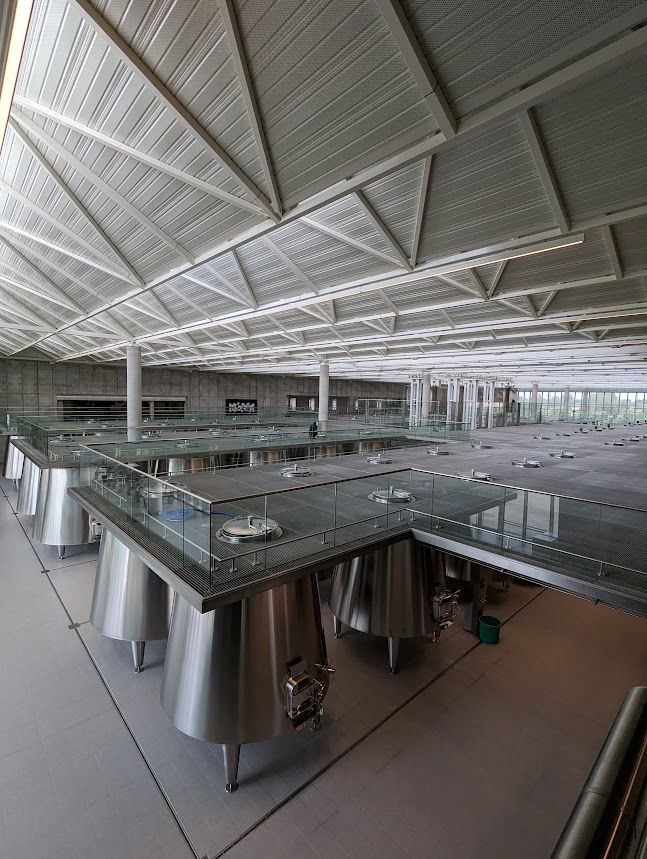
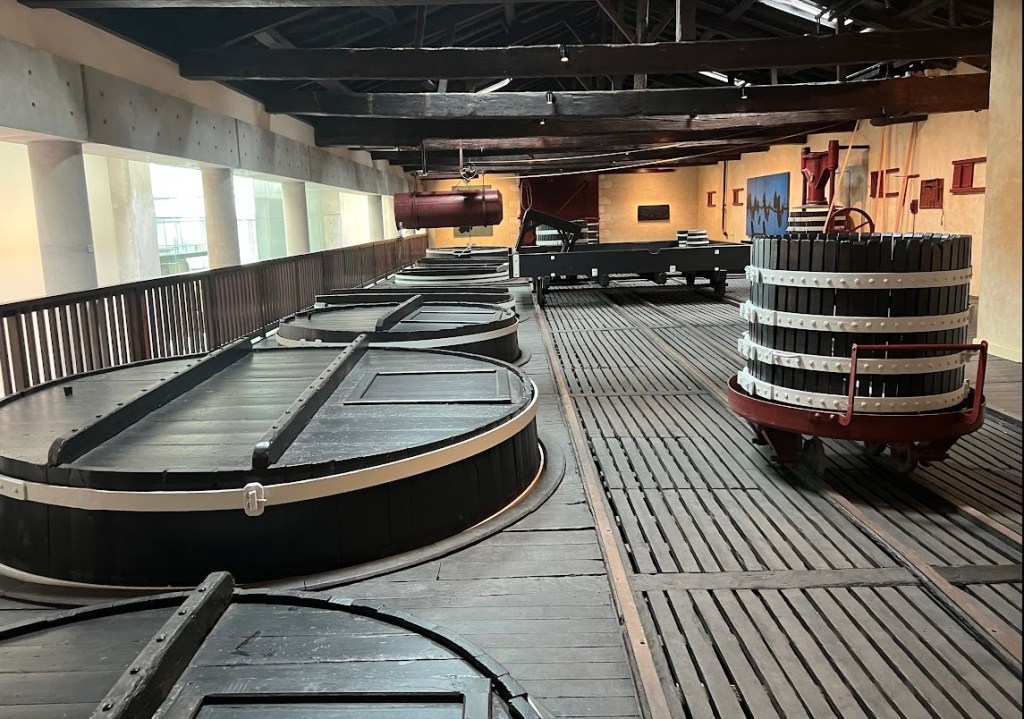
The picture on the left below is the room used by Lynch-Bages starting in 1866 to receive the grapes, destem them, crush them, put them into the wooden barrels to ferment, and press the skins after maceration to get all of the remaining juice. The picture on the right is their new cellar opened last year and bottling their first wine this year.
Lynch-Bages new Vat Room
Chateau Lynch-Bages old wine making equipment
Some of the significant things that the new vat room has that positively impacts the quality of the wine being made include:
The entire process from receiving the just harvested grapes to bottling the wine uses gravity to move the grapes and juice from one stage to the next. No grapes or juice is ever pumped through hoses avoiding the trauma that such pumping inflicts on the grapes and the juice.
The destemmed grapes are put on a belt that goes through an optical sensor. Any grape that does not meet their standards gets a puff of air that shoots it off the belt and into the trash. Those rejected grapes are not used for the second wine.
The stainless steel fermentation tanks can be strictly temperature controlled to get the best low temperature fermentation.
There are enough tanks of different sizes that each plot of vines has it own tank for fermentation and for maceration. The blending can then be done using the unique characteristics of each plot to get the very best wine and then move that blended wine into oak barrels for a year of aging before bottling. The wines not used for the Grand Cru are then blended to produce the second wine, which barrel ages for just a month of so less than the Grand Cru wine.
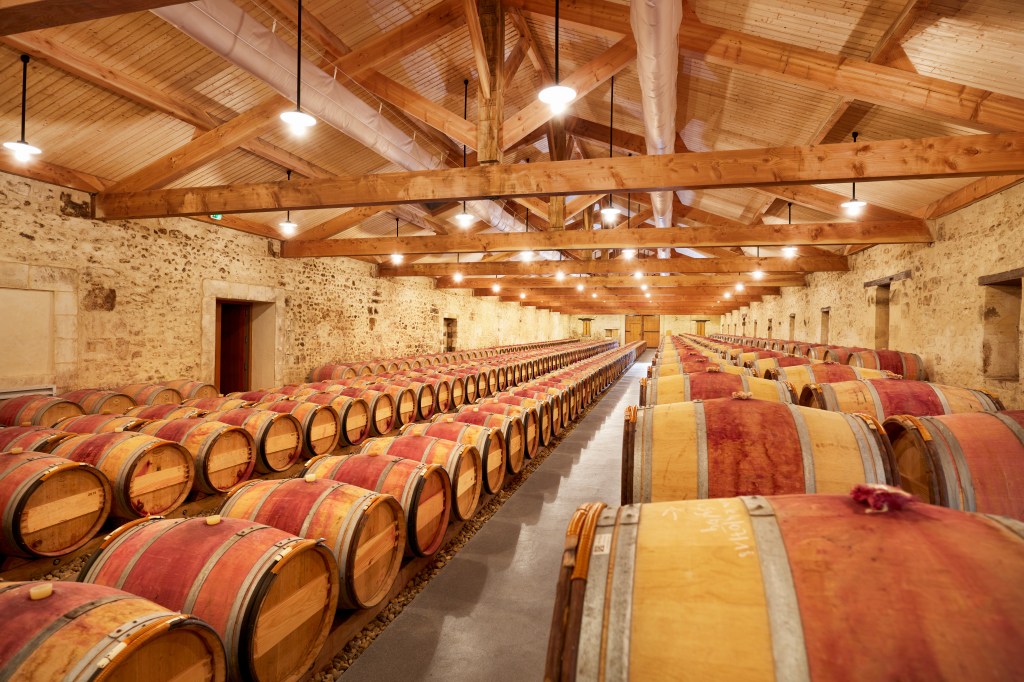
The barrel cellar can be kept at 15° C (59° F) with just the right humidity for aging.
While not related to the quality of the wine produced, everything about the building, the windows, the lighting, and the processes used is very efficient from an energy perspective.
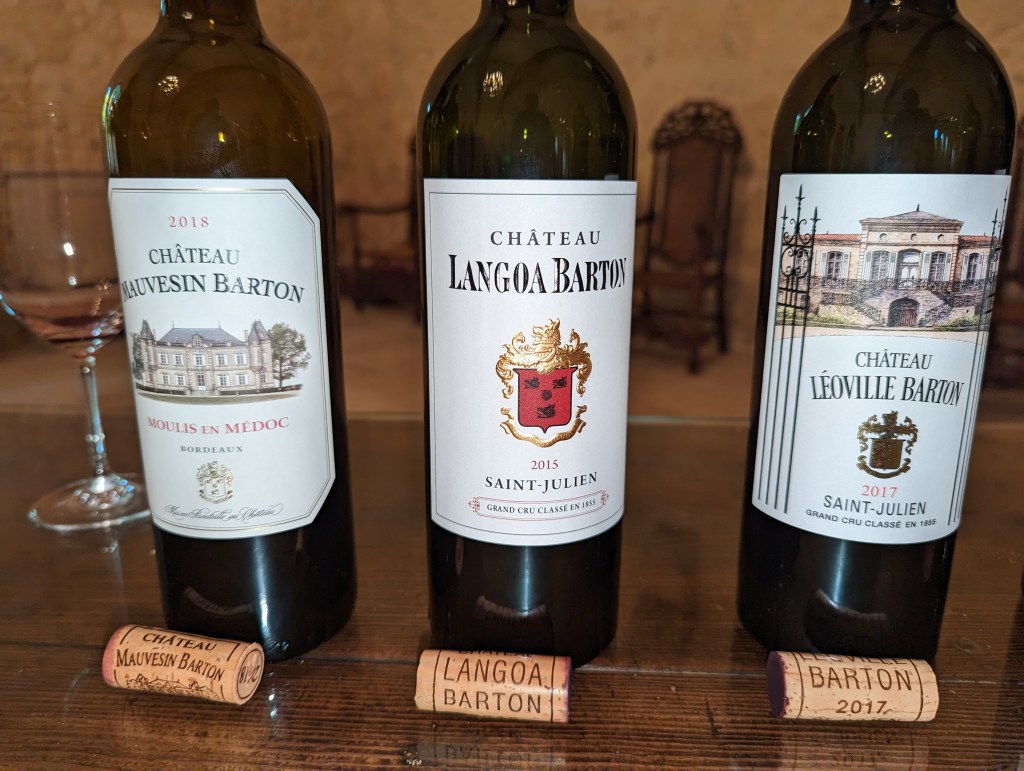
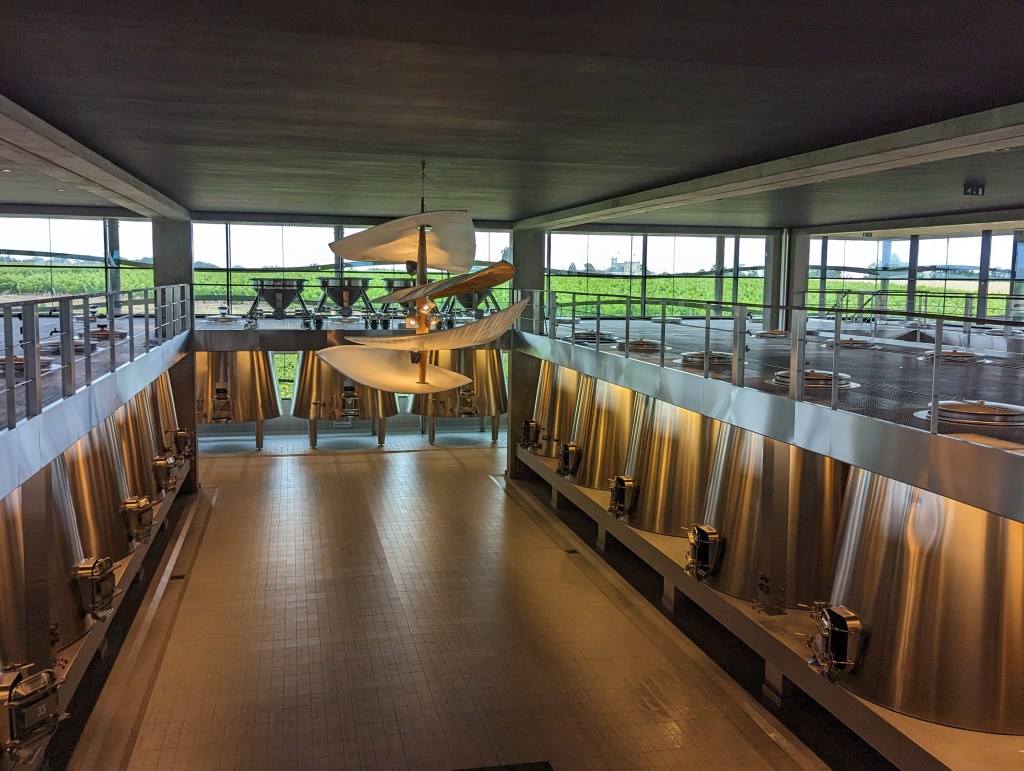
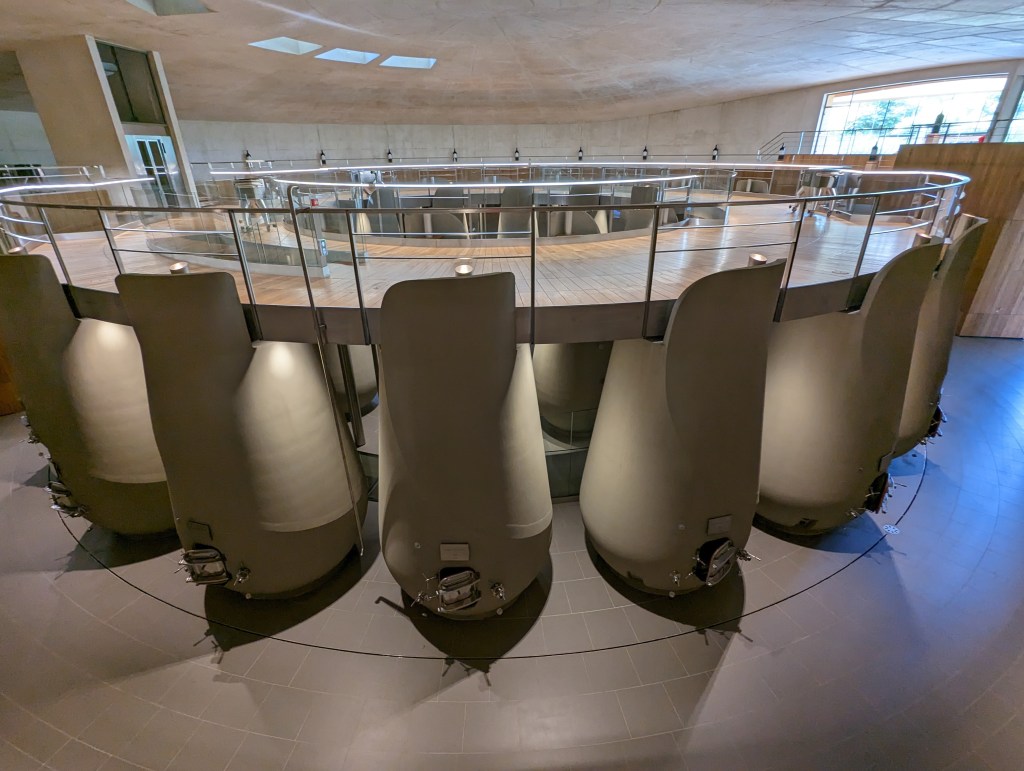
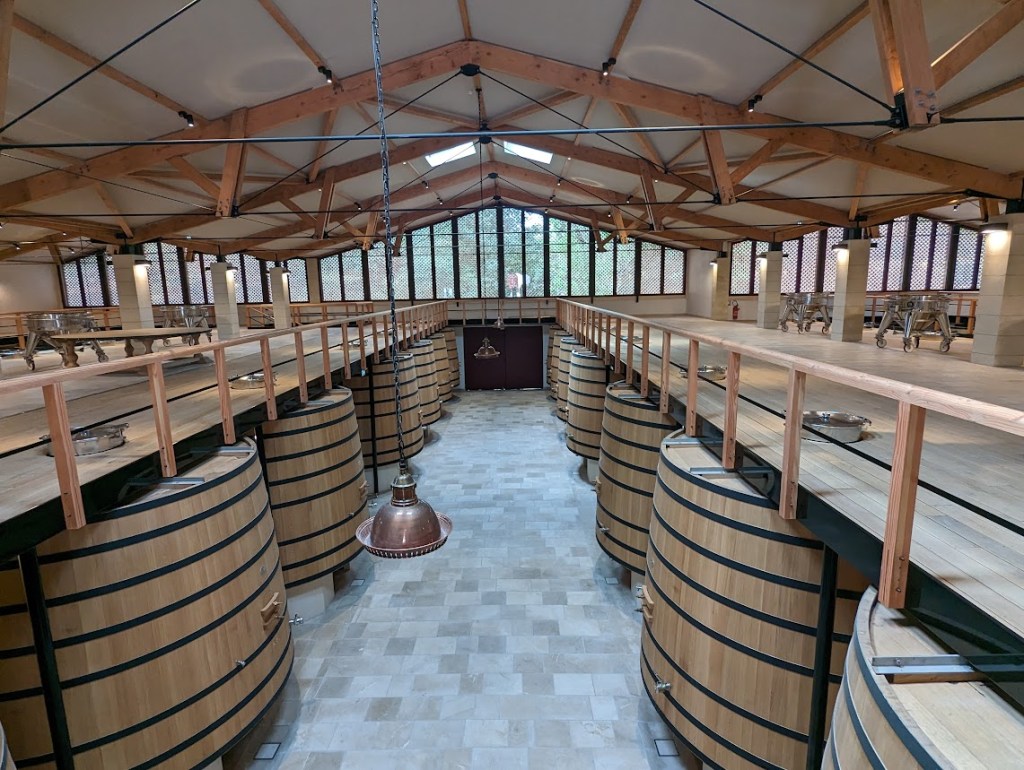
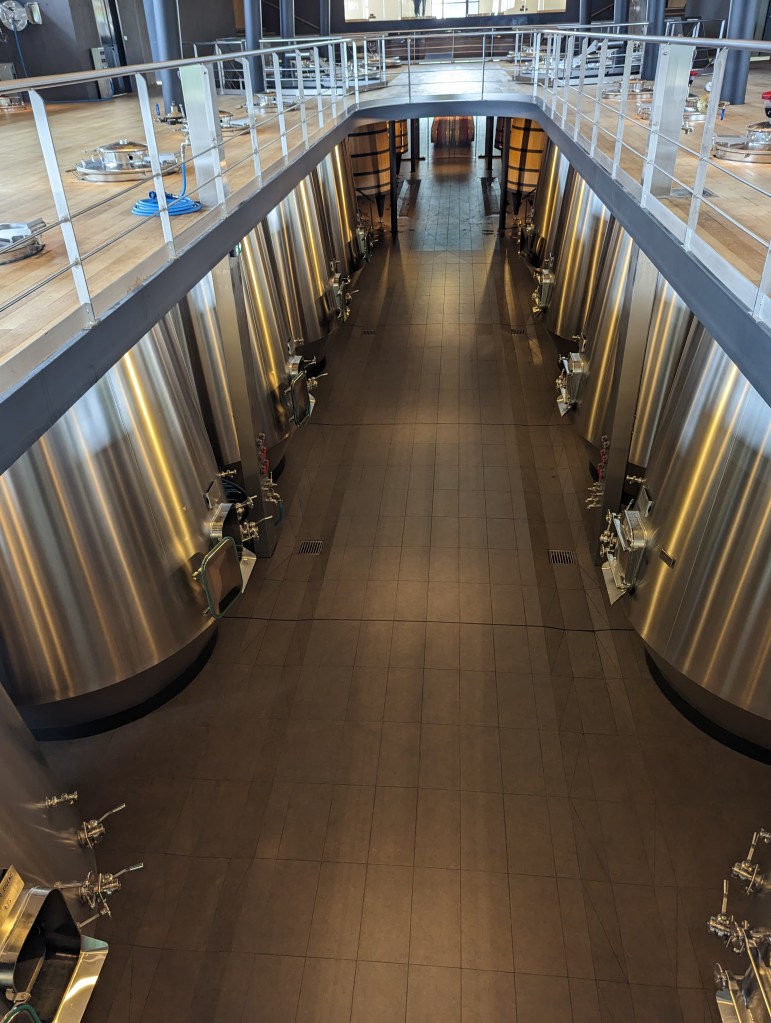
The pictures below are the new cellars of Beychevelle, Haut Bailly, Leoville Barton, and Figeac as other examples. While all are fully committed to the gravity process and being very energy efficient, they have their own idiosyncrasies such as using concrete or wooden tanks of different sizes so they get the wine that they want to make. The end result is wine of much higher quality, both their Grand Cru wine and their second wine. It was a significant investment to put in completely new wine making equipment and many smaller chateaus are not able to afford that change yet and their wine is not getting those benefits.
Chateau Beychevelle Vat Room
Chateau Haut Bailly Vat Room
Leoville Barton Vat Room
Chateau Figeac Vat Room
As a rule, a second wine is a little more fruit forward and will age a little faster than the Grand Cru wines. Most wine makers suggest that you don’t even think of opening their Grand Cru wines for at least 10 years. Anything later than 2013 should stay in your cellar. Those wines will really hit their peak for drinkability at about 40 years of age and hold that peak for a long time after that. The second wines should be held for at least 5 years and will show significant improvement for the next five years after that. They will typically hold their peak for at least ten more years after that.
If you buy a case of the 2020 vintage of any of the five wines below, your investment would be $360-720. If you started in 2025 to drink one bottle a year, that wine would be really good and get even better each year. You would want to decant it for a couple of hours and of course you want that wine at 16° C (61° F) to taste all of its wonderful flavor. The last couple of bottles, if you could find them for sale in 2035, would probably retail for more per bottle than you paid for that full case of wine! If you bought a case each year for a few years than you could do a vertical tasting with 3 or 4 bottles each from different vintages and see the differences from one vintage to the next and how each vintage is aging. I believe you would quickly be in full agreement with me that these are very good wines at a good price.
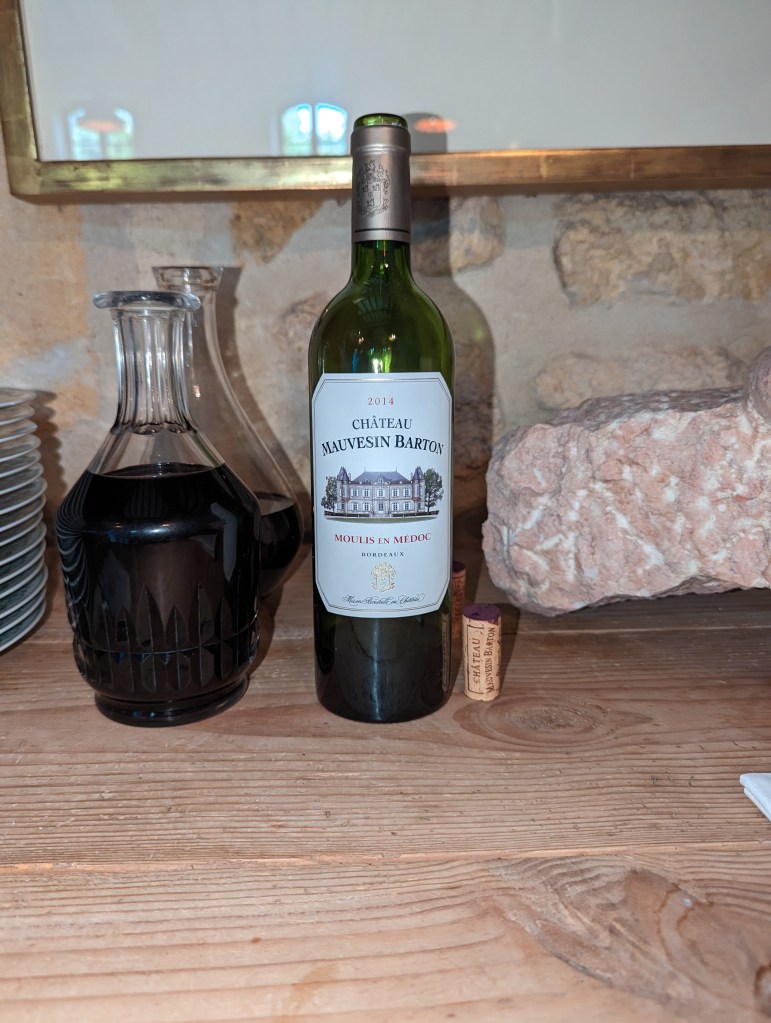
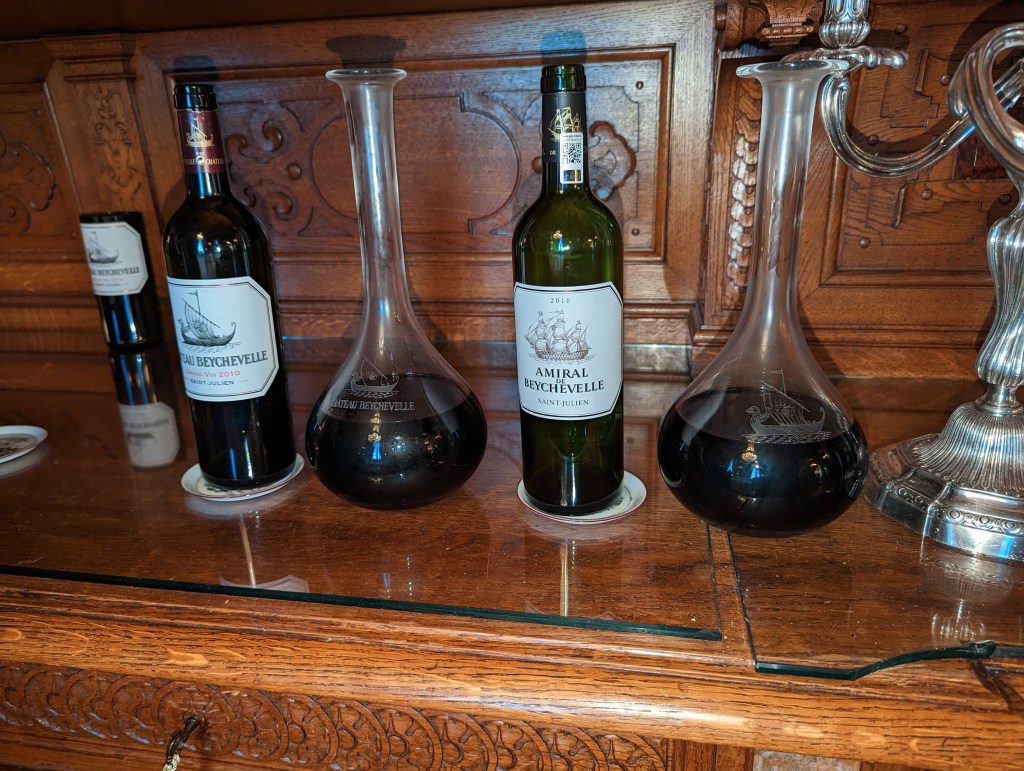
Many, but not all of the top chateaus, offer a second wine. Below are five that I like and what the 2020 vintage is currently selling for.
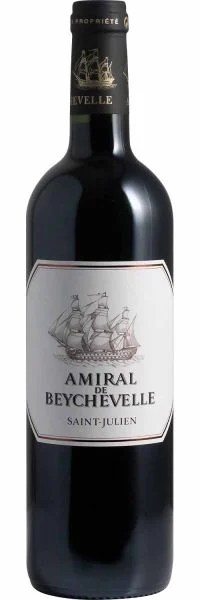
Beychevelle Amiral – $40-45. Chateau Beychevelle was 4th Growth in the famous 1855 Classification of the 60 estates making the best wine on the Left Bank.
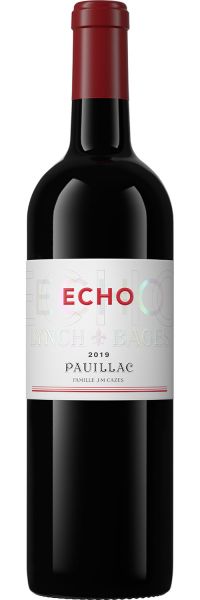
Echo de Lynch-Bages – $45-50. Chateau Lynch-Bages was a 5th Growth in the 1855 Classification.
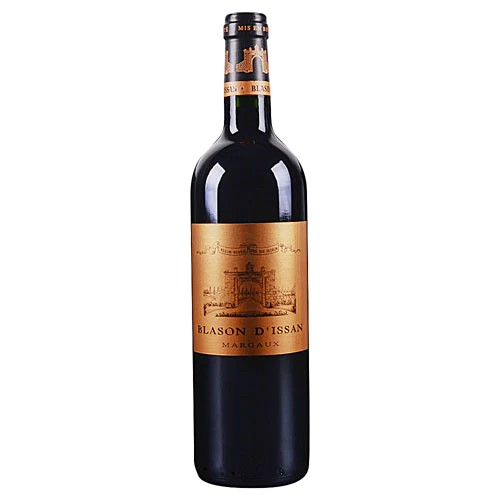
Chateau Blason d’Issan $30-35. Chateau D’Issan was a 3rd Growth in the 1855 Classification.
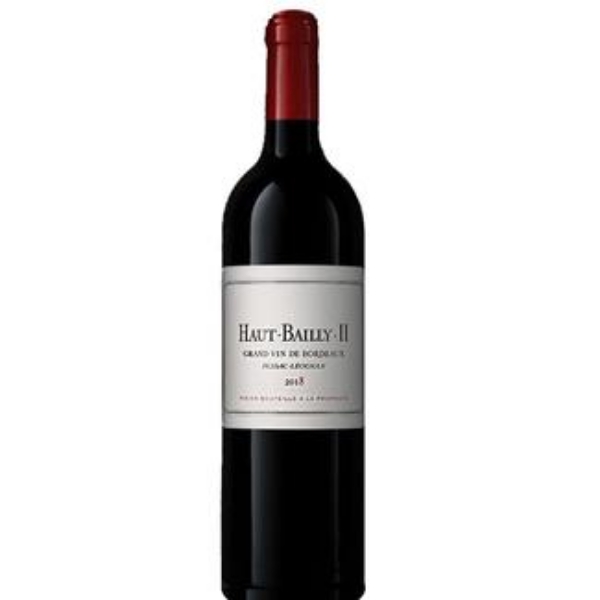
Haut Bailly HB II $35-45. Chateau Haut Bailly is a Graves Grand Cru Classe.
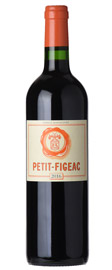
Petit Figeac $55-60. Chateau Figeac is a St. Emilion Premier Grand Cru Classe.
Download a list of the recommended wines with pictures or each bottle.
Second wines are not the only way to get very good Bordeaux wine at fraction of the price of the top classified Grand Cru wines. I will be looking at a couple of other ways to affordably drink very good Bordeaux wines in some future posts.
As we move into the summer months, here are my favorite fourteen Rose wines. Many people think Rose wines are sweet and are not interested in tying them. A LONG time ago, when Beth and I first started drinking wine, this was true in the US. The most available Rose choices were Mateus and Lancers, a sparkling Rose sold in a ceramic croc. They were both more like soda pop than wine.
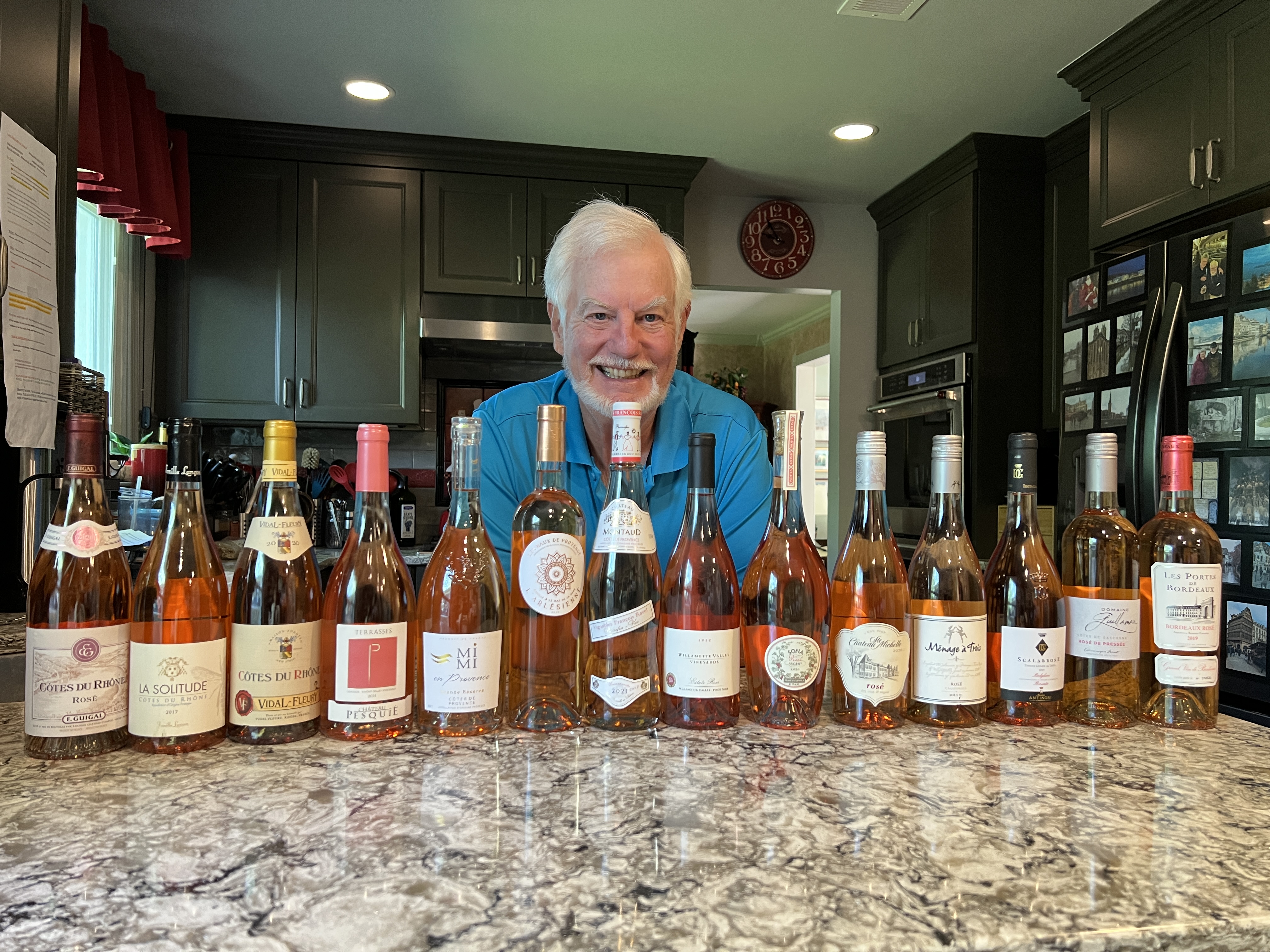
Things are very different today. The wine makers in the southern Rhone valley, often called Provence, took some of the delicious red wines that they have made for centuries and pulled off some of the juice after just a short period of time in the tank with the skins and made some delicious Rose wines. When red wine grapes are pressed, the juices are all clear and you can make white wine from red grapes. Classic French Champagne is about 1/3 juice from Pinot Noir grapes but only the clear juice is used. Red wines get their color from the juice being left in the tank after pressing or crushing with the skins for weeks or months. Most of the flavor in the grapes is stored in the skins and this time “on the lees” lets those flavors and color from the skins be pulled into the juice that is fermented and becomes wine. In this blog I will use rose to refer to color and capitalize it, Rose, when referring to wine. As you look across the 14 bottles of Rose in this first picture, you will see lots of variation on the rose color.
Most Rose wines, especially the better ones, are not blends of white wine and red wine. Instead, the period of time where the skins are left in with the juice is shorter so only a little bit of the color is added to the juice, and the resulting wine is rose colored instead of red. Some of the flavors from the skins is also pulled off so Rose wines often have more complexity and character than many white wines, particularly white wines that sell for under $20. Sometimes some of the juice from the tanks is pulled off early to make Rose and the rest is left with the skins for the full amount of time the winemaker designates for his red wine. The result is Rose wines that are as dry as red wines and that have some nice character and flavor.
These 14 wines are all still wines. There are very good sparkling Rose wines and I mention a few in the discussion of the different wines below. I thought 14 wines was enough for this post and plan to do a sparkling wine post which will have both white and Rose wines included.
The Cote du Rhone is justifiably known for making some of the best dry red wines from France with Chateauneuf-du-Pape as their star. Many of the wine makers there decided to pull some of the juice early and make nice dry Rose wines and these Rose wines have become very popular worldwide. Technically, the Provence region only extends up to the city of Avignon and a big part of the Cote du Rhone is not in Provence. But many recipes for the food from this region say they are from Provence and that name is often used for Rose wines from all parts of the Cote du Rhone. If the bottle says either Provence or Cote du Rhone, it likely has a nice dry Rose wine inside. Costieries de Nimes is just south and west of the Cote du Rhone and also makes some great Rose wines. If you are a fan of sweet Rose, I suggest you try the wines from the Tavel AOC in the Cote du Rhone.
As Rose wines from Provence gained popularity, other winemakers around the world took notice and now nice Rose wines are made in virtually every wine region. Even your top Champagne brands like Cristal, Dom Perignon, and Veuve Clicquot offer Rose versions of the sparkling wine.
None of your wines should be drunk right out of your refrigerator, which is generally set to about 38°. This is particularly true for Rose wines since they come from red grapes and have some of the flavors and characteristics of red wines. I take my white wines out of the refrigerator 30 minutes before pouring them so they are in the 55-58° range. I take my Rose wine out 45 minutes before pouring to get it to about 60°. I will also open the Rose wines and leave them in the refrigerator for a few hours so they open up, like a red wine does, and then take them out to get to about 60°.
While it is great to sip a cool, not cold, Rose on a summer afternoon after a nice round of golf, it is also a very good food wine. I have no trouble using Rose instead of a white wine with most fish or poultry dishes and I think it is a better choice when the dish is spicy, smoked, or otherwise very flavorful.
I have organized my list of recommended Rose wines geographically, starting with those from Provence/Cote du Rhone and then those being made in the US, and then other regions of the world.
Rhone Valley Rose
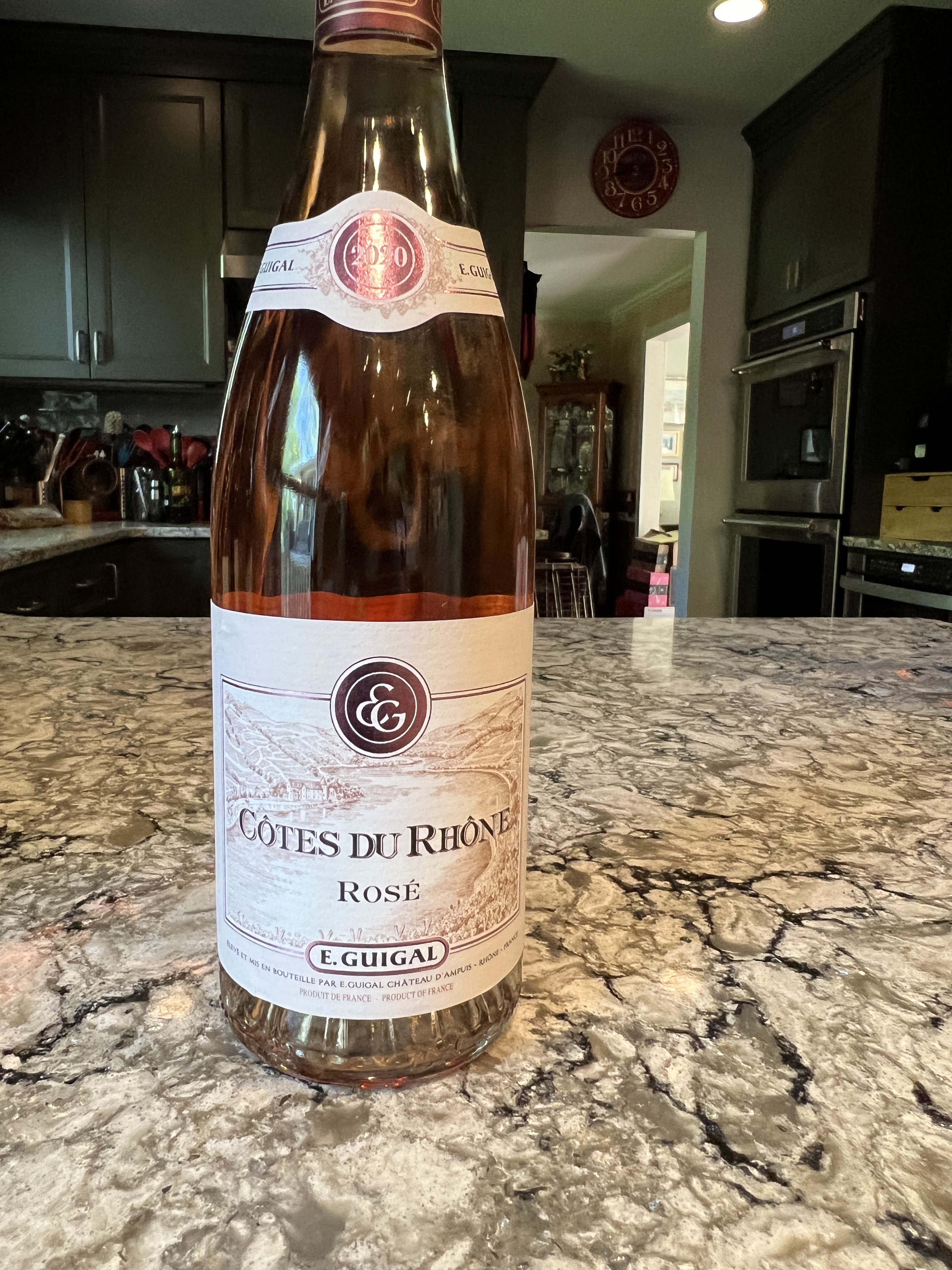
Guigal Cotes du Rhone Rose – Robert Parker has called the Guigal brothers the best wine makers in France and they are the largest in the Rhone valley. Very few winemakers have a significant presence in both the Cote du Rhone in the southern part of the valley making great GSM blends of red wine and in the Cote Roti at the northern part of the valley making great wines out of Syrah with a little Viognier sometimes added. If you want to see why people got excited about Provence Rose, spend the $16-18 and get a bottle of the Guigal. It is dry with some of the flavors of the 70% Grenache, 20% Cinsault, and 10% Syrah grapes used to make it, giving some nice character.
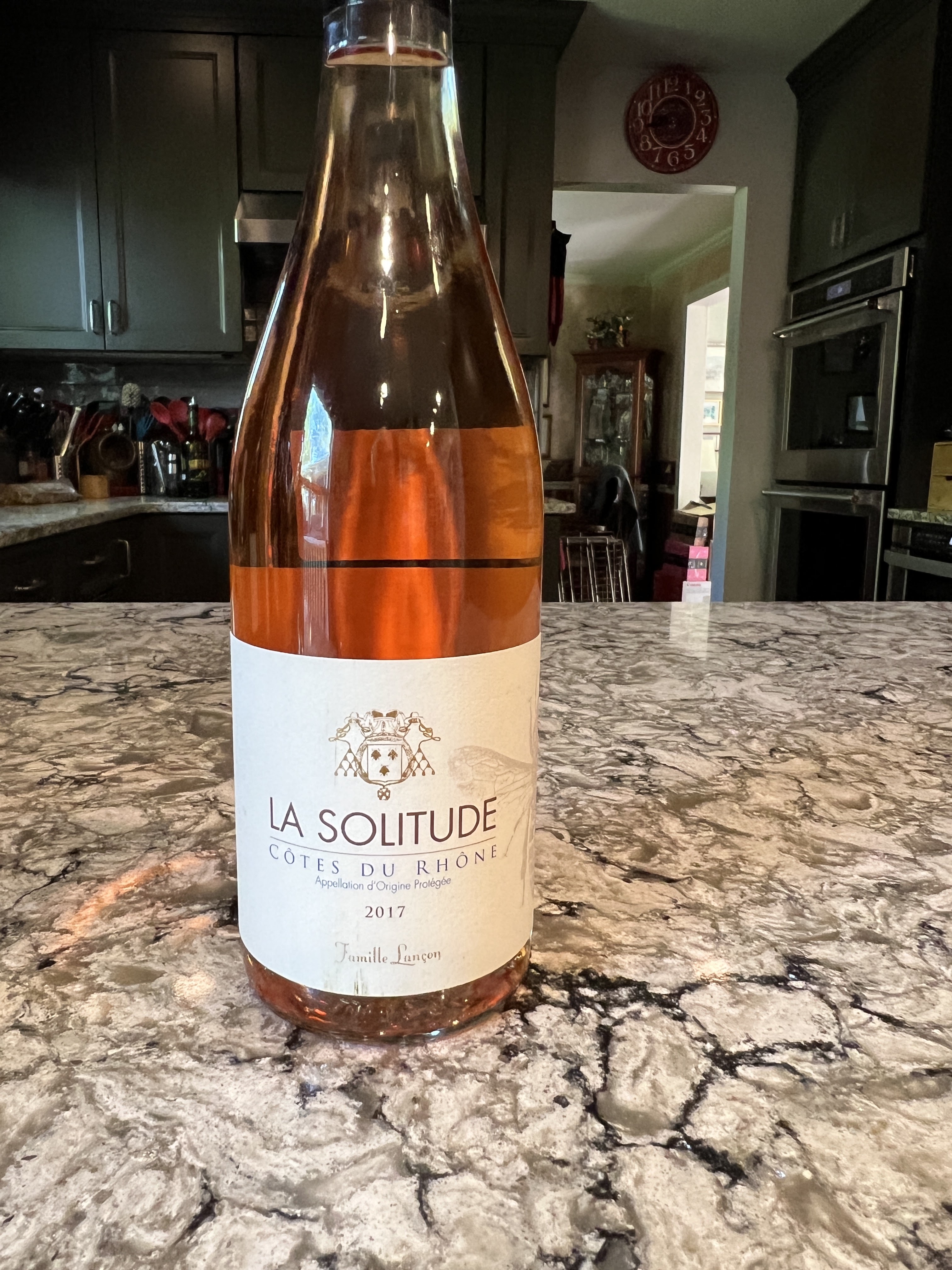
Domaine de la Solitude Cote du Rhone Rose – This wine wins the title of the very good Rose that is the hardest to find. I originally got it from Wine.com but they have been out of stock on it every time I look. The two major wine stores in the DC area don’t carry it. I believe it is a pretty small vineyard in the Cote du Rhone and it appears they quickly sell out every year. The last price I saw for it is was $20. If you ever see it, buy some!
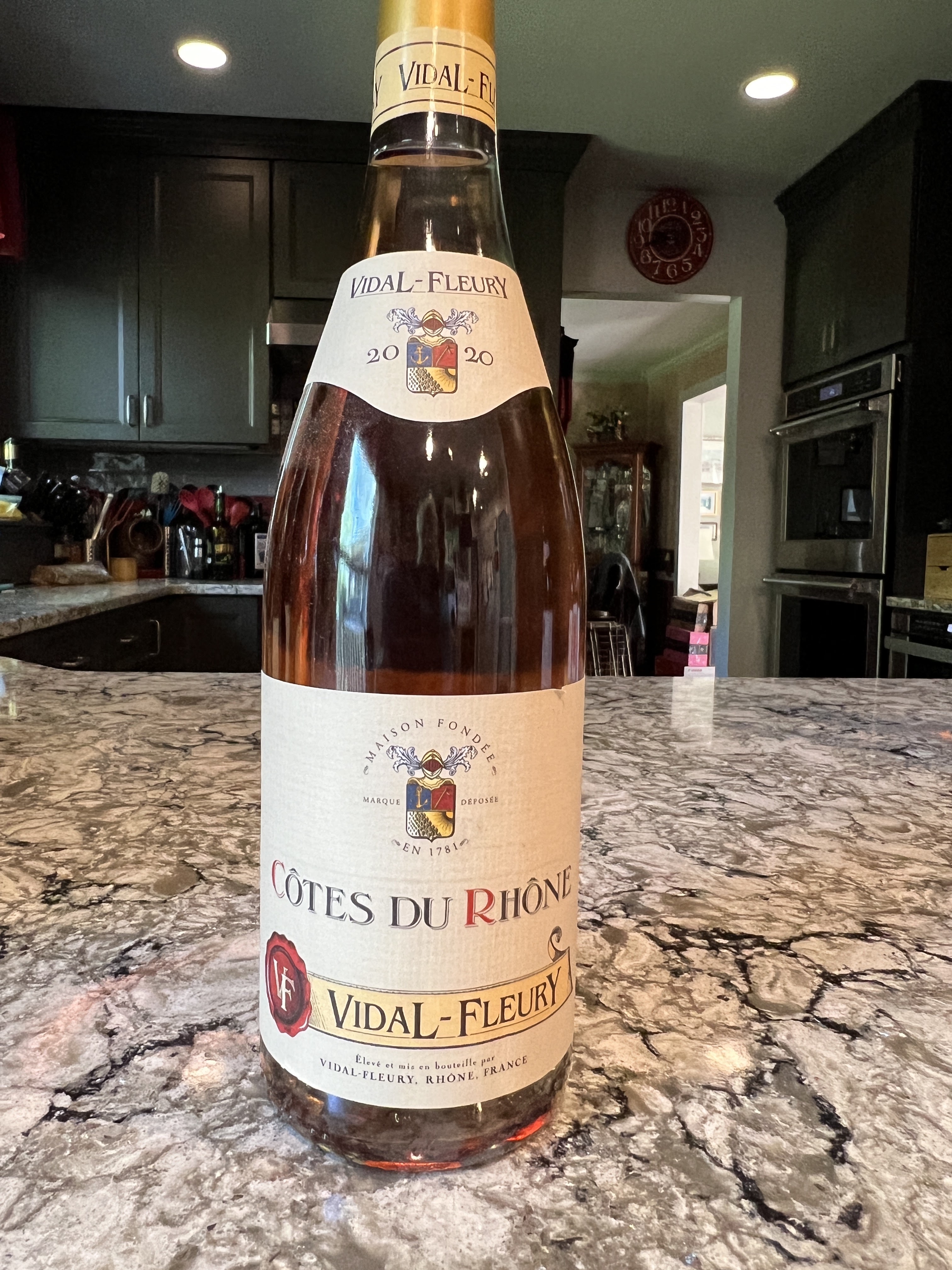
Vidal-Fleury Cotes De Rhone Rose – Vidal-Fleury is the oldest continuing grower in the Rhone Valley but does not have the name recognition that Guigal has. Different vinification processes are used for the 50% Cinsault, the 30% Syrah, and the 20% Grenache giving excellent minerality and a very nice finish. $16-18 and not as easy to find as the Guigal but definitely worth getting if you find it.
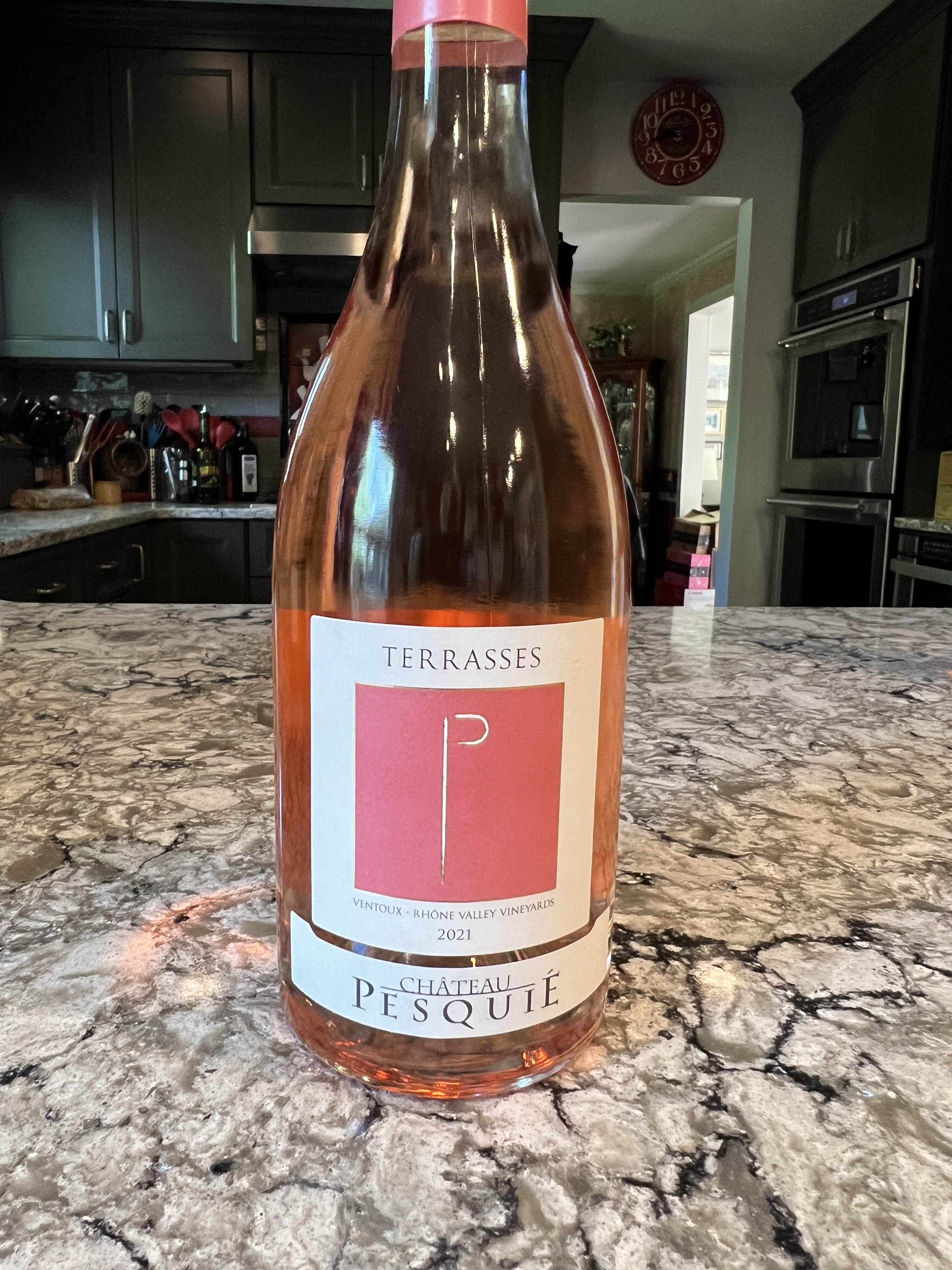
Chateau Pesquie Terrasses Rose – The designation “Cote du Rhone” means that all of the grapes in that wine were grown in the specific geographic region that is defined as Cote du Rhone. Within that large region smaller geographic areas have been defined as higher quality than just Cote du Rhone. The most famous of these is Chateauneuf-du-Pape and some of the 301 vineyards in that AOC do make Rose. But not at a price that I am willing to pay. The Taval AOC mentioned above is another one where they focus more on sweeter Roses. Chateau Pesquie is in the Ventoux AOC and the Chateau Pesquie red wine is one of my favorites for under $20. Their Rose is also one of the standard wines we keep in my cellar. It is not as widely carried as the Guigal Rose but many Total Wine stores carry it and Wine.com usually has it in stock. $18-20.
Mi Mi en Provence Grande Reserve – This is available as both a still Rose and as a sparkling wine. I enjoy both. It is also a blend of Grenache, Cinsault, and Syrah and sells for $16-20.
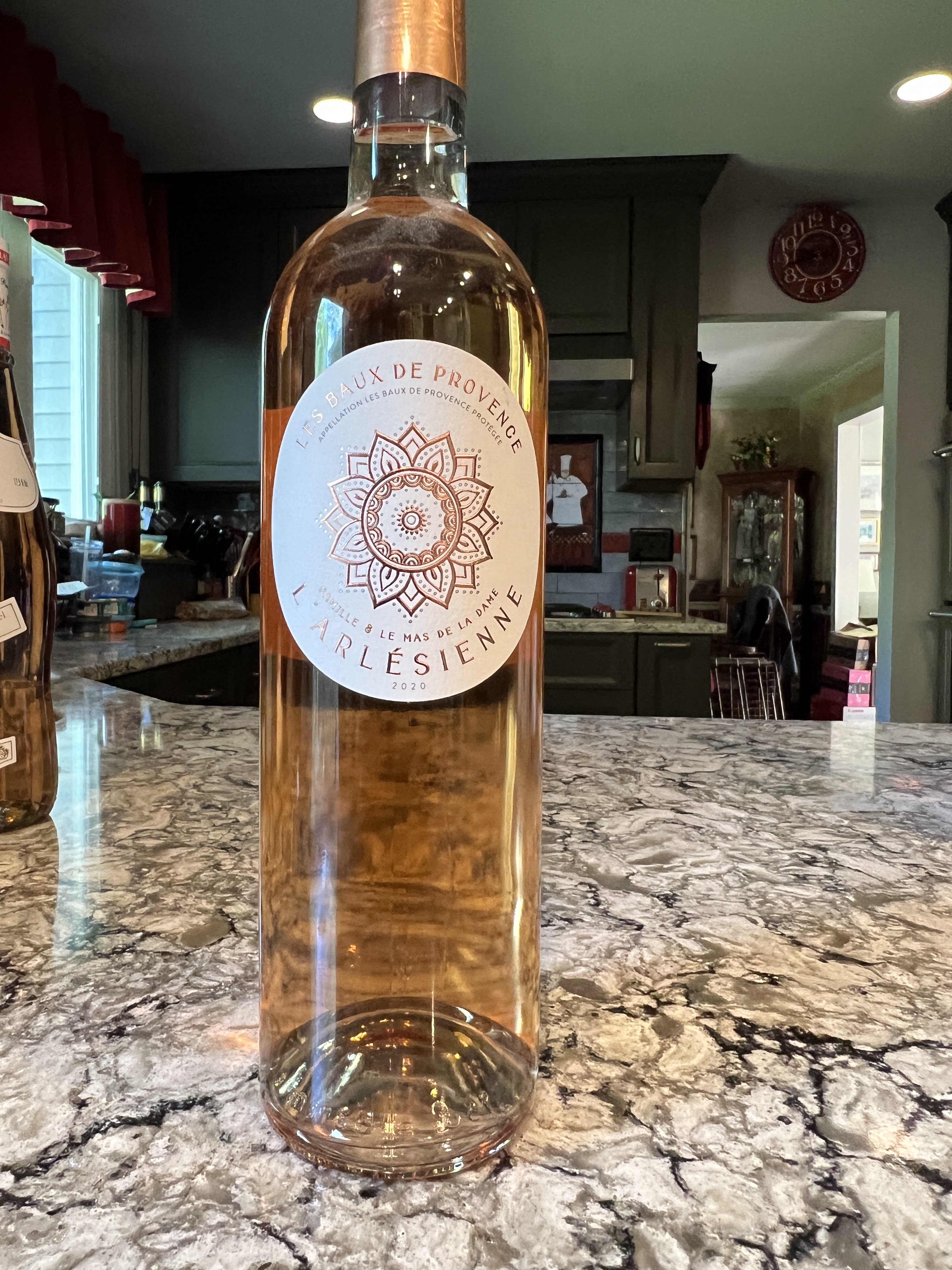
L’Arlesienne Les Baux de Provence – A very nice Rose, this blend has more Syrah than Grenache and a little Cinsault. A very good buy at $14 but not easy to find.
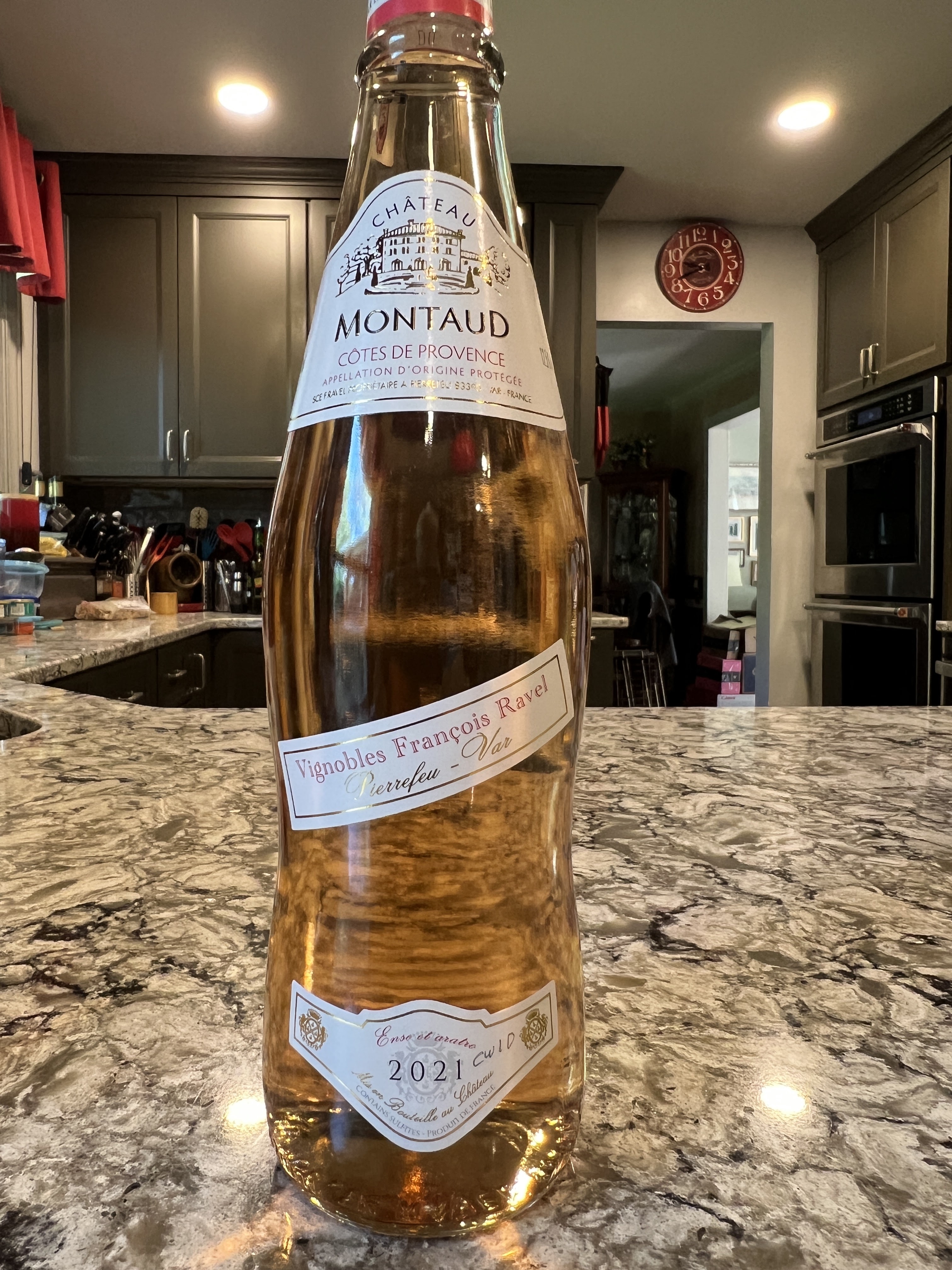
Cateau Montaud Cotes De Provence Rose – At $14-15 this is one of the least expensive Provence Rose’s and while not at the level of the top four wines above, it is a very good wine at that price.
Rose Wines Made in the US
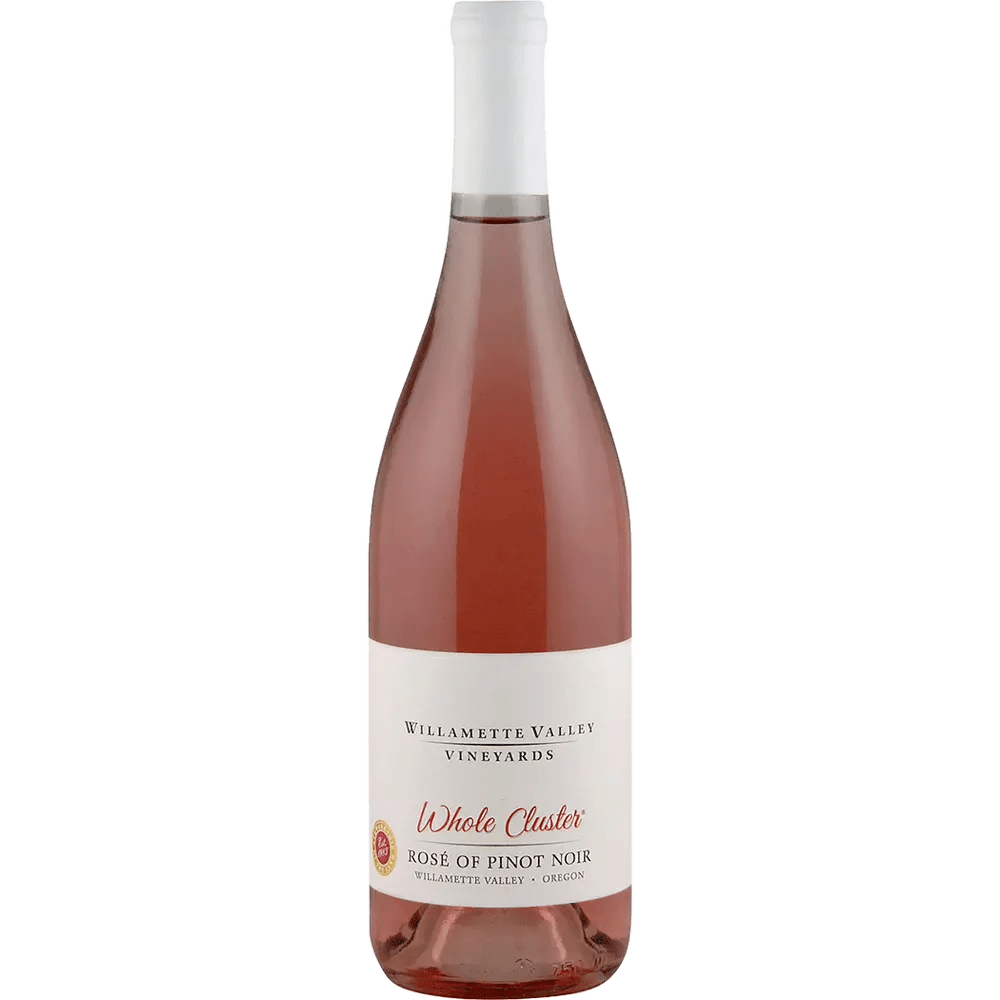
Willamette Valley Vineyards (WVV) Whole Cluster Rose – this is my favorite US Rose. I am a huge fan of the WVV Whole Cluster Pinot Noir where they harvest whole clusters of Pinot Noir grapes and drop them into stainless steel flasks, add yeast, and pump in CO2 to remove all the air and seal them closed. The grapes ferment inside the skin and eventually burst as the yeast gives off CO2. I think this is the best $25 Pinot Noir from anywhere in the world. Jim Bernau, their winemaker, pulls off some of the juice early and makes this delightful rose. It has a clear Pinot Noir aroma and taste and generally sells for $20-22. WVV has a number of very good Rose wines, the Whole Cluster is my favorite.
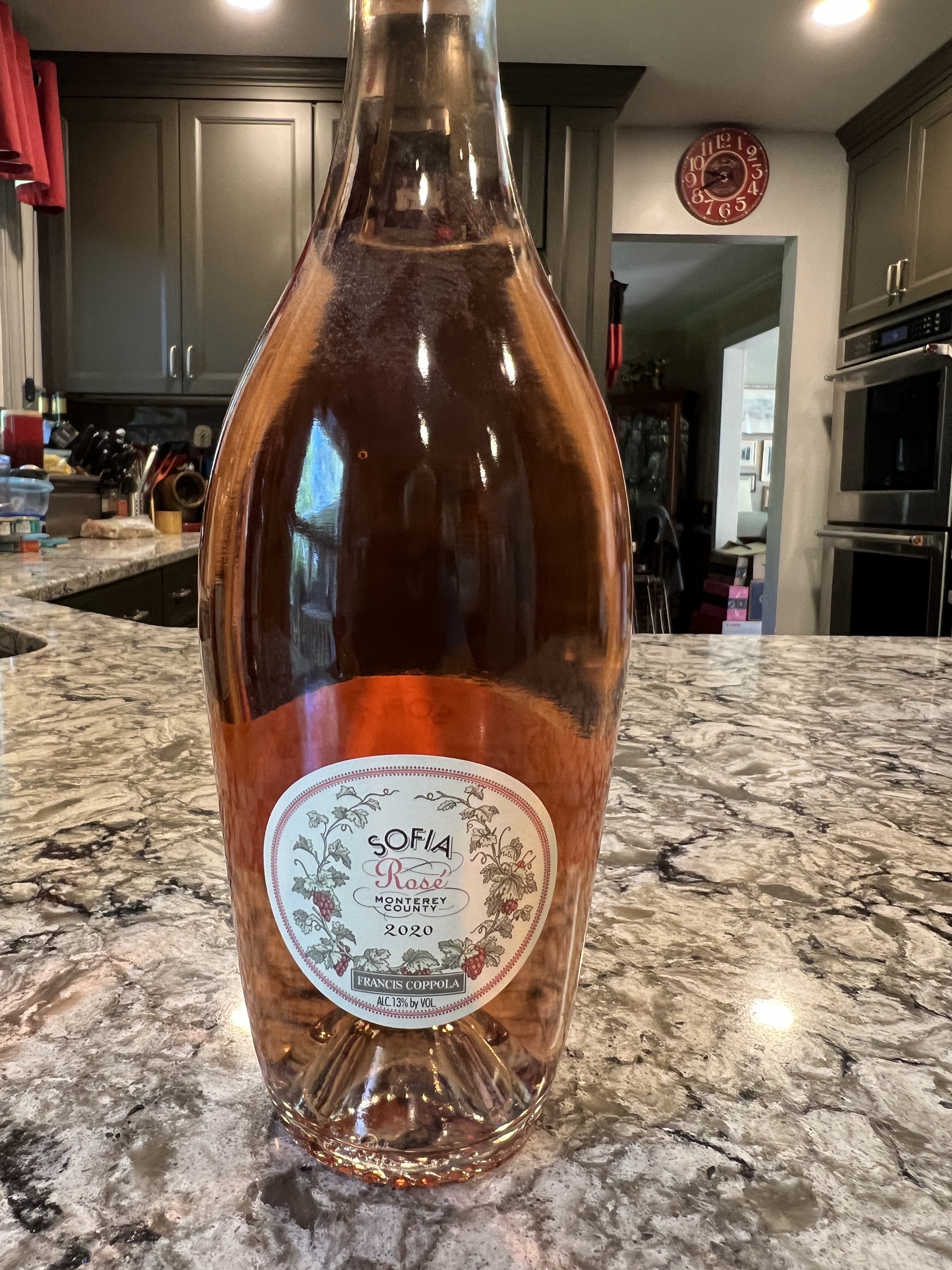
Coppola Sofia – Academy Award winning director Francis Ford Coppola has a very significant wine business under his name, and I am a pretty big fan of his wine. He named his Rose Sofia after his daughter who is also an Academy Award winning movie director. He makes both a still and a sparkling version of Sofia. I prefer the still version. It is widely available and can be ordered from his winery web site and shipped to most states. It generally sells for $14-16 and has an attractive bottle.
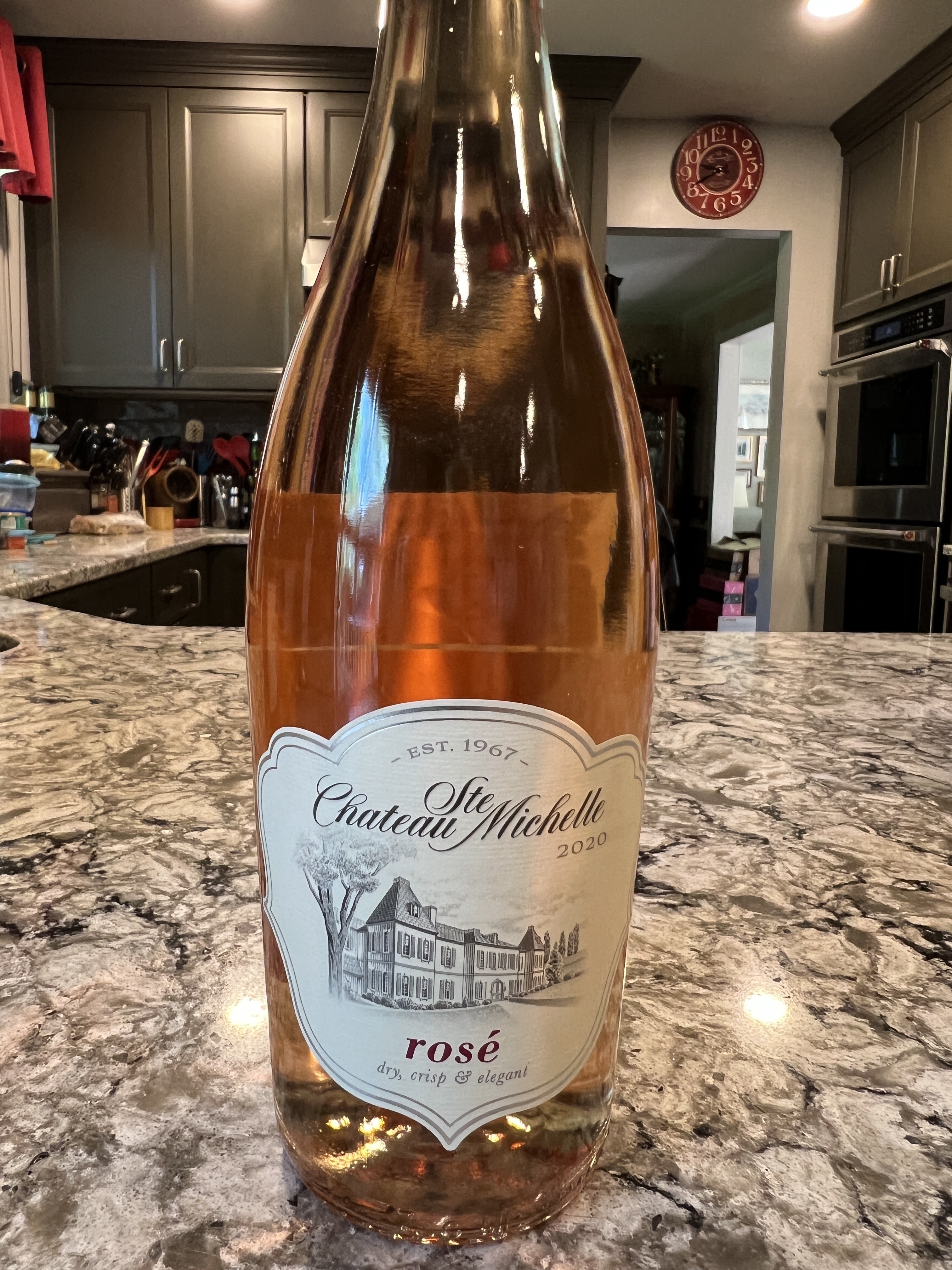
Chateau Ste. Michelle Rose – This is from Washington State and is 55% Syrah, 43% Cabernet Sauvignon, and 2% Grenache. Chateau Ste. Michelle does make a number of sweet wines, primarily their Rieslings, but they also make excellent dry crisp wines, and this is one of them. A couple of reviews called it a dry wine with a little subtle sweetness. I did not get any of that sweetness. $9-12 at most retail stores but much more if ordered from the vineyard website or if you visit their HQ outside of Seattle. They keep their prices high to protect their retailers.
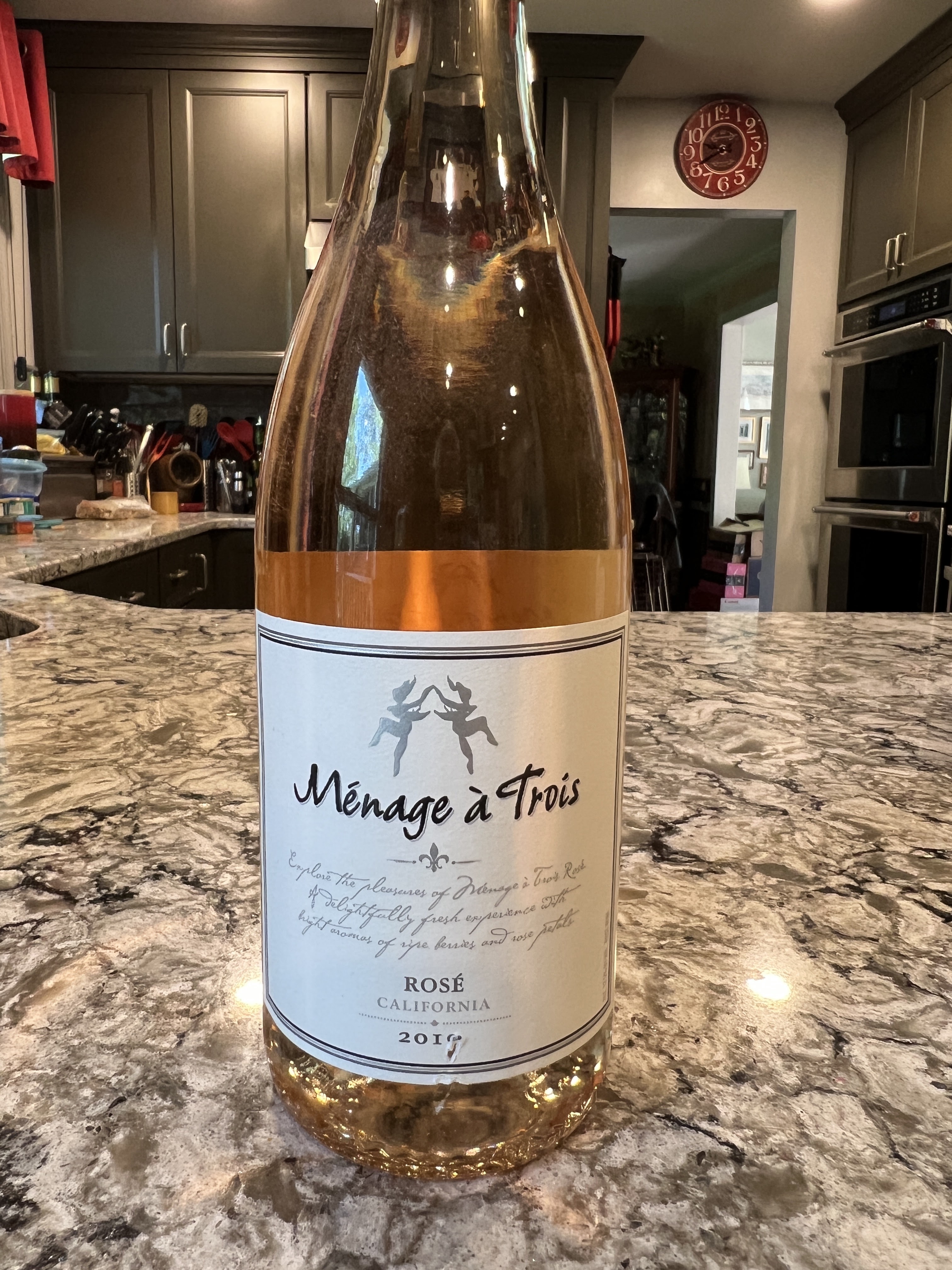
Menage a Trois Rose – As mentioned in my earlier blog post on Red Wines Under $15, Menage A Trois makes some nice table wines in the $10-12 range. I like them more than the other bulk producers like Barefoot, Dark Horse, or Cupcake. This is definitely true for the Rose at $6-12. Nothing wrong with sipping some of this Rose at the end of a nice day at the beach.
Rose Wine From Other Geographies
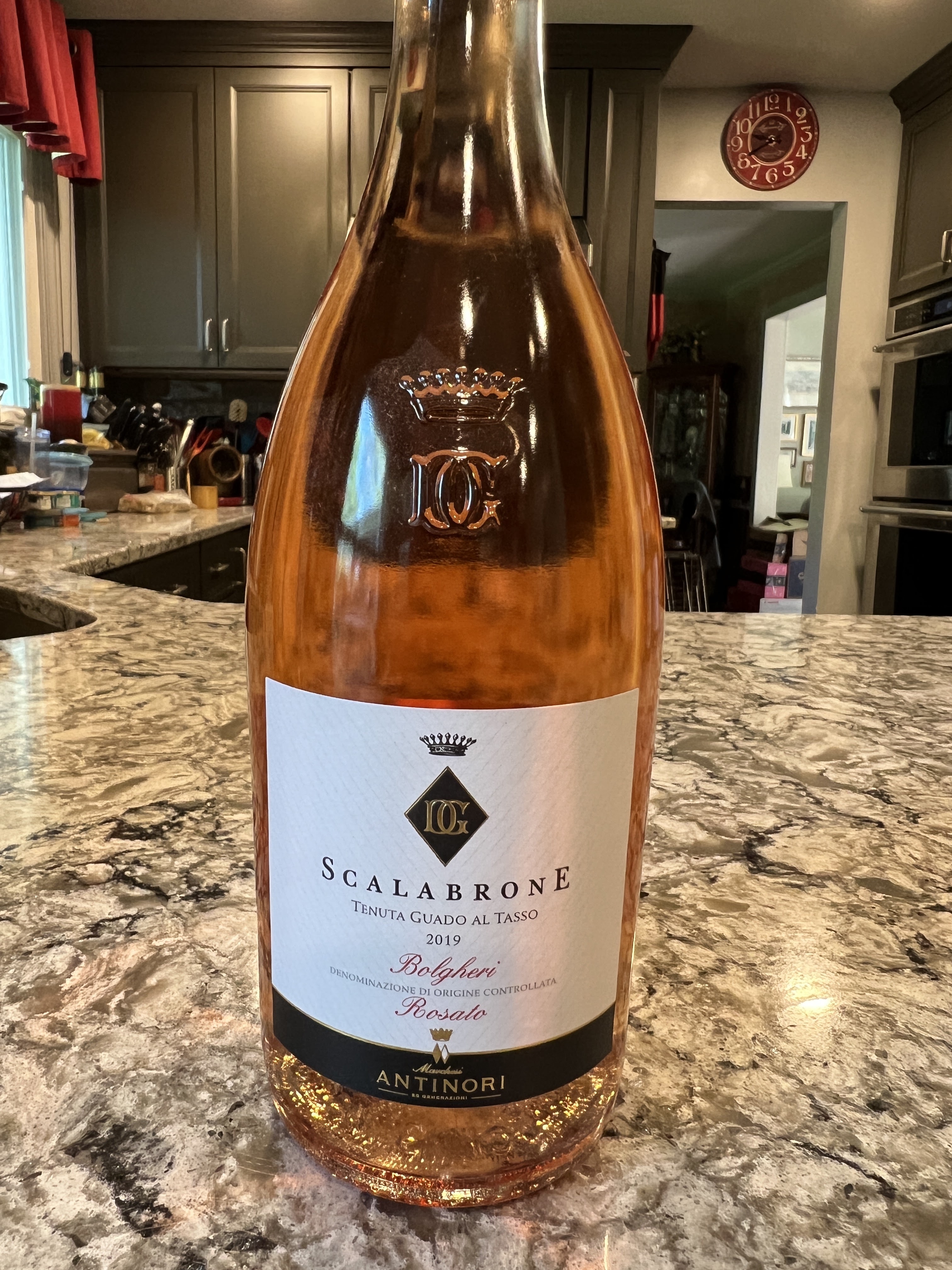
Guado al Tasso Scalabrone – Guado al Tasso is owned by Antinori and is my favorite winery in Tuscany. Their Bolgheri Superiore is one of the few wines I will pay over $100 for. They are located down in the Bolgheri Valley, right on the coast of the Med where their terroir is unlike most of Tuscany and so they do not make any of the typical Sangiovese based wines that Tuscany is best known for. This Scalabrone is named for a bandit who roamed that valley in the 18th century. Cabernet Sauvignon, Merlot, and touch of Syrah are used to make this wine, so it has a delightful taste different from the Grenache/Cinsault blends from the Rhone valley. It is absolutely worth the $16-18 price.
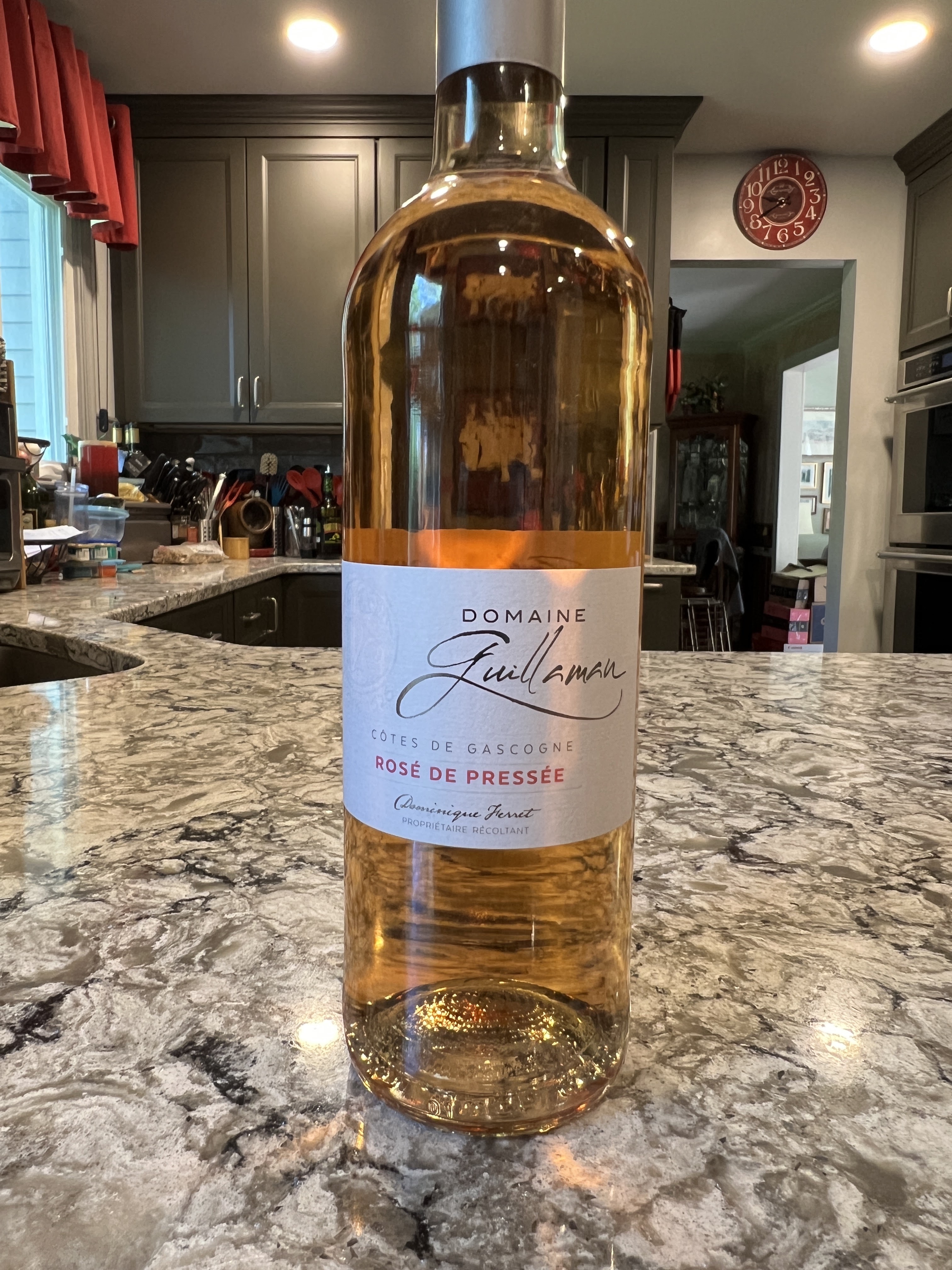
Domaine Guillaman Cotes de Gascogne Rose – Domaine Guillaman is best known for its nice crisp white wine from Gascony. If you see the Rose, it is a Best Buy at $12.
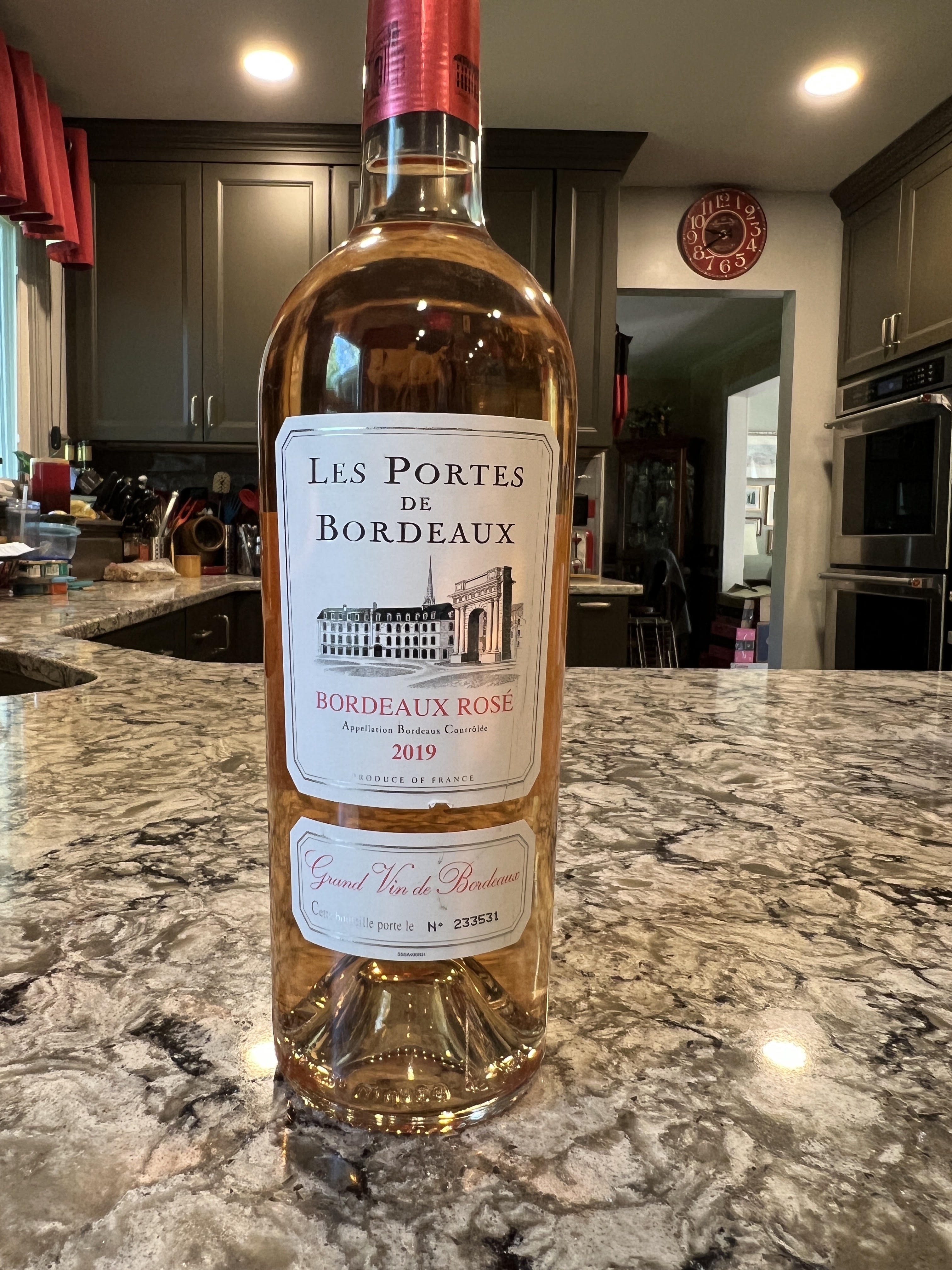
Trader Joe’s Les Portes de Bordeaux Rose – Two Buck Chuck is now about $3.50 last time I looked but it is a very small section of the wine aisle at the Trader Joe’s that have a liquor license to sell wine. Some geographies do not let them sell wine. Among the many other selections that Trader Joe’s carries are the Les Portes de Bordeaux wines for $7-8. There is a decent white and an OK red but the best of the three, when they have it on the shelf, is the Rose. It is made in Bordeaux and imported into the US. I have only seen these wines at Trader Joe’s so they may have an exclusive to buy all the wines under that label.
I hope you have a chance to try some of these 14 Rose wines and let me know what you think of them. If you have others that I should try, tell me about them in Comments.
What is my favorite Rose? It is a three-way tie since each of these three is delicious but different in taste from the other two: Guigal Rose, WVV Whole Cluster Pinot Noir Rose, and the Guado al Tasso Scalabrone. If I could get more of the Domaine La Solitude, it might get into contention.
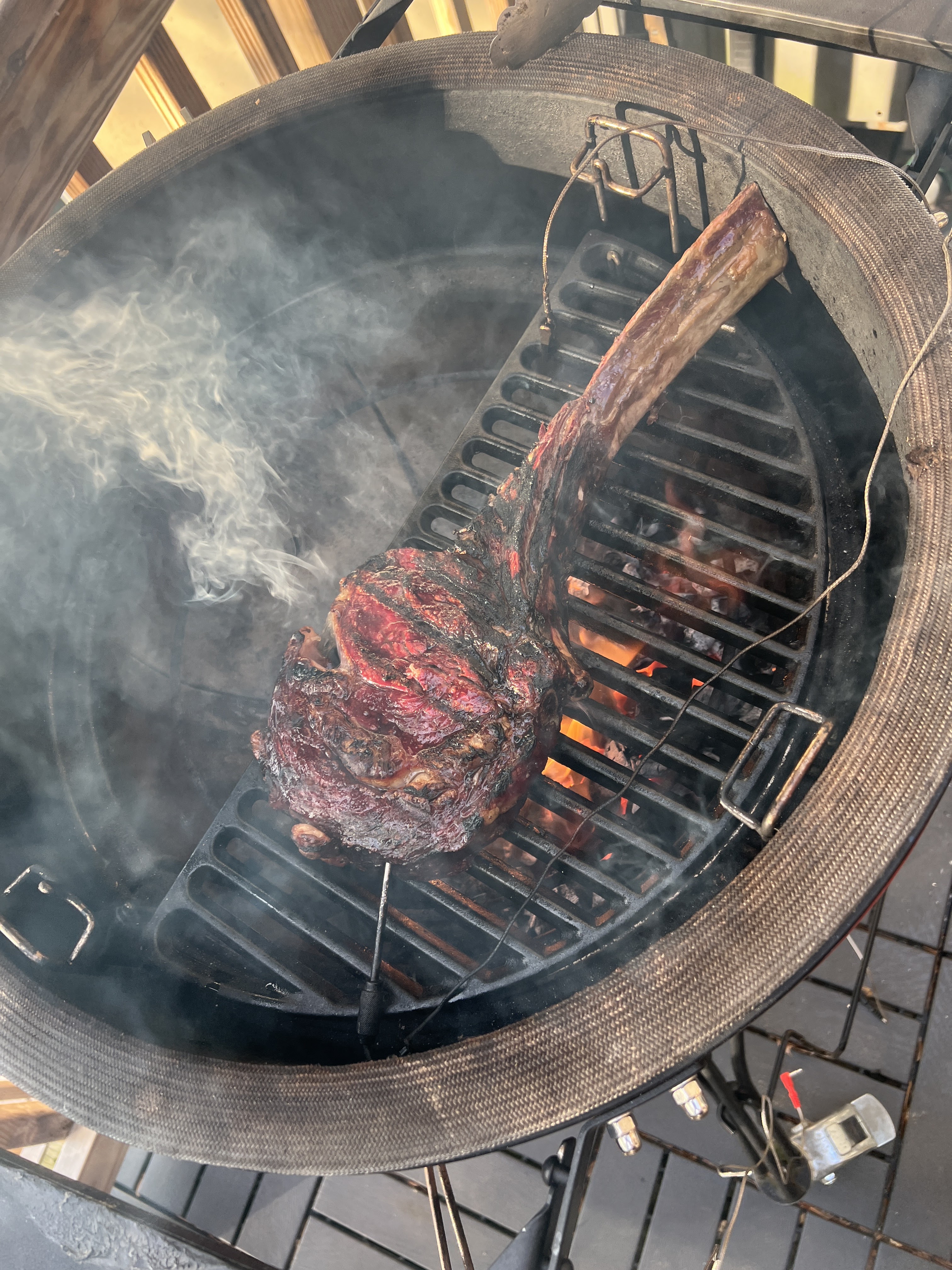
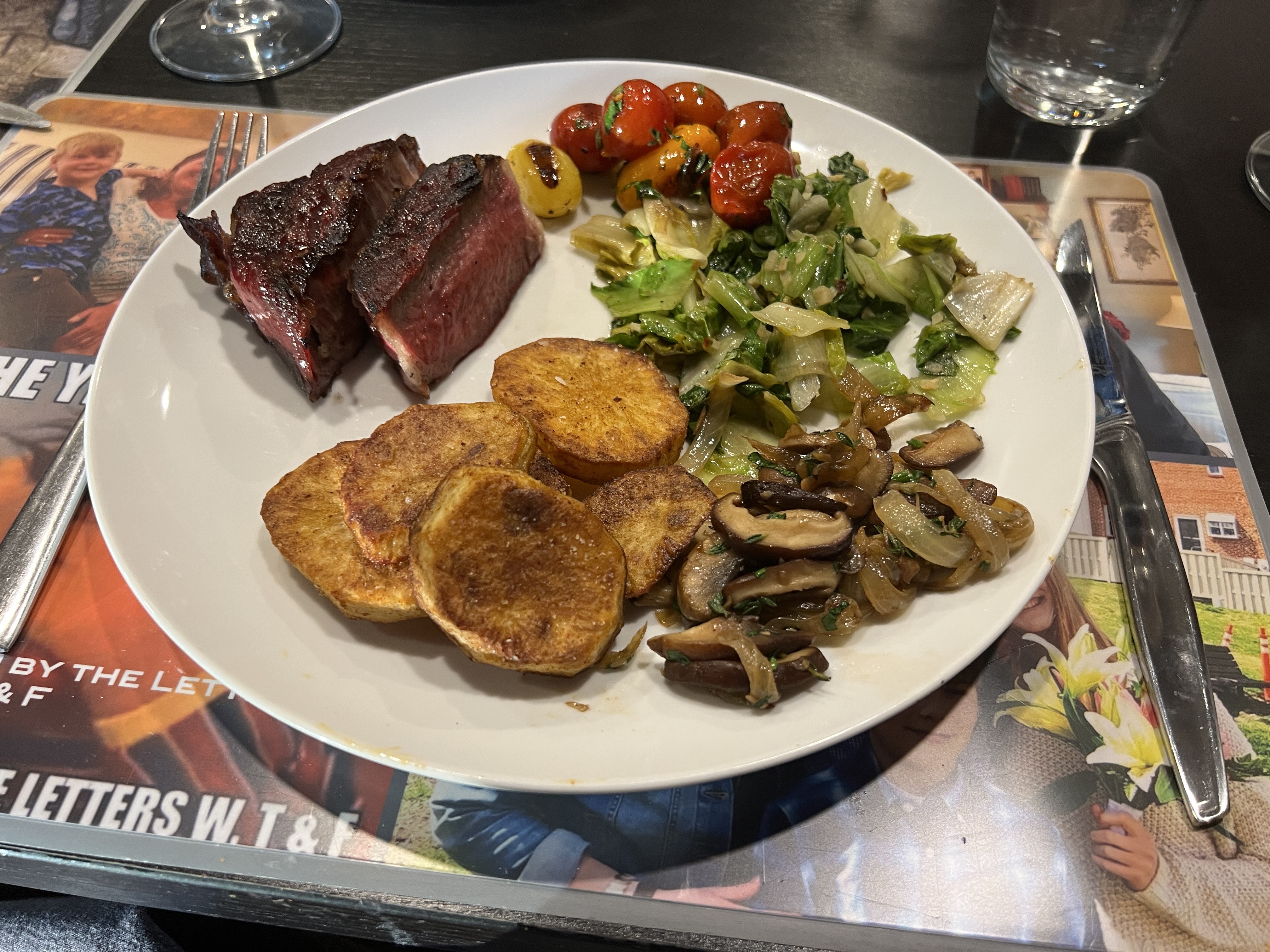
Beth got a Tomahawk steak at a great price in the “Dents and Bents” bin at the supermarket. She dry aged if for two days and I did a reverse sear with my Kamado Grill and it was delicious!
The Tomahawk steak has a thick piece of Ribeye at the end of a very long bone, usually 6-8 inches. It has eye catching appeal but you are paying Ribeye prices for a very long bone, so I think it is generally not worth the cost. When it is significantly on sale, as this one was, the challenge remains that it is also difficult to cook. With the very long bone it does not fit well in a fry pan, even in our large cast iron fry pan. The steak is about 2” thick and how do you get the inside next to the bone fully cooked while not making the outside dry and well done? How do you make a very thick cut of ribeye moist and tender? Well between the two of us we did just that!
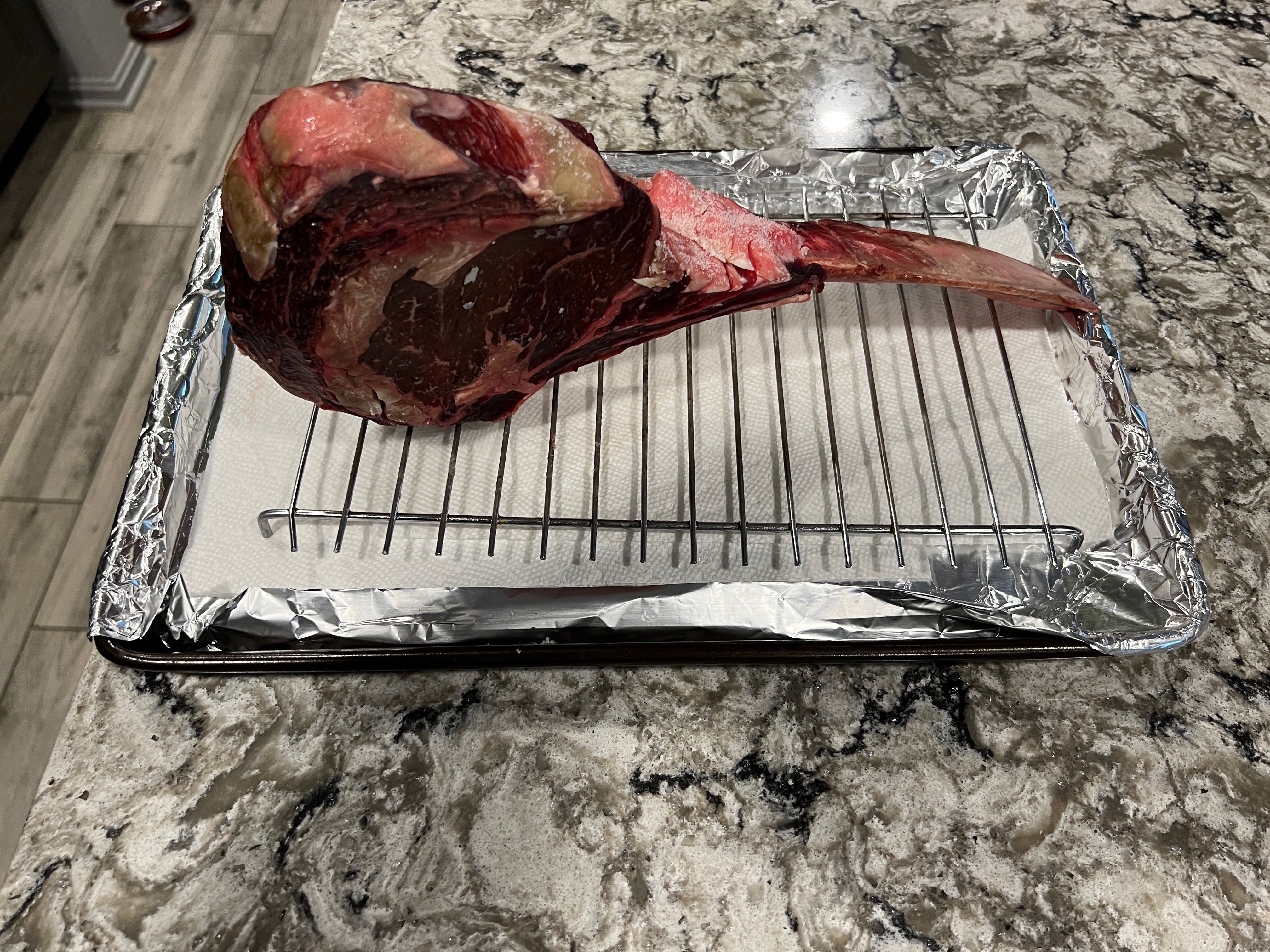
Step one is to dry age the steak. Some people call it dry brining but if you want to really set TV food expert Alton Brown off, use the term dry brining. Brine is salt water so Alton makes a lot of fun about anyone who says they are using dry salt water. Dry aging is a process of putting a coat of salt on the outside of a cut of meat, poultry, or fish and letting it sit uncovered in a refrigerated space for some period of time. 24 hours is minimum, three days is recommended. Restaurants or butchers who have the right kind of storage unit can have it age for several weeks which really has an very positive impact on what you are dry aging. What Beth did with this ribeye steak could be done with a turkey, or a thick cut fish steak. For beef the steak needs to be at least 1 ½” thick for this process, and the 2” steak we had was perfect.
The salt crystals draw out moisture from the meat, initially creating slick watery surface on the steak that dissolves the salt. Over time that salty liquid is absorbed back into the meat where it breaks down the connective tissues in the meat making it more tender. Beth kept the steak uncovered on a rack ln our refrigerator so it had airflow all around it for 48 hours. Three days is even better and something that you can do in a regular home refrigerator. Longer than that needs some more supervision and really benefits from a cooler dedicated to Dry Aging that is very seldom opened. Top Steak Houses will dry age their steaks for weeks. The steak should come out of the refrigerator an hour before cooking to come to room temperature and that is the picture where I stood the steak on the bone for that time.
Dry aging also means that the surface of the steak is dry. To get the nice crust that we like on steaks, what is called the Maillard reaction, requires that the steak surface be completely dry when you start to cook it. Any steak should be dried using some paper towels before cooking but a dry aged steak already has a very dry surface when you take it out of the refrigerator.
This first step to tenderizing the steak is pretty easy – just put a nice coat of salt on all the sides and edges of the steak and let it sit uncovered in your fridge for 2-3 days. The next step, reverse searing the steak, is more work, but the results make it very worthwhile.
The way almost all of us learned to grill steaks was to sear them for a couple of minutes on each side to seal in the juices and then finish cooking them at lower heat until they are done. Searing them does not lock in any juices and getting the steak right next to the bone cooked to the desired temperature almost always means that the outer portions of the steak are overcooked. Reverse searing tempers the steak at a low temperature to get it uniformly cooked to a certain desired level, and then finished at very high heat to get that lovely crust and bring the internal temp to the desired level. I did an earlier Blog on different ways to reverse sear and you can find out more about this process at the link below which will open as a new window.
For this blog I will talk about how I used the flexibility of my Kamado Joe Grill to reverse sear this steak with pictures of each step. I have several options for the Kamado Joe that I used for this steak. The first is being able to divide it into two cooking zones with all the coals on one side of the pit and no coals on the other side. The second is the ability to have grills at three different levels. At the lowest level the meat is closest to the coals and at the highest level it is furthest away. Finally, I have a computer-controlled venting that lets me set a temperature for cooking and the airflow through is controlled to keep the coals at that temperature.
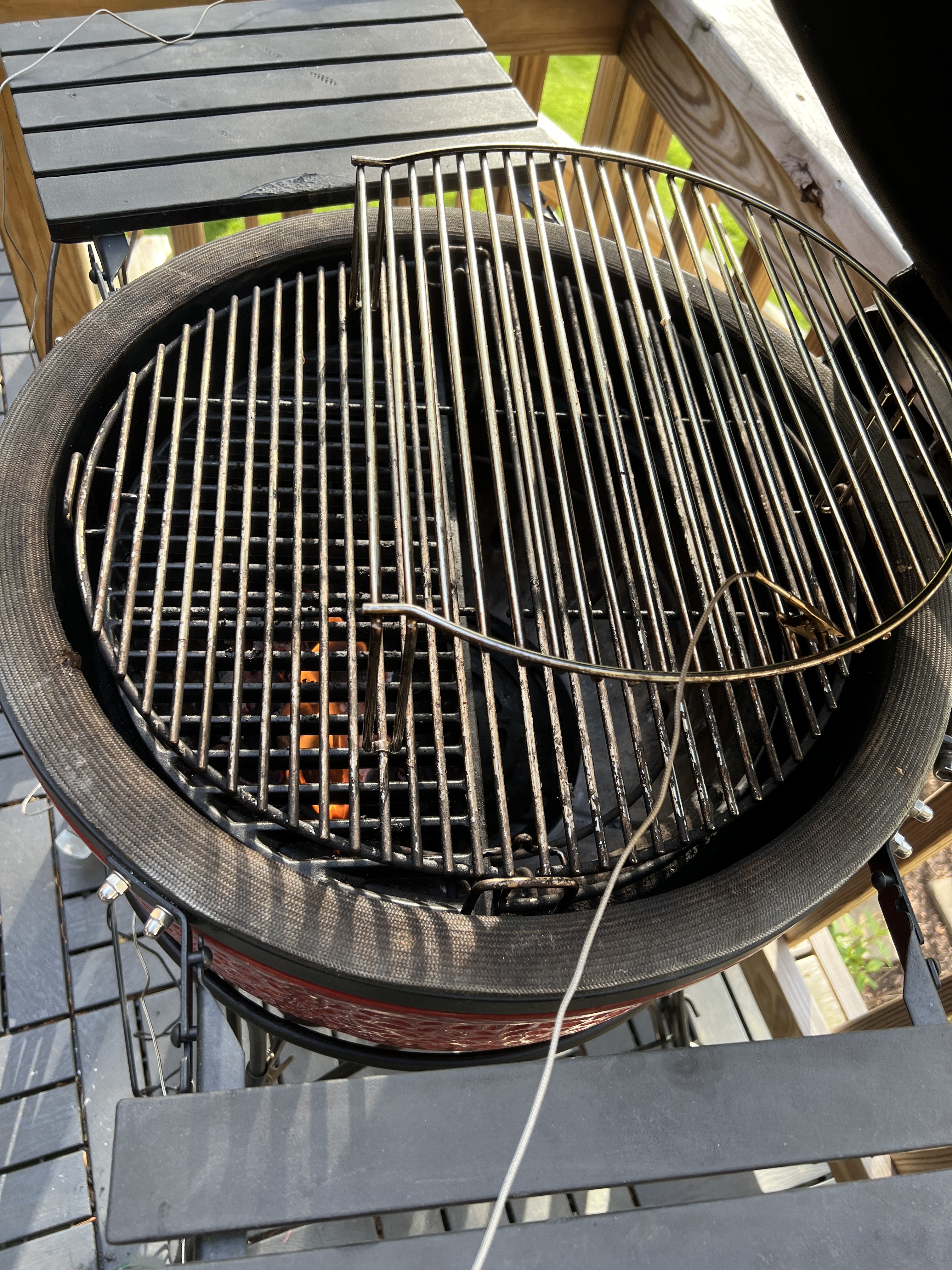
Here you can see I have the charcoal laid in the front half of the grill. I use the Fogo Super Premium Oak Restaurant All-Natural Smoked Hardwood Large Lump Charcoal that gives nice large pieces of charcoal. I lit the two fire starters that I had in with the charcoal and got the fire up to 300°. I then closed up the Kamado and used the controlled venting to get the cooking temperature to 225° and the ceramic egg of the grill up to temperature to keep that temperature constant.
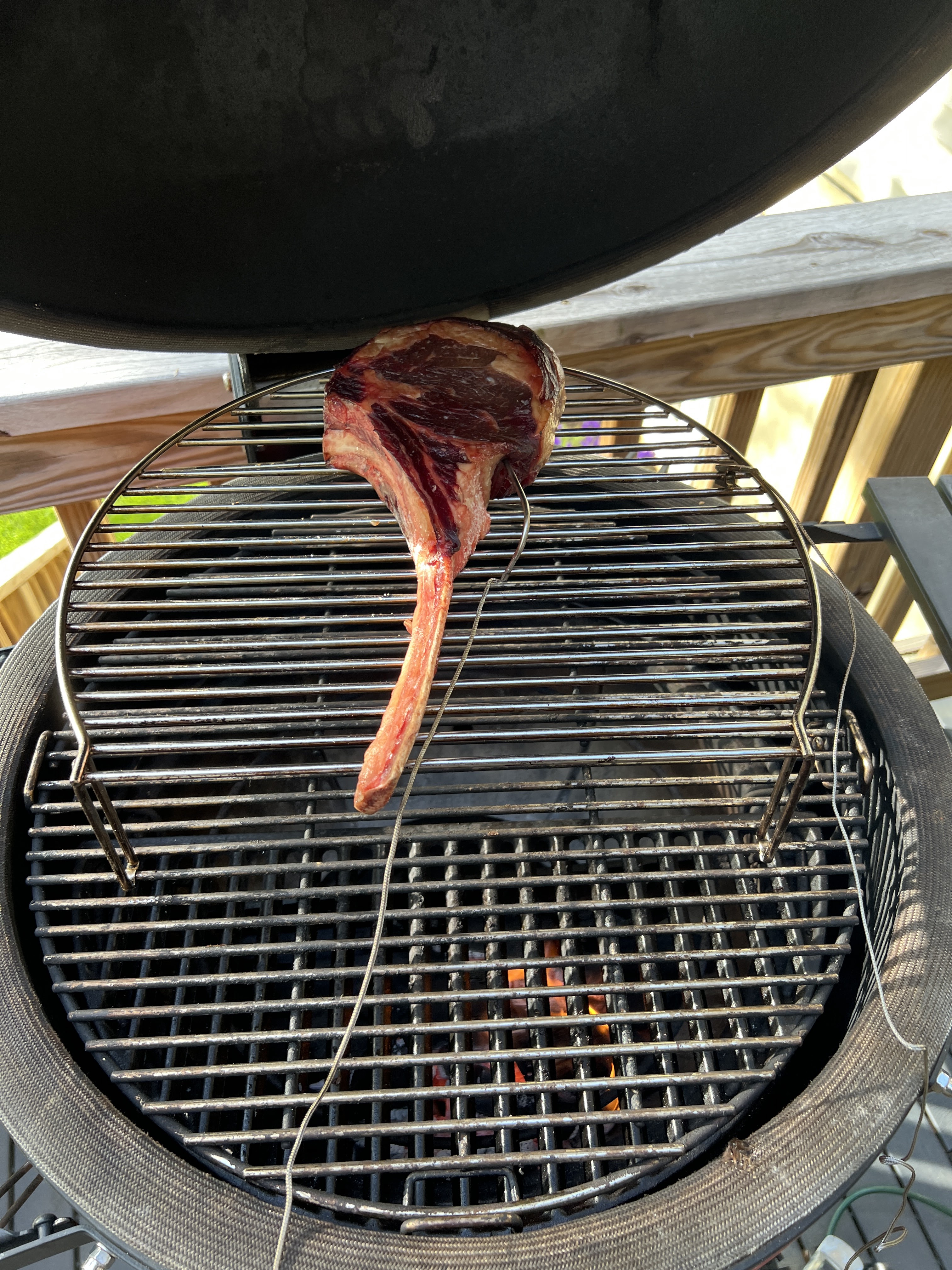
In this picture on the left you can see that I have a heavy duty cast iron grill in the low spot right over the coals. That grill has the heavy lines running horizontal in this picture. It will be getting hot all during the tempering process for the steak. I had the regular grills in the upper position so I can put my third level grill on top of them over the back of grill, totally off the heat. I have my cooking temp probe for the computer control clipped to the back of that upper grill so the cooking temperature there is 225°. It would likely be significantly hotter down on the lowest grill right over the coals but in the picture on the right you will see that I have the steak on the back of that highest grill, well away from the coals so it can temper very slowly.
I would have liked to have the steak standing on the bone, as I had it on the counter coming up to room temperature, but on that highest rack it did not have sufficient clearance with the dome of the grill to stand up, so I had it on its side and flipped it halfway through the tempering process. I have a second probe deeply inserted into the steak, so I am getting the internal temp on the meat very close to the bone. The probe can’t touch the bone or it will not give the internal temp of the meat but I want it measuring where the meat cooks the slowest.
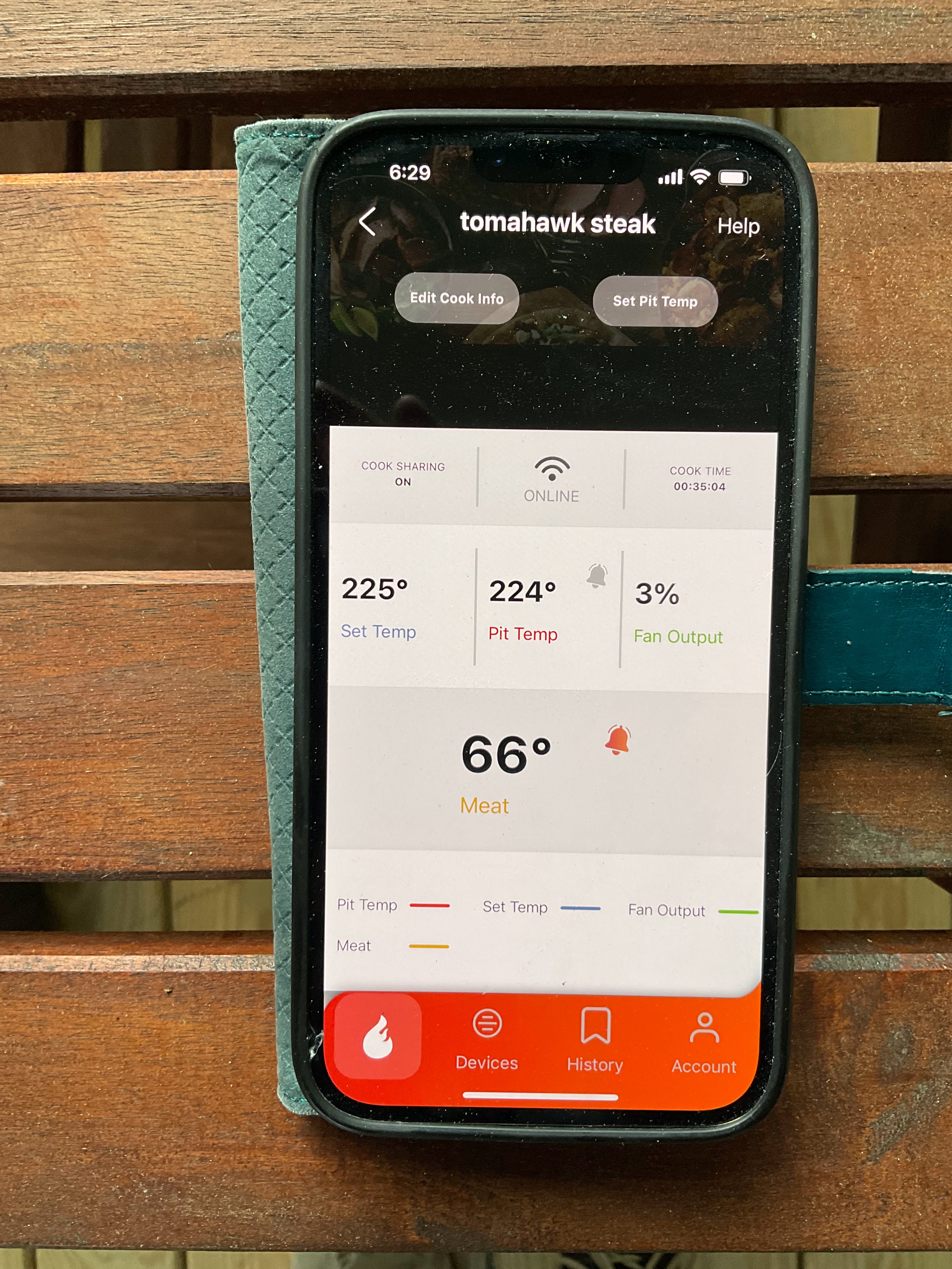
Beth and I like our steaks Rare, 125° internal is our preference. To get there I tempered the steaks at the low heat to get the internal temp to 100°. This took about 35 minutes. That slow cooking process really caused the internal connective tissue to further break down, so this thick steak was delightfully tender when we ate it. This next picture shows the control panel for the computer-controlled venting that I have for my Kamado, which has been broadcast to my phone. I got the Flame Boss FB400-Kamado for Christmas from my children and I love it. It does come with an attachment for a Beg Green Egg as well. The display on my phone is showing the goal cooking temp of 225° and the actual cooking temp of 224°. The computer has the fan going at 3% to get it back up to the right temperature. The steak has an internal temp of 66°, up from the 56° it was at when I put it on the grill. Looking at this control panel, I know when it is half way to 100° so I should flip it. That is the only time in this tempering process that I will open the grill.
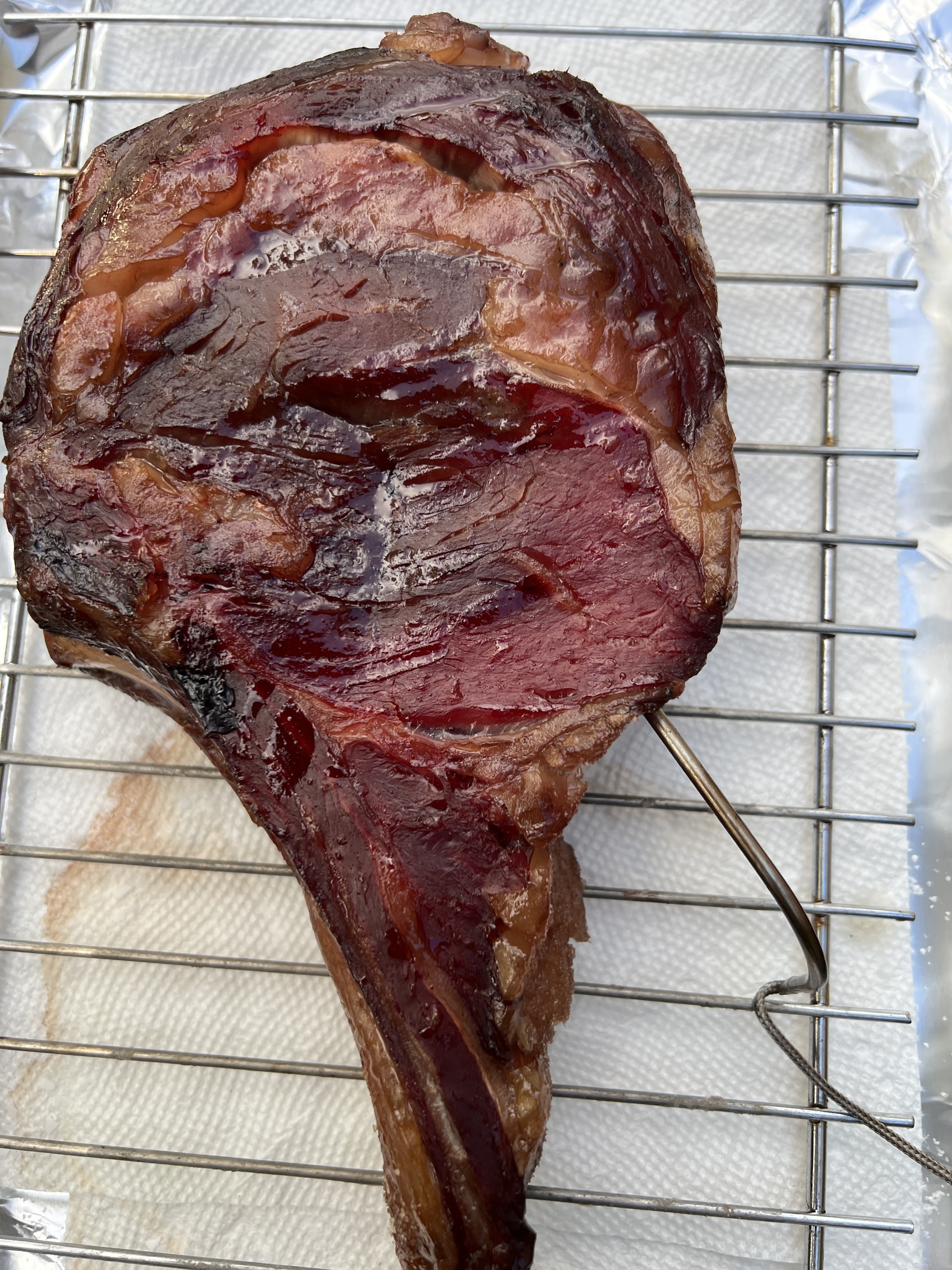
The steak has tempered to 100° internal temp so I have taken it off the grill and have it resting on the rack. It has a little color but would still be considered raw. I take off the upper and middle grills, leaving only the cast iron grill right over the coals. I set the computer control to run the fan at 100% and fully open the top vent to get lots of air flow to quickly get the fire very hot. In 10 minutes it is glowing red and I put the steak over those coals and quickly get some flames to give a strong sear and a nice crust. After 4 minutes I flip the steak to the other side and about 4 minutes after that the internal temp is at the 125° that I want, and I pull the steak off.
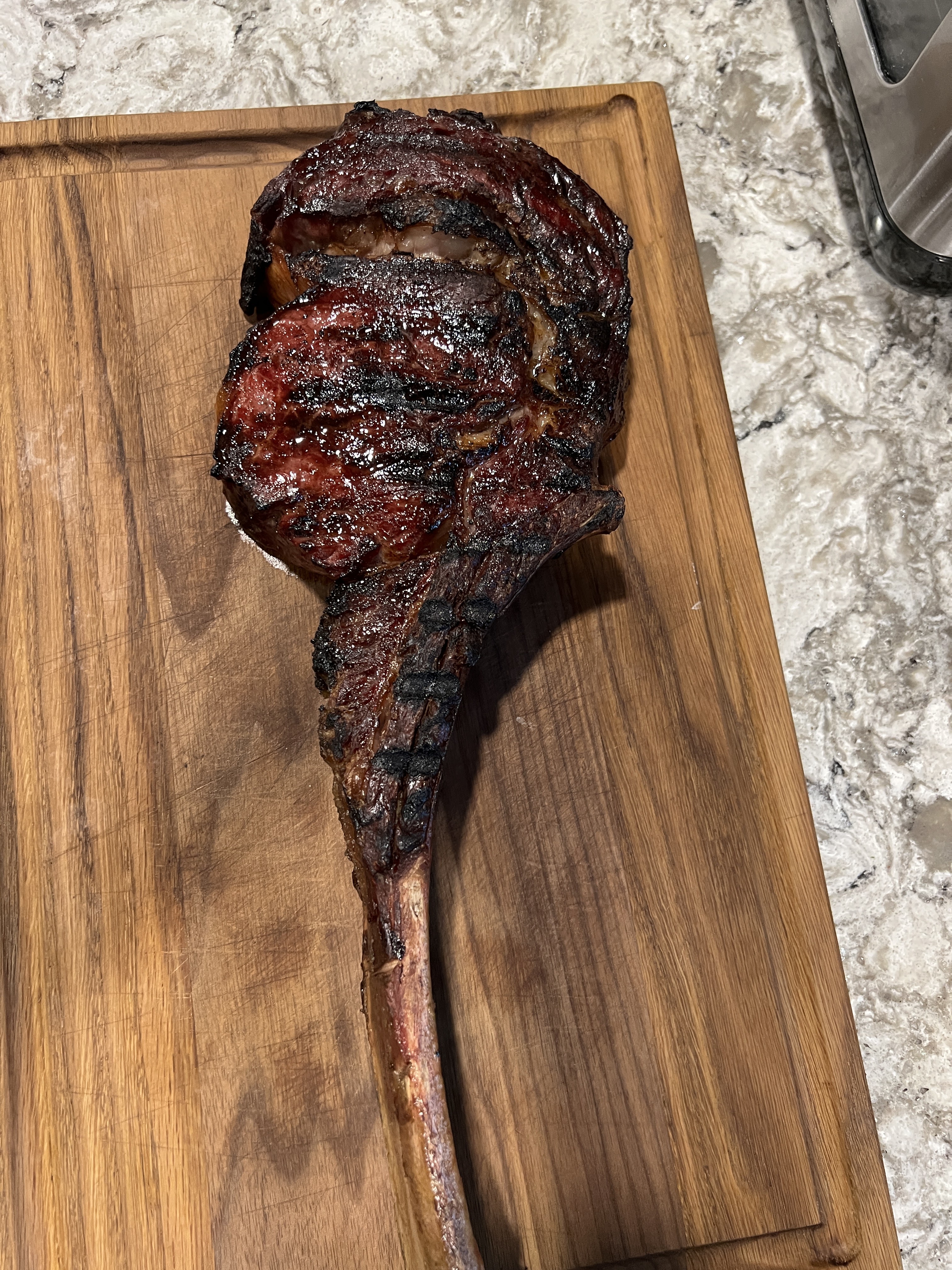
Here is a picture of the fully cooked steak on the cutting board with a lovely brown curst from the 8 minutes over high heat at the end of the cooking process. Because the steak was slowly tempered first, it does not need any resting period before being carved. The juices have all retreated back into the meat during that slow cooking period and the steak can be carved and served immediately.
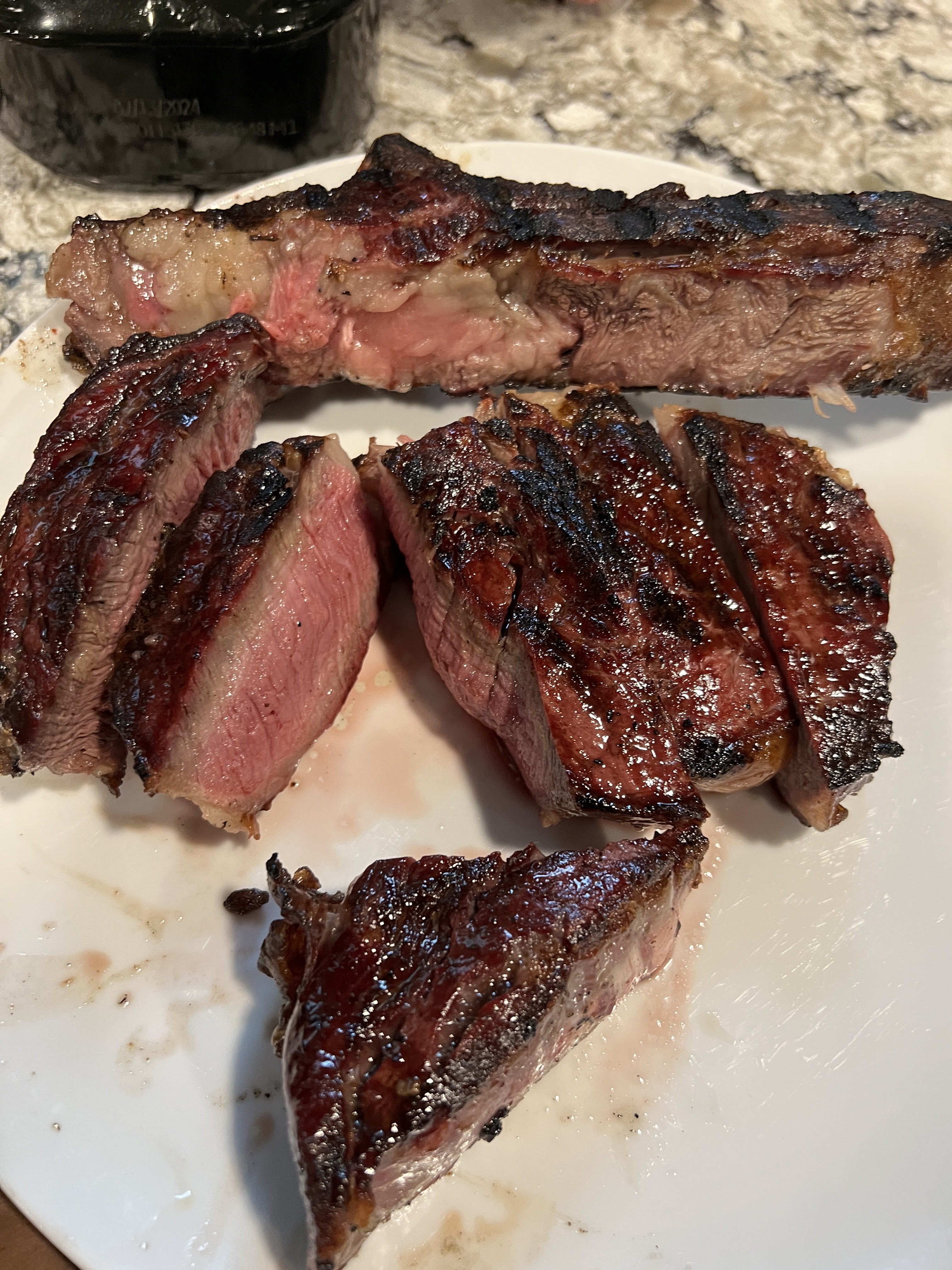
I carve the steak off the bone and then into ½” slices. You can see in the picture below that over 80% of the meat has the rosy red color of a nicely rare steak from the edge all the way back to next to the bone. On the top and bottom there is only a tiny ribbon under the crust before we get to the rare meat that was our goal for this steak.
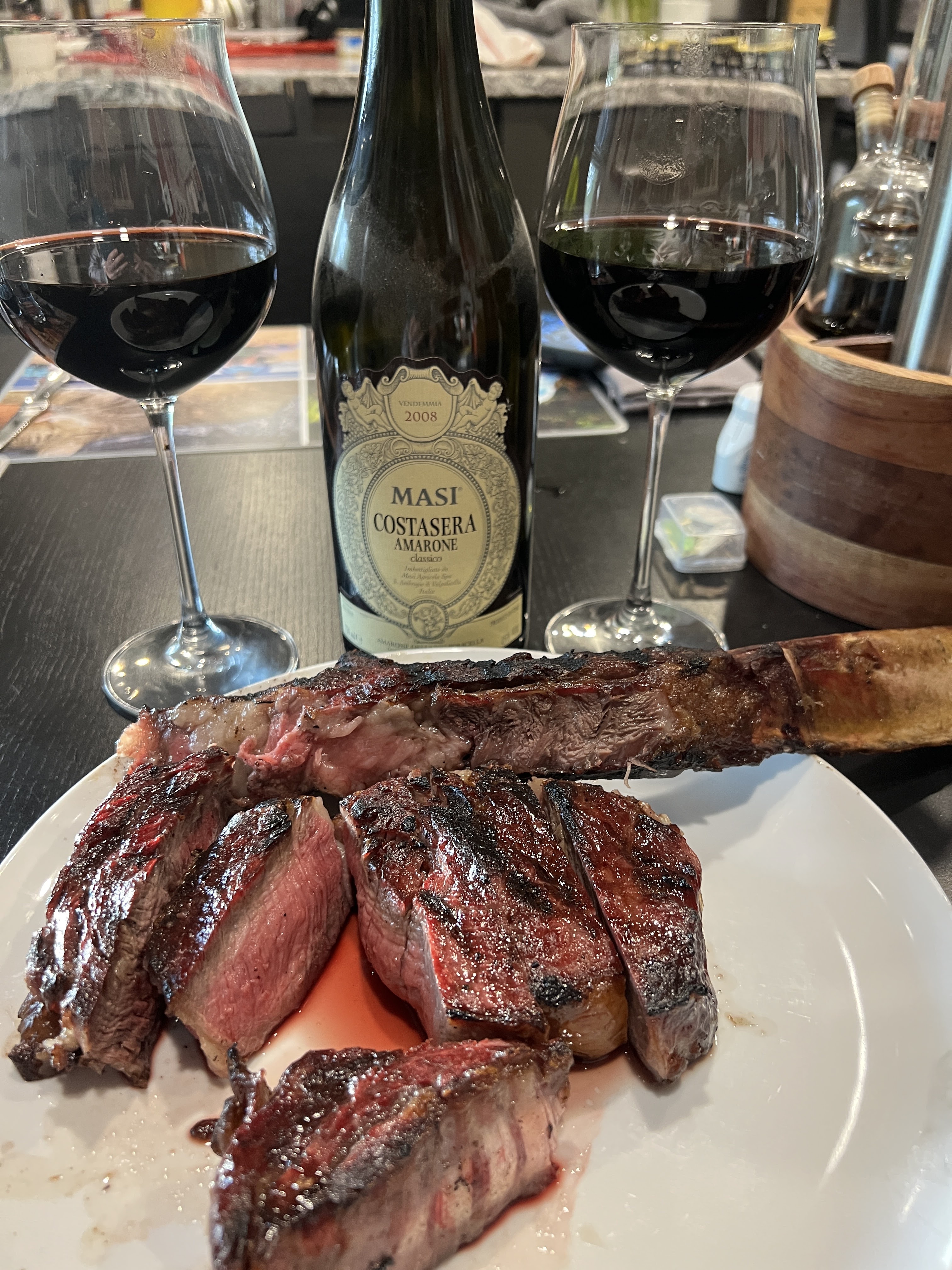
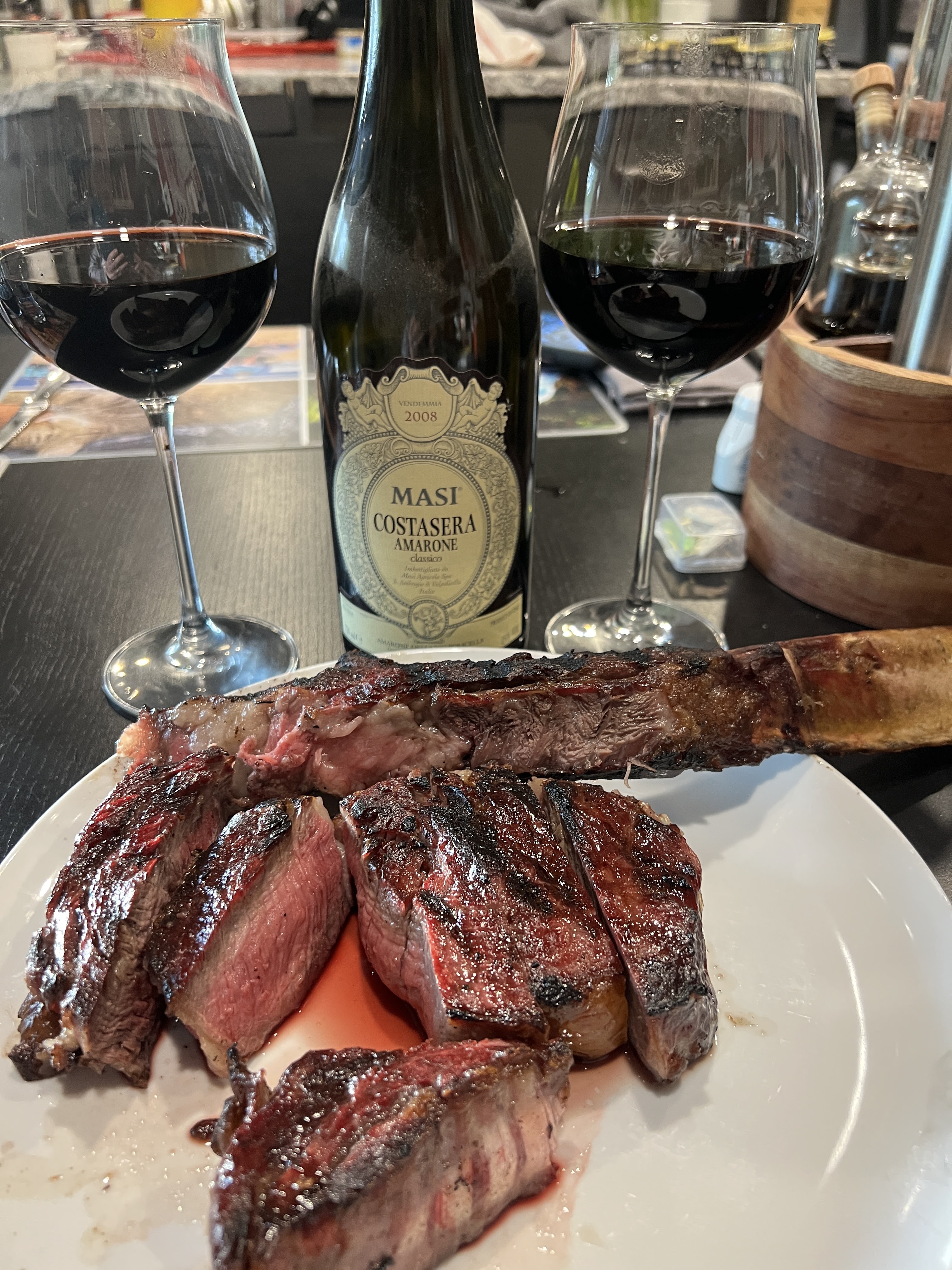
A lovely steak like this deserves a very good wine we had a 2008 Amarone that I have had in my cellar for about 11 years. It had beautiful body with softened tannins from the aging and matched up perfectly with the steak. No sauce was needed for this steak.
Beth made some delicious, healthy accompaniments including some crispy potato slices that were delicious and very low in calories. It was a very wonderful meal, and a healthy one by the way it was prepared. The two slices of steak on my plate in the picture were plenty for me. Each bite of steak was moist and very tender, with great flavor.
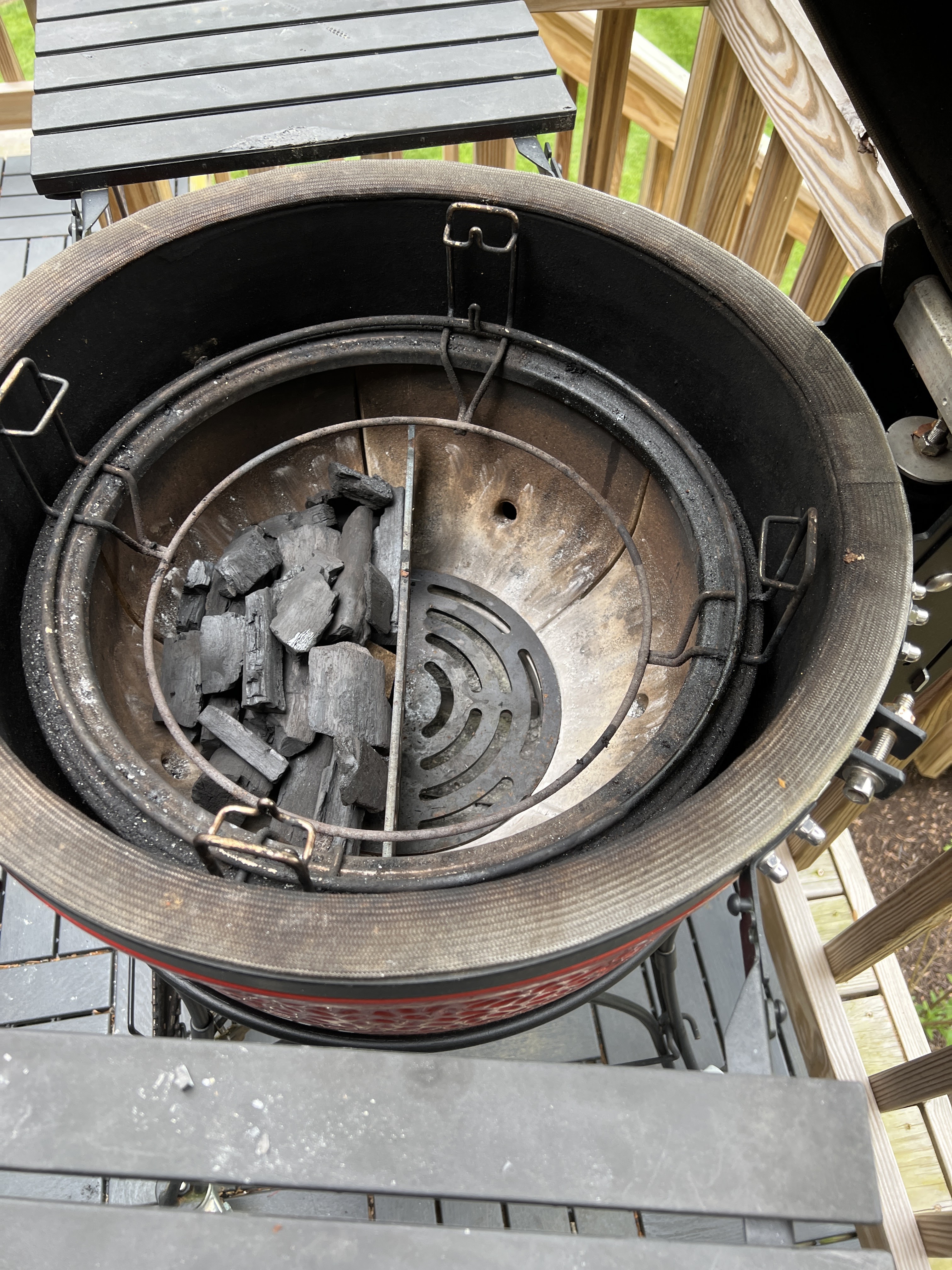
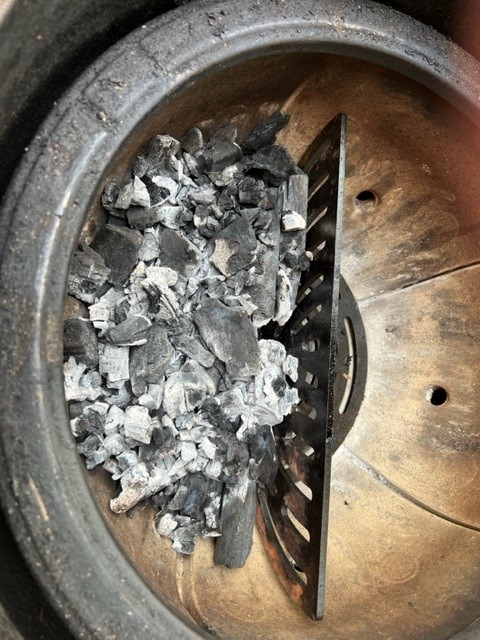
One of the things that I really like about the Kamado is how efficient it is in burning the charcoal. I have smoked a brisket for 12 hours and did not need to add any charcoal and I have read writeups of people smoking pulled pork overnight for over 15 hours without adding charcoal. From the time I lit the fire until I took the steak off was 2 hours. I shut all the vents which cuts off air to the coals and causes them to stop burning. This picture is the next day and shows the charcoal that was left to be used for my next cooking effort on the Kamado.
It took me ALOT longer to write this up and post it than it did to cook this delicious steak. Once I had the fire at the right temp I put the steak on to temper and about 15 minutes later I flipped it. During the rest of that 35 minutes of tempering I could be doing anything else. Once the steak got to 100° I took it off and left it in the pan it dry aged in for 10 minutes while I got the fire up to red hot. I then put the steak on the very hot fire for 4 minutes per side and then I was done. About 20 minutes when I was actively cooking.
I went into a lot of commentary with lots of pictures here because I enjoy cooking, and writing it about is a fun for me. I wanted to show some of the advantages of a Kamado style grill for this but, as discussed in my earlier blog on Reverse Searing, there are all sorts of ways to do it and it really isn’t very hard. Find one that works for you and you will no longer want individual steaks for everyone. You will want to get a nice thick steak that you can dry age, temper, and reverse sear that will be much more flavorful, tender, and juicy than your individual steaks have been.
In sum – To get there took planning in terms of getting the steak at a very good price, taking the two days to dry age it, and starting the fine in the Kamado at 5:00 to sit down to eat at 7:00. Yes, the reverse sear is some work, but I enjoy the cooking process and I really enjoy the end product.
We had a great virtual wine tasting last evening of 5 delicious Spanish Wines that the participants were not familiar with. All three of the red wines got very high praise and the split was 50-50 on the two white wines. Half the group really liked one of two and thought the other was OK. The other half thought the same thing, but the wine they really liked was the one that only OK to the first group 😊.
If you are interested in knowing more about Spanish wines I have three downloads for you.
The first download has a list of the five wines we tasted and the price for them from Wine.com. It also has the 19 other Spanish wines that I recommended during the tasting and typical retail prices for them.
The second download is the slides that I used for this tasing with lots of pictures of Spain, maps of where the wines came from, ond tasting notes for each of the wines.
The third download are my notes for each of the slides. If you want to get a few friends together and get this wines you can use the slides and these notes to do the wine tasting for yourselves.
The recorded session ran for two hours. If you send an email request to bill@billwinetravelfood.com, I will send you a link to that recording. It has all of the questions and comments of the participants. That way you can play the recording and pause it when you want to compare thoughts on the different wines.
I hope this helps you discover some Spanish wines that you like as much as I do.
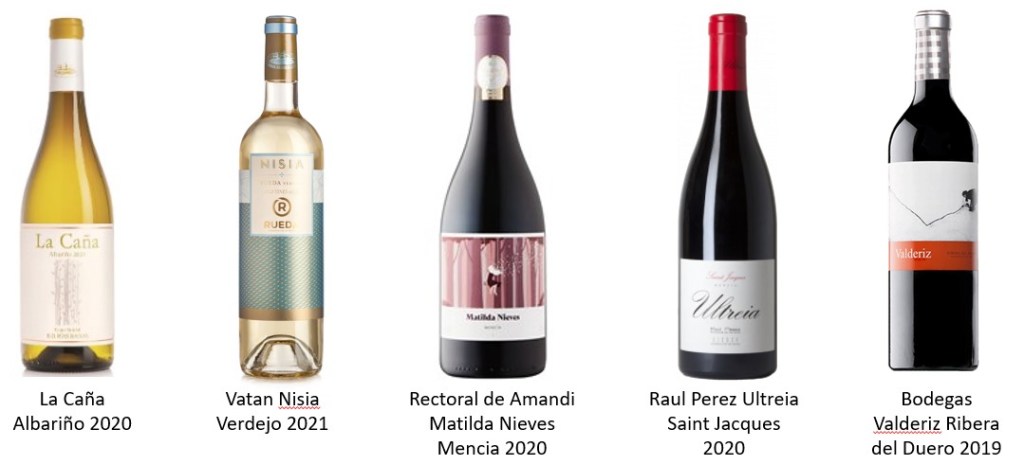
I will be doing a virtual Spanish Wine Tasting on April 27 starting at 8:00 PM Eastern. The wines that we will be drinking are listed below. All of them should be available through Wine.com. I suggest you order them right away to have them for the tasting.
If you are interested in joining this wine tasting, send me an email at bill@billwinetravelfood.com with your email address and I will send you the Google Go To Meeting link that we will be using. You are also welcome to send me any questions regarding this wine tasting to that address.
These are the wines for my Spanish Wine Tasting. I an planning on an hour but I have it blocked for 90 minutes if we have a lot of discussion.
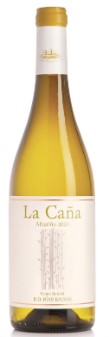
La Cana Albarino 2021 – $17: a dry white wine from the Atlantic coast of Spain, just over the border from Portugal. Fantastic seafood wine.
Bodegas Vatan Nisia Verdejo 2021 – $17: Spain’s best white wine from the Rueda region very close to the famous Rioja region
Bodegas Rectoral de Amandi Matilda Nieves Mencia 2020 – $16: First of two different red wines made with the Mencia grape. This is a very nice table wine that got over 90 points from multiple reviewers but currently on sale for $16 at Wine.com. Mencia is a little like Cabernet Franc, a great wine that is almost unknown.
Bodegas Raul Perez Ultreia Saint Jacques 2020 – $26: A second Mencia that is a step up, 94 points, to give you two samples of this great grape.
Bodegas Valderiz Ribera del Duero 2019 – $34: The best known wine from Spain is the red wine from the La Rioja region right along the Duero river. But right next to that region, just down the river, is the Ribera Del Duero region and all the major reviewers say that the very best red wine from Spain is from this region.
Mencía is one of two wines we had never heard of and that we fell in love with on our Spanish wine tasting trip. It is lovely medium bodied red wine that generally sells for under $20. We have tried a few that were in the $25-30 price range, and they are well worth that price, but the ones that were $12- 18 are Best Buys at that price. Mencía was thought to be another descendant of Cabernet Franc, but DNA analysis proved that was not the case. But I do think that Mencía shares several characteristics with Cabernet Franc.
It is a name that many people are not familiar with and have never tasted.
It is delightful red wine at a very good price point.
It is medium bodied with lots of flavor and complements a wide range of food dishes.
Most retail stores will have a limited selection. The very good wine stores like Calvert Woodley and MacArthur in DC, and the big online shops like Wine.com and Total Wine will have some good choices. I found 46 Mencía wines available to me on Wine.com the day I wrote this post.
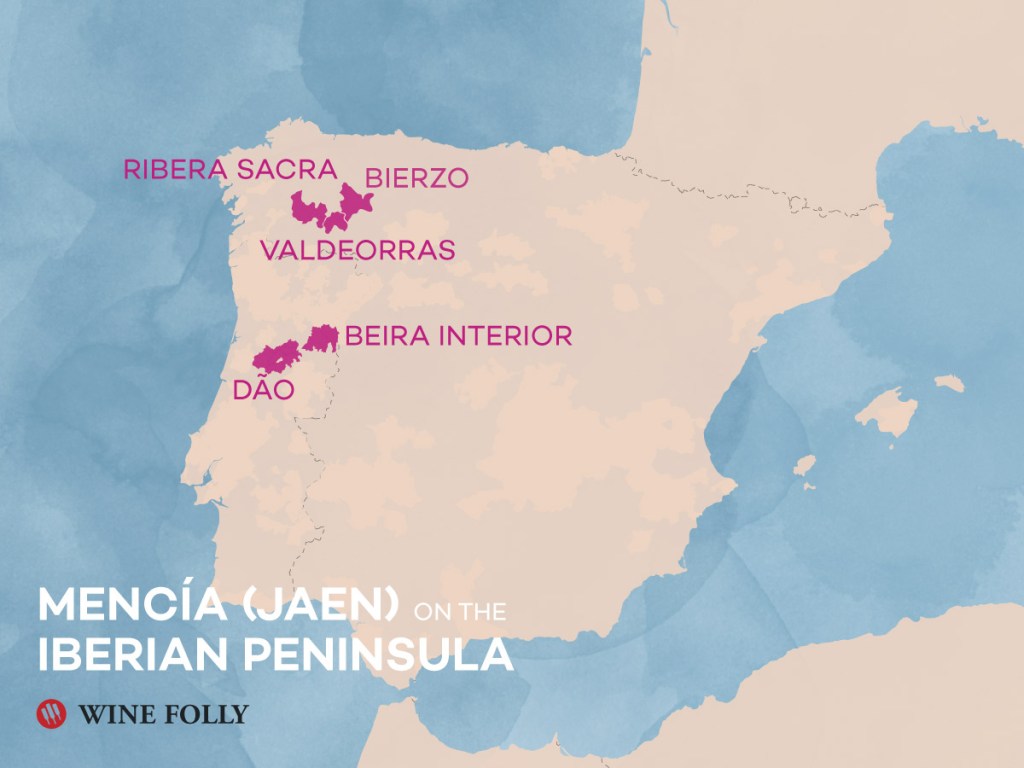
According to Wine Folly’s excellent web site, Mencía (“Men-thee-ah”) is a medium-bodied red wine grape that produces high quality wines with floral and red fruit flavors. If you’ve never heard of it, it’s not surprising, Mencía only grows in Spain and Portugal on the Iberian peninsula. What makes Mencía special is it has shown the ability to age like other fine wines and it offers rich aromas in the glass. If you love Pinot Noir and other aromatic reds (like Gamay or Schiava) then Mencía is something worth investigating. Mencía is labeled as Jaen (“jyne”) in Portugal.
Mencía vines are planted on about 22,000 acres in Spain in Castilla y Leon, east of Galicia where the Albariño wine in the first post came from. The Bierzo DO is where most of the Mencía vineyards are located with some in the Ribeiro and Valdeorres DOs which are in Galacia. Another 6,200 acres of Mencía is planted in Portugal, primarily in the Dow region.
Mencía was primarily a light table wine for many years. Beginning early in the 20th century a number of wine makers applied fine wine making techniques to the Mencía grapes which resulted in a medium body wine with great flavor and the popularity of that wine is now growing rapidly. Some of the key actions that led to the significant improvement include:
Vineyards planted on the south facing side of higher altitude hills.
Pruning the vines to limit the yield to get grapes with more flavor. In the Bierzo DO wine makers are allowed to harvest enough grapes to produce 20,000 liters per hectare. But most of the wine makers that are producing good Mencía are trimming their vines to only produce 12,000 liters per hectare and for some of the premium Mencías, they only get 8,000 liters per hectare, so the grapes have much more flavor.
Nurturing old vines to produce smaller quantities of grapes with very rich flavors to be added to the gapes from vines in their peak growing years.
Very little oak is used in the Mencía process as it can significantly impact the flavors in this medium body wine. When it is used, the wine does have softer tannins.
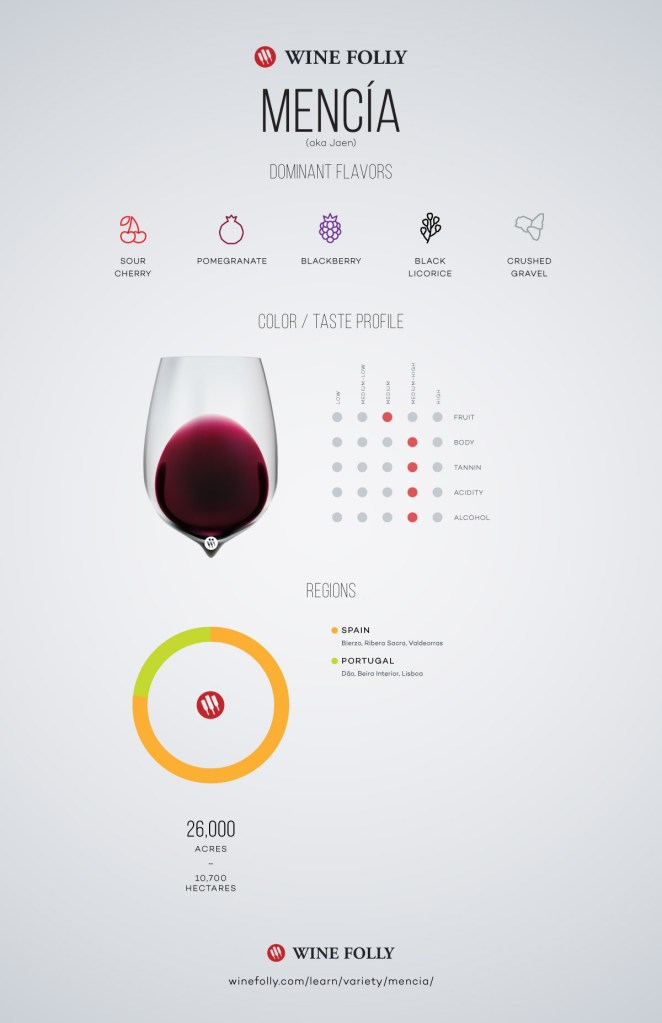
This excellent graphic on Mencía comes from Wine Folly. The wine has a very pleasant flowery aromas with red fruit notes like raspberry, strawberry, cherry, and pomegranate. While medium bodied, it has a deep red maroon color with fresh acidity and chalky tannins that you can taste but they are not at all dominant. The taste is the red fruits that were in the aroma with some secondary notes of black peppercorns, violets, and some gravel minerality.
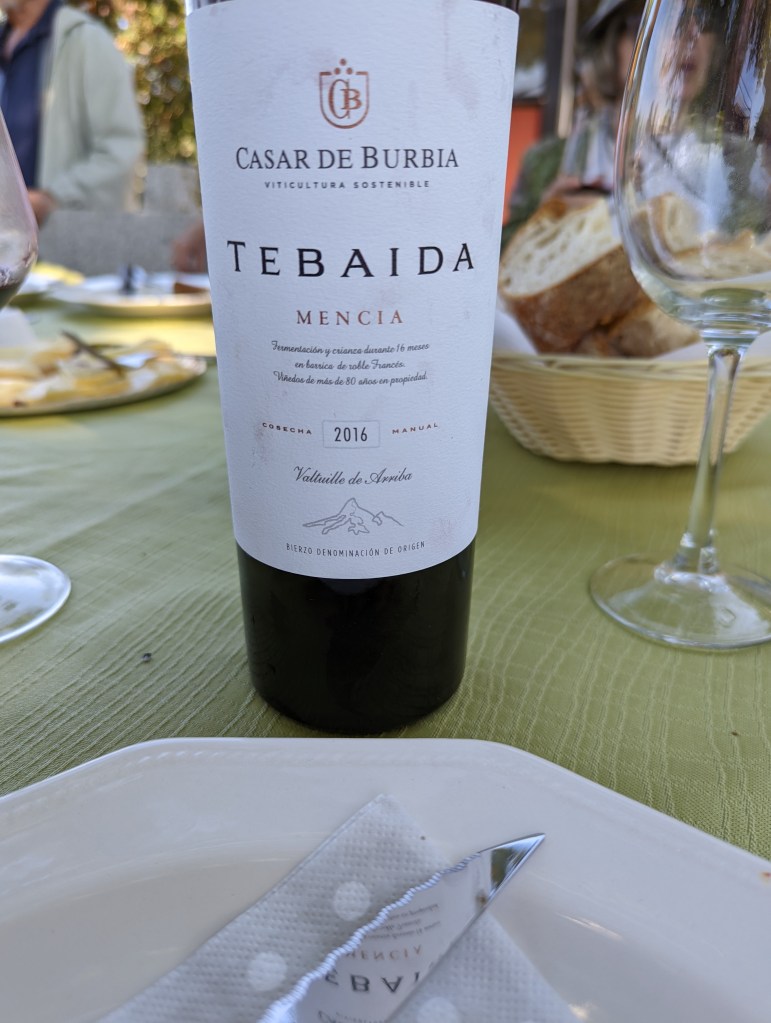
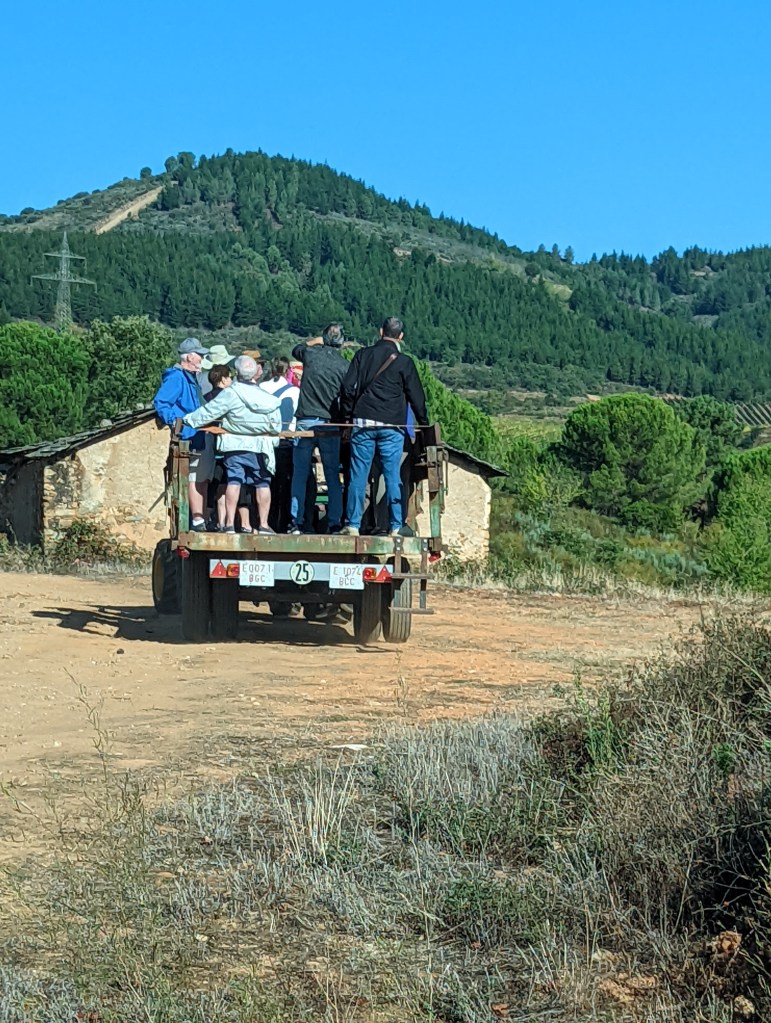
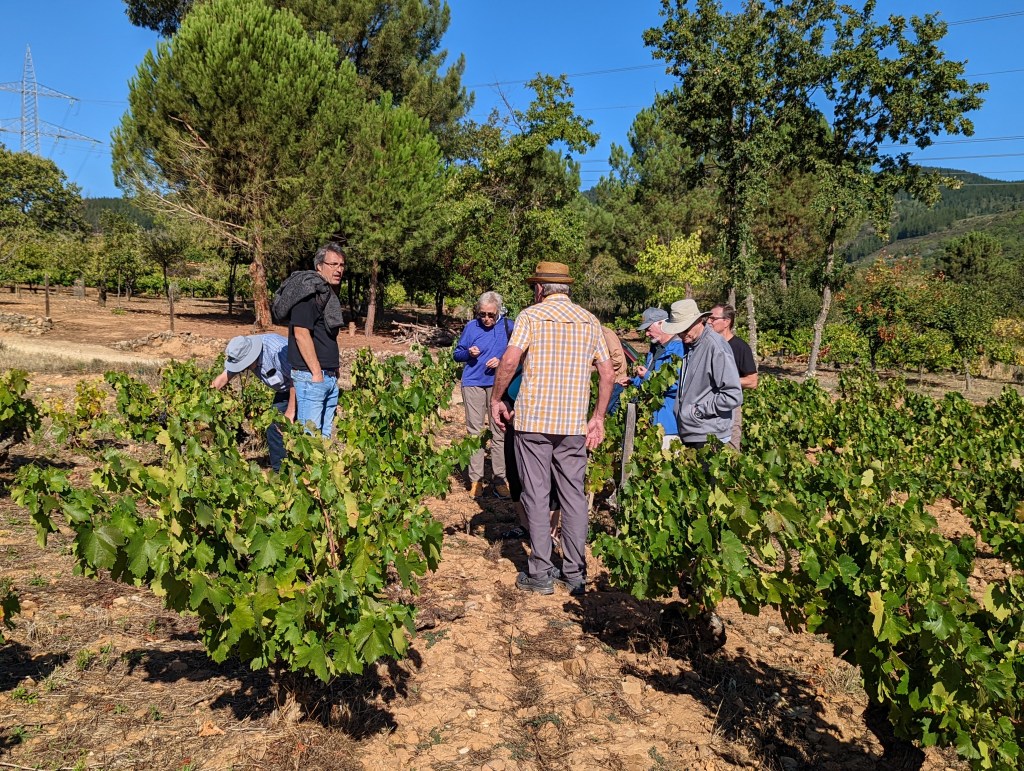
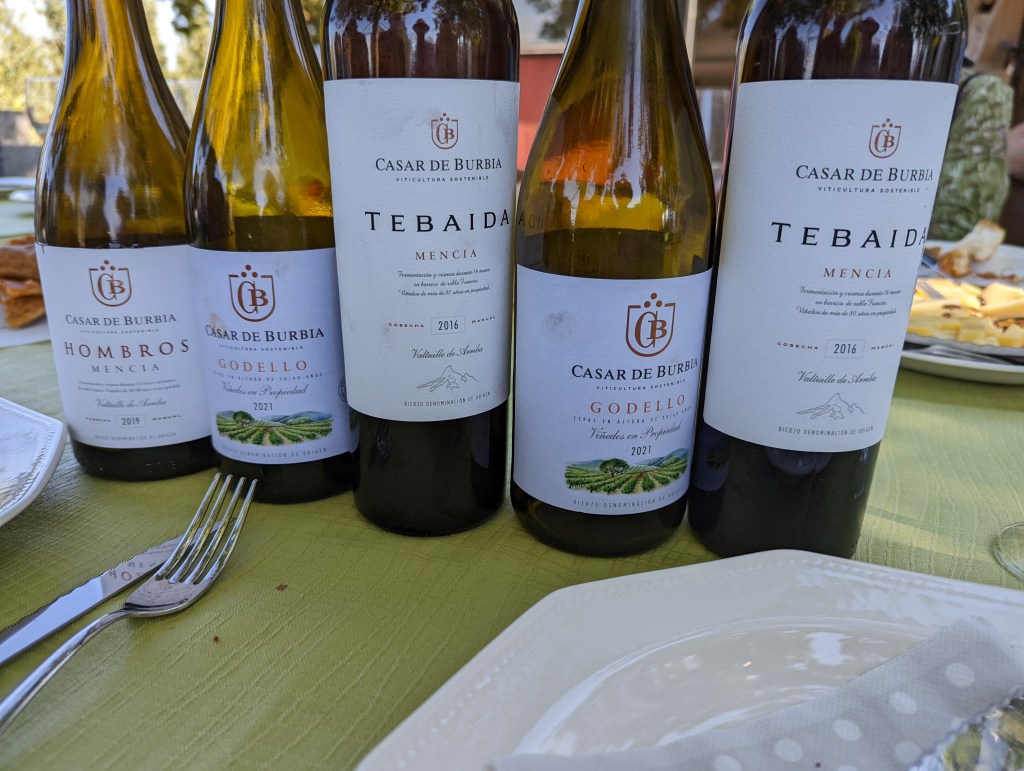
We were introduced to Mencía in a visit to Cesar de Burbia in Bierzo and I have a number of pictures from that visit. From our comfy bus we climbed onto a large flatbed truck and held on the ropes surrounding the truck bed as we drove up into the higher elevation hills to the vineyard where we tasted ripe grapes from the vines and listened to the wine maker talk about limiting the yields and being all organic in his approach.
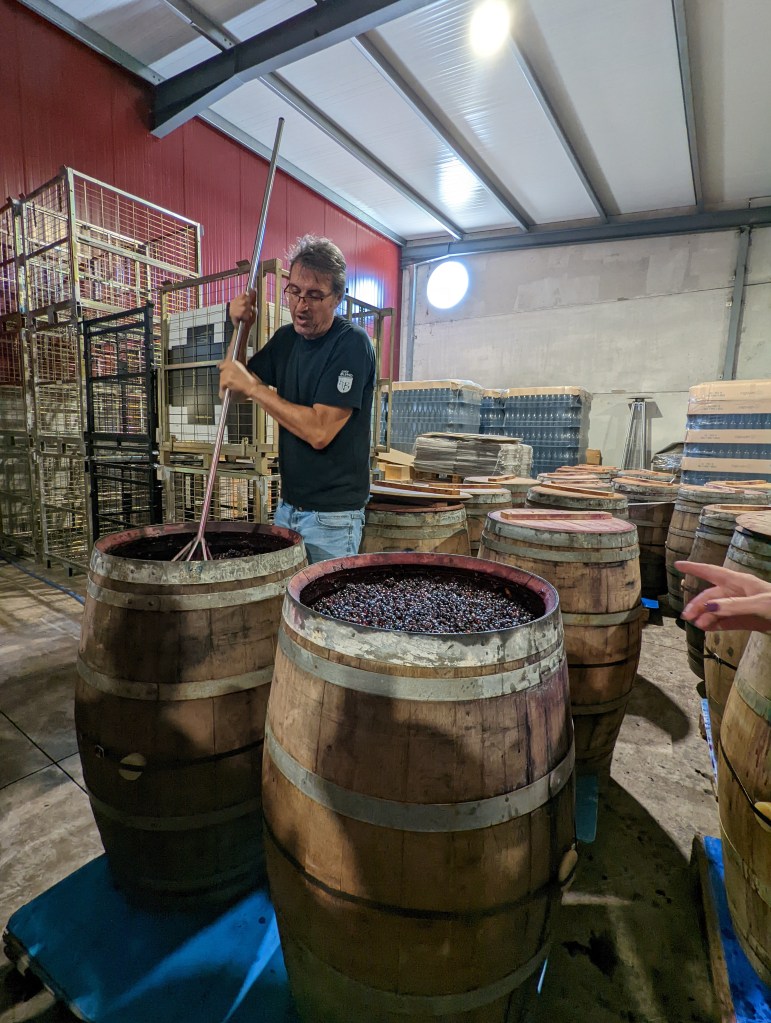
We then went back to the bus and went to the winery where were taken through their wine making process and then enjoyed six of their wines including the three Mencías recommended below. The first one is their basic Mencía, the Hombros is the next step up, and the Tebaida Mencía is another level up wine where they trimmed the vines to further limit the yield of the harvest. We loved all three and have gotten the Mencia and the Tebaida locally, but all the stores are now out of stock. I suspect they are waiting for the 2021 vintage to ship. I am enjoying the other wines in the list below while I wait for the Cesar de Burbia get back on the shelf.
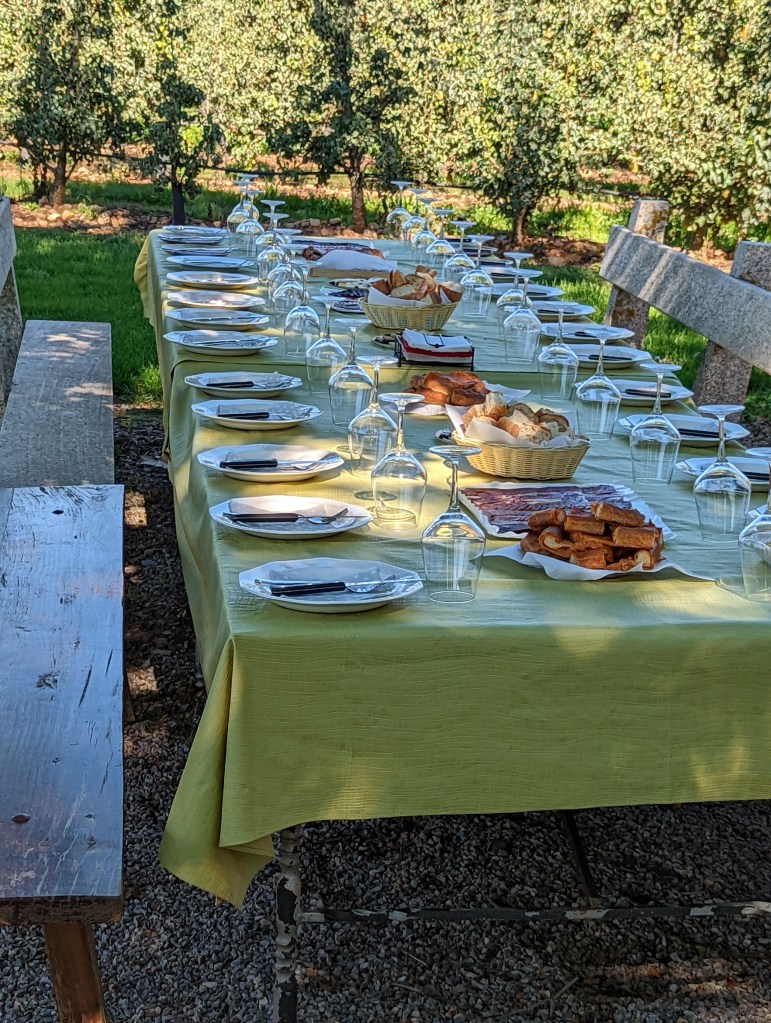
Our tasting was at a long outdoor table in perfect weather, and they had a lovely spread of charcuterie and cheeses for us to enjoy with the wines. We were poured a taste of each wine and the winemaker took us through that wine. At the end bottles were put on the table and passed around and we could have us much as we wanted of each of the wines. It was a great tasting! Two of the wines we tasted were their Godella wines, the other grape we had never heard of or tasted before this trip and that will be one of the other four Spanish wines that you might not have heard about that I will discuss in future posts.
Recommended Mencía wines:
Casar de Burbia Mencia – Bierzo. $15
Casar de Burbia Hombros Mencia – Bierzo. $20
Casar de Burbia Tebaida Mencia – Bierzo. $25
Descendientes de Jose Palacios Petalos – Bierzo. Consistently getting 93-95 points from multiple reviewers. $27
Bodegas Raul Perez Ultreia Saint Jacques – Bierzo. Consistently getting 93-94 points from several reviewers. $30
Bodegas Rectoral de Amandi Matilda Nieves Mencia – Ribeiro. 91 points form several reviewers. $20
Bodegas Avancia Cuvee de O Mencia – Valdeorres. Consistently getting 90-91 points from multiple reviewers. $18
Vinos de Arganza Lagar de Robla Premium Mencia – Bierzo.. $12
Vinos de Arganza Flavium Premium Crianza Mencia – Bierzo. $12
Vinos de Arganza Alvarez de Toledo Mencia – Bierzo. 2020 got 91 points from JS and WW. $14
I will be doing a set of posts on some really delicious wines from Spain that you might not be familiar with. The two wines that Spain is best known for are the red wines from the La Rioja region and the Cava sparkling wines from the Priorat region outside of Barcelona. Both are excellent but there are eight other Spanish wines that we really enjoy, many of which we learned about on our great wine tasting trip to Spain last September. Here is a link to a write up on that trip – https://billwinetravelfood.com/2022/10/10/two-week-spanish-wine-tasting-trip/. This years trip was recently announced. If you want a link to the information for this year’s Spanish Wine Tasting trip, let me know in Comments where to send it. I highly recommend it.
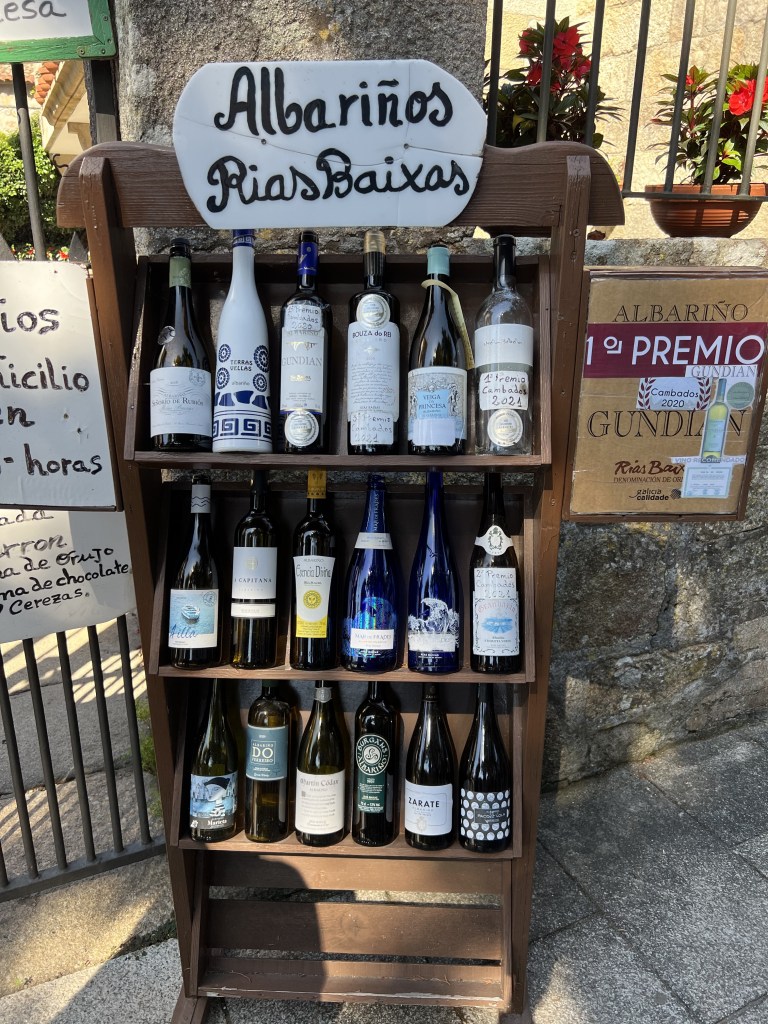
The first wine that I will be covering is Albariño from the Rias Baixas DO. It is a crisp dry white wine that is our favorite wine for seafood and generally sells for under $20. The picture is of a roadside stand in Spain with a whole selection of Albariños, most of them were about €8 and these are only sold locally. If you go into a Spanish bar or restaurant and ask for glass of Albariño, it usually costs about €2. There is a pretty good availability of a number of Albariños in the US.
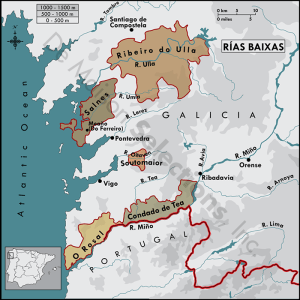
For those of you whose Spanish is as bad as mine, the squiggle over the n in Albariño adds a y sound to the pronunciation – al bar EEN yo. The x is Rias Baixas has a sh sound so the region is pronounced – re az BY chees. It is believed that the Albariño grape was introduced to the area in the 12th century by the Cistercian monks of the Monastery of Armenteira. The map shows the Rias Baixas region which is in northwestern Spain, right on the Atlantic and just across the border from Portugal. That same grape is called Alvarinho in the Portuguese province of Portugal, just south or Rias Baixas and I am a big fan of the Portuguese version of this wine as well.
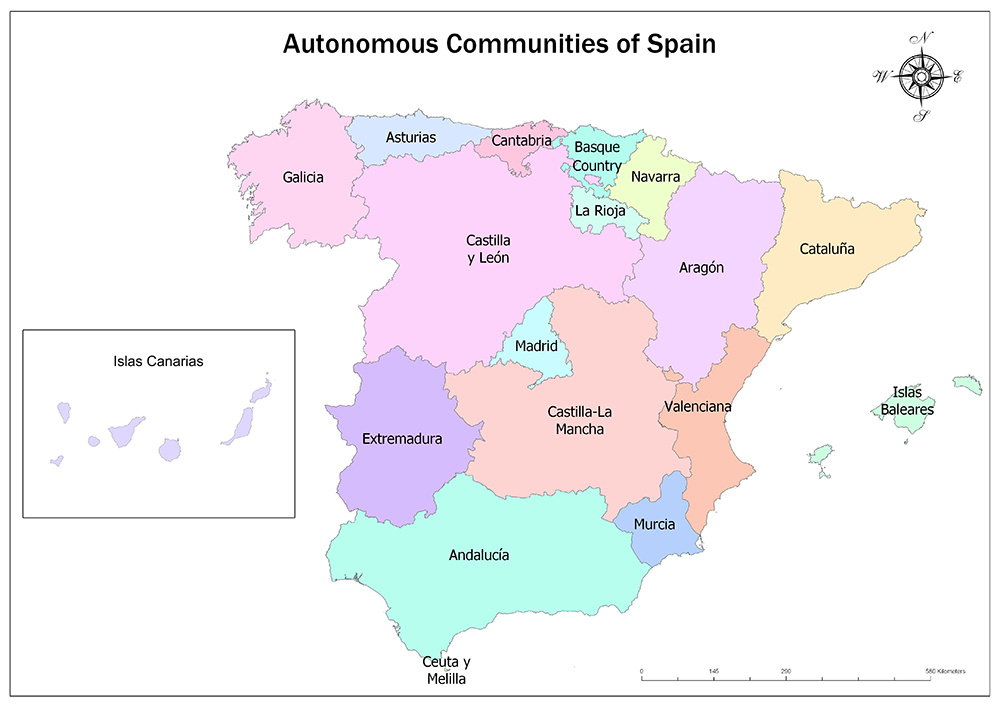
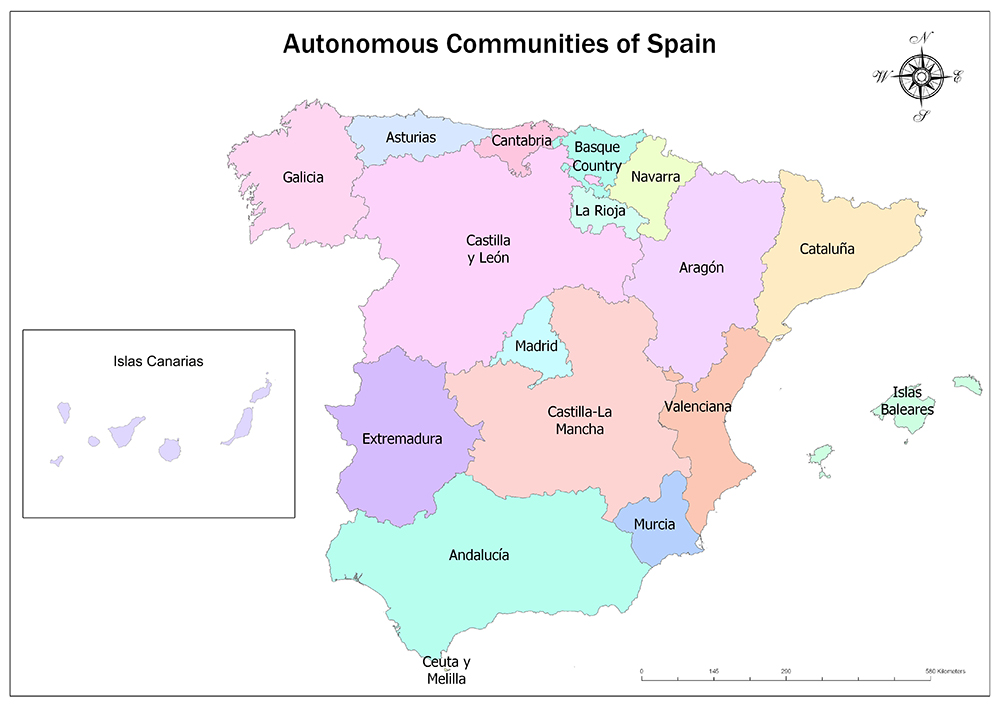
In my write up of these other eight wines I will consistently recommend that you get ones that have the DO designation on the label. This “Denominación de Origen” (designation of origin) lets you know that the wine you are considering met a set of standards defined by the leading vineyards in a specific geographic area and therefore is likely of good quality. It may not be to your taste, and any bottle can have a bad cork or have been exposed to too high or too low temperatures in transit into this country – so there are no guarantees. But wines that do not have a DO have not committed to those standards of quality and therefore are a much higher risk. Spain is divided into 17 Autonomous Communities (AC), which are wine making regions, and they are shown in the map below, which can also be downloaded. In each of those AC’s, wine makers in some of the smaller geographic have banded together and defined a set of standards that a wine must meet in order to put DO on the label, e.g., DO Rias Baixas in the Galicia AC. Each DO has a group of members that monitors compliance with those rules and determines who can put that designation on their label. There are approximately 70 DO’s in Spain.
The Spanish claim that when God finished creating the world he looked down and was very proud of his work. He reached out to touch it and his thumb and four fingers made the inlets of Rias Baixas. The Albariño vineyards are right on the ocean and even if God did not touch this area with his hand, he put those grapes on the earth to accompany seafood. You can almost smell the salt air when you breath in the aroma of Albariño. The climate is very humid with warm summers influenced by the Gulf Stream.
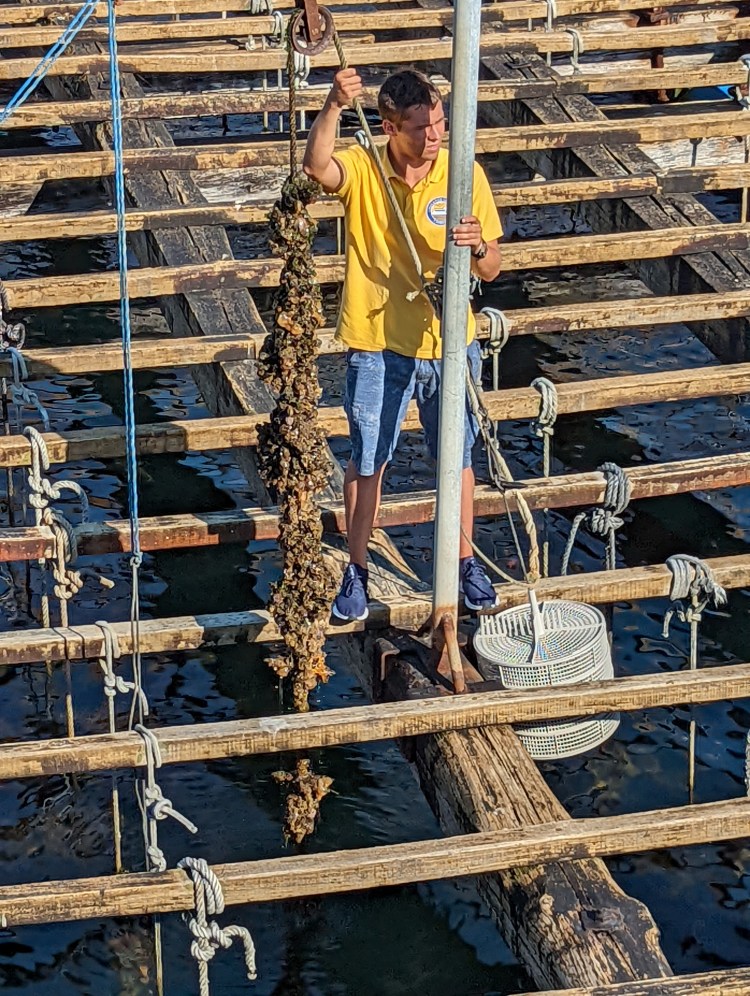
In addition to making delicious wine that is mostly under $20 in the US and half that cost in Spain, the region also is a major producer of shellfish. The first picture shows some of the over 2,200 of barges or “Bateas” in one of the inlets, the Ria de Arousa , where they raise enormous amounts of shellfish. Each of these bateas has 420 ropes hanging down 5-10 meters into the water. Each rope can be used to raise mussels, scallops, or oysters. The second picture shows one of the crew members on the bateas with a rope for each kind of shellfish. Each is seeded with tiny baby shells and put down in the Ria which is very rich is the ocean plant life that the shellfish thrive on. The rope with the mussels can grow about 20 kilos of mussels on each meter of rope in two years and there are about 300 mussels in the picture below. The scallop and oyster ropes each grow a few dozen full sized shellfish in 3 years. Because of the 2-3 year time required, thousands of bateas are needed so a significant crop can be harvested each year.
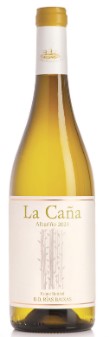
Our house Albariño is La Caña (CAHN ya) which is owned and operated by Jorge Ordoñez. It consistently gets 90-92 points from the reviewers and is about $18-20 and pretty widely available in the US. It demonstrates the complexity, intensity, and longevity Albariño can achieve when sourced from old vineyards and using serious winemaking practices. They ferment 35% of the wines in small old oak puncheons and 65% in stainless steel tanks. The pressed grapes are left for Sur le aging for eight months and are punched down biweekly.
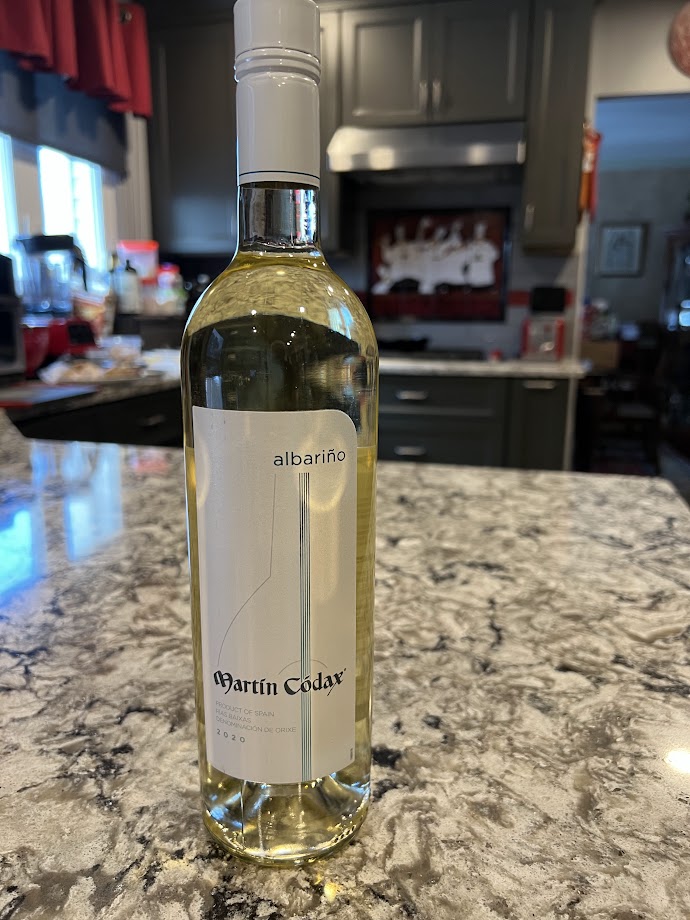
Martin Codax is also very widely available in the US. This is a Co-op wine with grapes purchased from a number of different vineyards. It is a very nice table wine that retails for about $15,but just a little below the La Caña in quality in my opinion.
Quinta de Couselo has pretty good distribution in the US and offers three Albariños. Their Barbuntin is a lighter wine made from younger vines, generally less than 30 years old. It sells in the $12-15 range. I like the richer Albariños and would take either the Martin Codax or the La Caña over this one. Their Rosal is in the $20 price range, and I found it delightful. Their Turonia is the best of the Couselo Albariños and fully worth the $24 price that on line retailers in the US have it for and I have a couple of bottles in my cellar.
I open my Albariños three to four hours before drinking them and leave them open in the refrigerator to breathe. I take them out of the refrigerator at least 30 minutes before pouring the wine to get the temperature up to the high fifties Fahrenheit. Another theme you will see in my posts on wine is that we don’t let our wines breathe and open up, we drink our white wines much too cold, and our red wines too warm.
Would anyone be interested in joining a virtual Spanish wine tasting? Maybe in late March? I did an 18 day Spanish wine tasting trip in September and found some great wines that I really love. Below are five wines that Wine.com shows as in stock. Check if they show as in stock and available to you and let me know. These may be totally new wines to you, especially the two Mencia red wines that I had never heard of before taking this trip.
Spanish Wine regions
La Cana Albarino 2021 – $17: a dry white wine from the Atlantic coast of Spain, just over the border from Portugal. Fantastic seafood wine.
Bodegas Vatan Nisia Verdejo 2021 – $17: Spain’s best white wine from the Rueda region very close to the famous Rioja region
Bodegas Avancia Cuvee de O Mencia 2018 – $16: First of two different red wines made with the Mencia grape. This is a very nice table wine that got over 90 points from multiple reviewers but is under $20. Mencia is a little like Cabernet Franc, a great wine that is almost unknown.
Bodegas Raul Perez Ultreia Saint Jacques 2020 – $26: A second Mencia that is a step up, 94 points, to give you two samples of this great grape.
Bodegas Valderiz Ribera del Duero 2019 – $34: The best known wine from Spain is the red wine from the La Rioja region right along the Duero river. But right next to that region, just down the river, is the Ribera Del Duero region. All the major reviewers say that the very best red wine from Spain is from this region.
We have not had a virtual wine tasting for a while. Please let me know in comments or via email response you are interested. If there is enough interest to do this one, I will get it scheduled and send out an invitation. I think you will really enjoy these wines.
I will not be recording this and publishing it on youtube as I did with two of the wine tastings we did last year. It was a lot of work to take the virtual session and turn that into a video that I could post on youtube and the viewership of those videos was very limited so not worth the effort required.
A pizza cooked in the oven at home, or even warming a store bought frozen pizza, will taste much better when done on a pizza stone that is at the proper temperature. But pizza stones have several drawbacks:
They are expensive!
They have a fairly short life before they are “gunked” up and need to be replaced. About every two years in our house.
They break every easily if dropped, even from a short distance.
The round shape makes them suitable for round pizzas but not much else, particularly not well suited for artisan bread baking.
There is a very good alternative to pizza stones that addresses all of these issues – unglazed ceramic or quarry tile. These tiles are safe for cooking and Alton Brown is widely quoted on recommending inexpensive quarry tile instead of an expensive pizza stone.
The key is unglazed. Any glazed tile can release lead into your oven and food and this is NOT good. Unglazed quarry tiles are made from fired clay as it comes out of the ground. Unglazed ceramic tiles are made from refined clay in a powdered form. Quarry tiles are a little thicker than ceramic tiles but either are fine for baking. Because both types are made entirely from earth materials, they are fine if left unglazed. This allows moisture to pass out of the bread or pizza bottom leading to a nice crisp texture.
You want to put the tiles in the oven before you turn it on to preheat. By the time the oven comes up to the cooking temperature, the tiles should be at the right temperature for your bread or pizza. It might take a little longer for your oven to come up to temperature as it needs to also heat the tiles. If I have a loose dough, then I put it on parchment paper and slide that onto the tiles. After a few minutes I can slide the parchment paper out from underneath using tongs and the dough is right on the stones for the rest of the cooking time. If I am using a bread pan, perhaps for baguettes, I put the pan on the stones for a few minutes and then with pot holders slide the bread out of the pan directly onto the stones.
As shown in the above picture, my oven lets me put two rows of four tiles in it for baking so that gives me a 24” x 12” cooking surface, much larger than a pizza stone. Even if your oven would only let you put three tiles across, that is still well more than double the square footage then a typical pizza stone and the rectangular shape gives you a lot more flexibility in baking different sizes and shapes of bread.
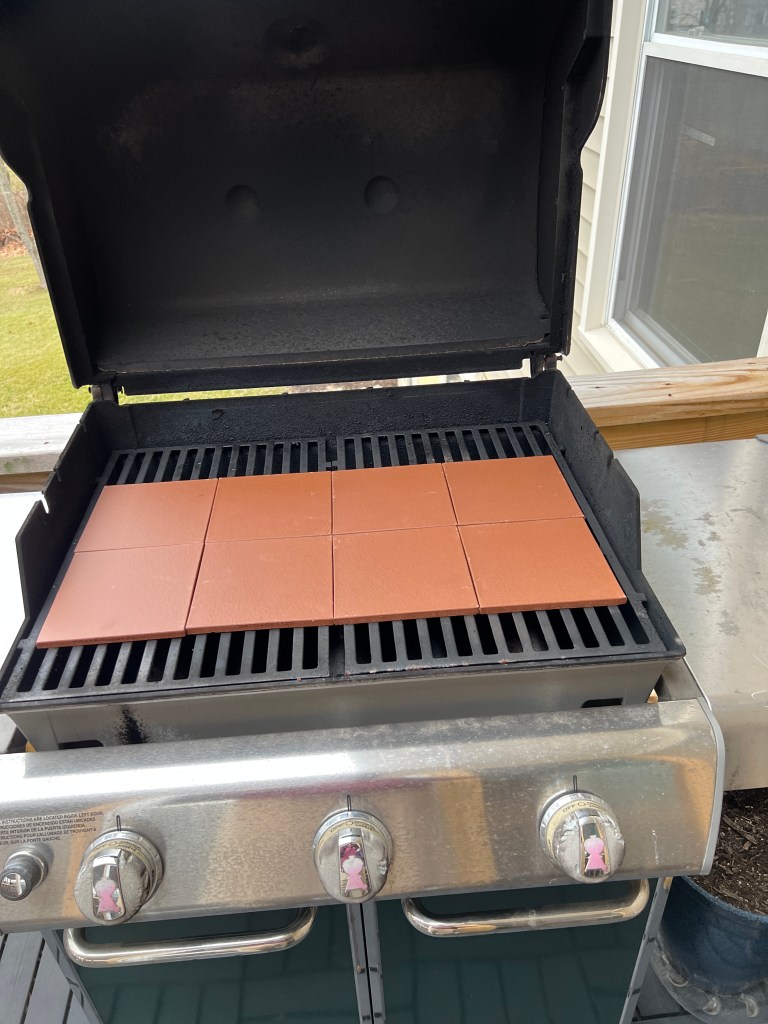
Cooking pizza on the grill is also great and here is a picture of those same tiles on my Weber gas grill. I can cook a pizza right on the grates but I like the crispness that I get using the tiles and there is less risk of char on the bottom of the pizza when it is not directly over the flames. I could put a third row of tiles on that grill, but you don’t want to cut off the air flow in your oven or grill or the top of your bread or pizza will not brown. You can see in the picture of the tiles in my oven that there is plenty of space in front of and behind the tiles to let the air flow.
I have been using 6” x 6” unglazed quarry tiles from Metropolitan Ceramics for years. And here is a picture of one. When I first started, I could buy individual tiles for about $0.50 a tile at Home Depot. It appears they no longer carry Metropolitan but I have about a dozen of the tiles from the case of 28 that I bought years ago left in the box. Below are links to what appears to be very similar unglazed tiles at Home Depot, Lowes, and Amazon. I also suggest checking out tile stores. When we redid both our kitchen and the Master Bath, we got much better prices at the tile store than at one of the big chain stores like Home Builder and we could purchase the number of tiles we wanted and did not have to buy by the case. The tile in this picture has been used at least a dozen times and has just a little bit of discoloring.
These tiles come in cases of 23 tiles and the cost for each of the stores is shown below. The case price comes out to about $3-4 per tile. But even at $3 a tile, using three tiles across and two deep would only cost $18 which is a lot less than a pizza stone and give you more cooking area. And you can replace individual tiles when one gets stained to the point that you don’t want to cook on it anymore. I have had my case of tiles for at least 10 years and only about six tiles have gone in the trash so I am way ahead of the game financially. It was a shock that the prices are so much higher than when I purchased the tiles I have, but these are primarily used as flooring tiles and all building materials are much more expensive in the last few years.
As mentioned above, when I first started, I bought six tiles as an experiment for about $3.00. All of the web sites have a cost of at least $11 for an individual tile so the stores clearly want to sell full cases and not individual tiles. But I suggest you check out individual stores and see if they have any open boxes and, if so, what is the cost of an individual tile.
I am a long-time home bread baker. My focus has been on artisan breads like baguettes, boules, and focaccia with many different toppings. King Arthur Bread Flour is my staple. But our oldest grandson was recently diagnosed with celiac disease. Bread was a great love of his and I am now learning to make gluten-free breads for him. I was very happy with some gluten-free English muffins that I recently made and am sharing that recipe here. We do not have a gluten-free kitchen and are learning what we need to do to have him continue to enjoy family meals at our house.
It has been an interesting learning curve for me so in addition to providing this recipe for you to download below, this post provides some and some lessons learned from my first attempts at gluten-free baking. At the end, for those new to gluten-free baking, I have some background on gluten-free baking that I found very interesting and helpful.
Being a big fan of King Arthur Flour’s products, I went first to their web site for gluten-free recipes and ingredients. I also looked at a number of gluten-free bread recipes that have been posted on line and tried some for focaccia and baguettes. The standard approach in almost all of the recipes that I saw was to purchase one of the mixes of gluten-free flours at a grocery store and use and xanthan gum to replace gluten as the way to capture the CO2 released by the yeast so the bread rises. I was very disappointed with the results I got with this approach. The breads were very dense and gummy.
My wife found a great cookbook, Against The Grain which takes a totally different approach to gluten-free baking that I really like. Nancy Cain was a very good home baker who had to convert her kitchen to gluten-free when her husband and younger son both were diagnosed with celiac disease. Much of the discussion below extensively uses material from the first 53 pages of that cookbook. I have one very long page length quote below and several smaller quotes from that book in the discussion at the end of this post. All quotes in this post are from that cookbook. Any mistakes in the information below, or misunderstandings of what Nancy has in her book are totally my fault.
Nancy was so successful that she created a company, Against The Grain Gourmet and their products are widely available in grocery stores. Their web site is https://againstthegraingourmet.com/ and it has tabs for what products they offer through retail stores and where you can find stores close to you that carry those products. To get the recipes you need to purchase her book and if you are at all interested in gluten-free baking, I strongly encourage you to do that.
My recipe that you can download indicates that it was adapted from the recipe in the Against The Grain Cookbook. I have made wheat-based english muffins that I really like and part of that is an overnight slow rise in the refrigerator. I also use large english muffin rings that I got from King Arthur Flour and wanted to make 8 muffins in a batch, so I adjusted the recipe to be larger. The last significant difference is that Nancy’s recipes are based on using a food processor, but with the increased ingredients, it was too large for my food processor, so I used my Kitchen Aide stand mixer. The dough here has a thick batter like consistency and I find it much easier to get the batter like dough out of the bowl of the mixer than out of the food processor bowl with the large cylinder in the center that holds the blade. I do have some notes at the bottom of the recipe for people who want to use a food processor. I put the bowl and blade through the dishwasher before using them for any gluten-free bread to minimize any cross contamination.
When you bake with gluten, that is the mortar that holds the dough together. In the absence of gluten, you want flours with different sized granules to improve your structure. Mixing at least two different flours with different granule sizes – one of those a pure starch – will significantly improve the structure and integrity of your baked goods. Most commercial gluten-free flours contain three or more different flours for this reason. This english muffin recipe uses Tapioca Starch and light buckwheat flour to provide the alternative proteins. Some additional proteins are added by the milk and whole egg. I am not using any commercial mix of different gluten-free flours.
Buckwheat produces a heavy, earth-flavored flour that is good in pancakes but not much else. But light buckwheat flour is a great ingredient that is suitable for all types of baked goods. It adds a little color to the breads but no buckwheat flavor that I can taste. I use Organic Hulled Buckwheat Flour that I buy in 5 lb. bags from Amazon. It has a cost of only $0.34/ounce making it much less expensive than the small bags sold in supermarkets.
Tapioca flour is tapioca starch with fiber included. Many bags have both Tapioca starch and tapioca flour on the label suggesting they are the same thing. Bringing the milk and butter to a boil before adding them to the dry ingredients is needed to make the starch become soluble. As discussed in long quote below, starch is insoluble in cold water and becomes a dead weight in the bread unless the liquid is hot. I use Anthony’s Organic Tapioca Flour that I get from Amazon in 5 lb. bags. It has a cost of only $0.26/ounce. There can be a wide variation in Tapioca starch (flour) from the same vendor. Doing ingredients by weight instead of by volume will give more consistent results. In the recipe I have both the weight and the volume measurements. As you probably know, good bakers strongly recommend adding ingredients by weight, not by volume.
Recipe Hints and Lessons Learned
The wheat-based english muffins that I have made in the past had a slow overnight rise in the refrigerator and I have incorporated that approach to this recipe. The dough/batter is put into the rings on a sheet pan and that sheet pan is covered in plastic and put in the refrigerator overnight. One of the important steps in planning for this recipe is making room in your refrigerator for this sheet pan. You want the dough and the rings to be at room temperature when you start the cooking process the next day. The recipe suggests at least two hours in a slightly warm oven to do that. Once they are at room temperature they can sit for a while with no problem before cooking them.
The biggest challenge in this recipe is to get some color on the sides so they have a little crispness coming out of the toaster but having the center of the muffin fully cooked, but not overcooked. This is done with a three-step process.
The muffins are initially cooked in a cast iron fry pan over low heat for 5 minutes on each side. The goal is to have each side lightly browned, like the ones in the package of Thomas’s English Muffins in the store. Just lightly browned since they will go in the toaster in stage 3 when you are ready to eat them.
Because of the thickness of the muffins, the centers will not be fully cooked when they come off the fry pan. Stage 2 is to put them in a 350° oven for 5-10 minutes until the center is fully cooked. The recipe talks about using a cake taster at the 5 minute mark to see if additional time is needed. We don’t want the muffins to be overcooked and dried out.
The final stage is when you want to eat the muffins to fork split them and put them in to toaster until they are nicely browned. That takes 1 ½ cycles in my toaster.
The timings for stages 1 and 2 in the recipe are approximate. They are what works for my cast iron fry pan at the setting I have on my Viking gas range and then in my Kitchen Aide electric oven. If you have an electric or induction burner range, your timing and heat levels are very likely to be different from mine and your oven may cook at a different speed than mine. I suggest the first time you try this recipe that you do one muffin at a time to start. This trial and error on one muffin at a time will let you get the timing and temperature that is right for your fry pan, range, and oven. I would keep the range temp low enough that at least 4 minutes is needed before they are lightly browned but high enough so it is not more than 6 minutes. I would be more inclined to drop the oven temp and add time than I would be to raise the oven temp and reduce time. We are trying to get the very moist center fully cooked but not overcooked. Going completely through that process for one muffin and after it comes out of the oven fork splitting it to see how the center is and the color of each side will let you adjust the settings on the range and oven and the times you want to use to get it properly cooked. Once you get a muffin that you really like, you can add your timings to the recipe and then you can cook the muffins in batches with confidence they are coming out right for your kitchen each time you make this recipe in the future.
Your cast iron fry pan must be fully hot before starting the cooking process. A Carbon Steel fry pan is also a fine alternative to cast iron. I strongly prefer cast iron or carbon steel to nonstick pans, but you are free to do whatever works for you. A cast iron or carbon steel griddle also works.
I use 3.75” english muffin rings sold by King Arthur Flour in sets of four rings in each package. This size makes a larger muffin than the Thomas’s English muffins sold in the stores that we have enjoyed for years. If you are using a smaller size ring, and they are available on Amazon in many sizes, you may need to adjust how much of the dough/batter you want in each ring since the smaller diameter rings may not need the ½ cup of dough that my large rings do. That may also mean that you need less total dough/batter and will need to reduce the quantities from what I have in the ingredient list in the recipe.
I welcome your feedback on this recipe and on the topic of gluten-free baking. Anything we can do to help each other out to put tasty baked goods in front of family or friends who have a gluten intolerance is good for all of us.
If you are new to gluten-free baking, these next two sections might be of interest to understand what gluten is and why it is used and what the alternatives are. If you have a good handle on gluten-free baking, feel free to ship these sections.
Gluten – What Is It and Why Do We Use It To Make Bread
Gluten is a protein found in wheat flour. “Proteins are chains of amino acids, which are the building blocks of life. Proteins are also the building blocks of baked goods, both wheat-based and gluten-free… Proteins do the opposite of tenderizers. They toughen the dough and build the framework for the structure of baked goods.”
Wheat-based flours are very consistent. “if you buy a bag of King Arthur Unbleached Bread Flour, it will have a protein content of 12.7% and will be milled from hard red spring wheat in the northern Great Plains.” Unfortunately, gluten free flours do not have that consistency. The amount of proteins vary widely between different flours and different batches of the same flour from the same vendor can have variations.
When moisture is added to wheat flour, the gluten proteins form long strings. Mixing and kneading the dough causes those strings to form a mesh or net. When yeast is added to the dough, the yeast consumes the sugar in the flour and produces alcohol, which evaporates away, and carbon dioxide (CO2). The gluten net catches the bubbles of CO2 and that causes the bread to rise. When the dough has been machine mixed and kneaded, like most supermarket breads, the bread that is produces has very uniform small holes, each of which was where a CO2 bubble had been trapped. When bread is hand kneaded, as for artisan breads, the gluten mesh is very uneven and the holes are of very different sizes.
The primary challenge in baking gluten free bread is to find an alternative to the gluten mesh to capture the CO2 so the bread rises. As noted above, the most common approach is to use xanthan gum which can capture the bubbles of CO2 as the yeast releases them. This works and there are commercial products in the frozen food section of your supermarket that use xanthan gum with some success. But I was totally unsuccessful in using xanthan gum and much of the criticism of gluten-free baked goods on the web seems to be the dense nature of those products.
I really liked the idea of other proteins that do not trigger the same response that wheat-based baked goods do for people that cannot have gluten. The success that Against The Grain Gourmet’s products have had in the retail stores got me solidly in their camp.
Two other thoughts on gluten before diving into the alternative protein approach to gluten-free baked goods.
Gluten can be found in many places, especially in processed foods. Just eliminating wheat based baked goods does not mean you have a gluten-free diet. If anyone in your family has a gluten intolerance, you should carefully check the list of ingredients in all processed or packaged foods to make sure that it does not use gluten as a thickener or binding agent. Even some medications can contain gluten.
Gluten-free diets have become popular with people who do not have any gluten intolerance. These diets are often perceived as a healthy alternative, largely because the primary source of gluten, baked goods, often have a high calorie content. In fact, studies have shown that there are minimal health benefits to a gluten-free diet and some risks to eliminating gluten from you diet when you do not have any gluten intolerance. Her is a link to a very good article on this topic – https://www.medicalnewstoday.com/articles/288406#foods-to-avoid .
What Are Gluten-free Alternatives?
Producing gluten-free baked goods is more than just using ingredients that do not contain gluten. Our kitchens have had numerous exposures to products that have gluten and some of that can remain on pots, pans, and utensils even after normal cleaning. The recipe I have here calls for cooking in a cast iron fry pan as the first stage in the cooking process. Below is an excellent article on preventing cross-contamination in your kitchen and it specifically calls out cast iron pans. The seasoning that makes cast iron fry pans so great to cook with, and that requires proper cleaning to maintain that seasoning, can trap gluten and transfer it to your english muffins. I have gotten a 2nd cast iron fry pan that I keep separate in my basement, along with a separate baguette pan, for when I am doing gluten-free baking. I am also comfortable putting some pots, pans, and utensils through a dishwasher cycle and them using them for gluten-free cooking instead of having all the duplicate items that this article suggests.
The following long italicized quote from Against The Grain” provides a great introduction to the alternative protein approach to making very good gluten-free baked goods.
“Bread bakers often refer to the ratio of liquid to flour by weight as the hydration ratio. Liquids include not only water but also ingredients like milk, vegetable oil, juice, and whole eggs (which are about 75% water). Typically, the hydration ratio for wheat-based breads ranges from 50% to 80%, depending on the type of flour used and the baked good. Since one cup of liquid weighs ½ pound, this means that a two-pound loaf contains two to over three cups of liquid. For wheat-based baking, high hydration ratios are used for breads like focaccia and ciabatta, with loose, open crumb structures. On the lower hydration end are dense breads like bagels.
Gluten-free breads require much higher hydration ratios, typically with a ration of more than 100%. These are very loose doughs and kneading many gluten-free doughs is more akin to folding the dough over and over with a spatula. The presence of more liquid in gluten-free breads also means that baking times are typically longer…
Typical wheat flour for bread baking is almost 13% protein. Very few gluten-free flours contain that much protein, and those that do would typically be used in a mixture of two or more flours. During the baking process, proteins, whether they come from the flour or added protein sources like eggs, milk, nuts, and seeds, thicken the dough or batter and add structure. There are many reasons why gluten-free baked goods rise beautifully and then fall, but chief among them is inadequate protein. As the dough begins to heat up and bake, there has to be sufficient proteins to set and form the walls, otherwise the dough will flatten or not create a resilient enough structure to hold in the gasses.
Pure starches get a bad rap when it comes to gluten-free baking, yet they are probably the least understood component of gluten-free baked goods. Like protein, starches are essential to the structure of gluten-free baked goods. All traditional flours, whether from cereals or grains, are at least 70% starch, and starch is made of chains of sugar molecules. These chains may be either straight or branched, and the percentage of each type varies with the type of starch.
Pure starch is insoluble in cold water, and unless starch granules are broken down by heat, the shearing action of mixing, or enzymes (as in fermentation with yeast), they are dead weight in gluten-free dough. Starch becomes soluble in water when heated and forms an elastic gel as the starch granules absorb water and swell. It is this gel that can help build structure, contribute to the crumb, and aid in moisture retention.”
If you read these last two sections, your feedback is helpful. I found it really interesting and helped me have an approach I had confidence in. It gets into the chemistry and physics a little so it might be pretty boring to some people.
You must be logged in to post a comment.